Cultural and Historical Landmarks of Singapore: Sacred Sites, Colonial Monuments, and Museums
Singapore’s built environment reflects centuries of British, Malay, Chinese, Indian, and Peranakan heritage. Beyond its modern skyline, the city-state preserves a dense network of 19th-century houses of worship, wartime memorials, and world-class museums that chronicle its evolution from a 14th-century trading port into a multicultural republic.
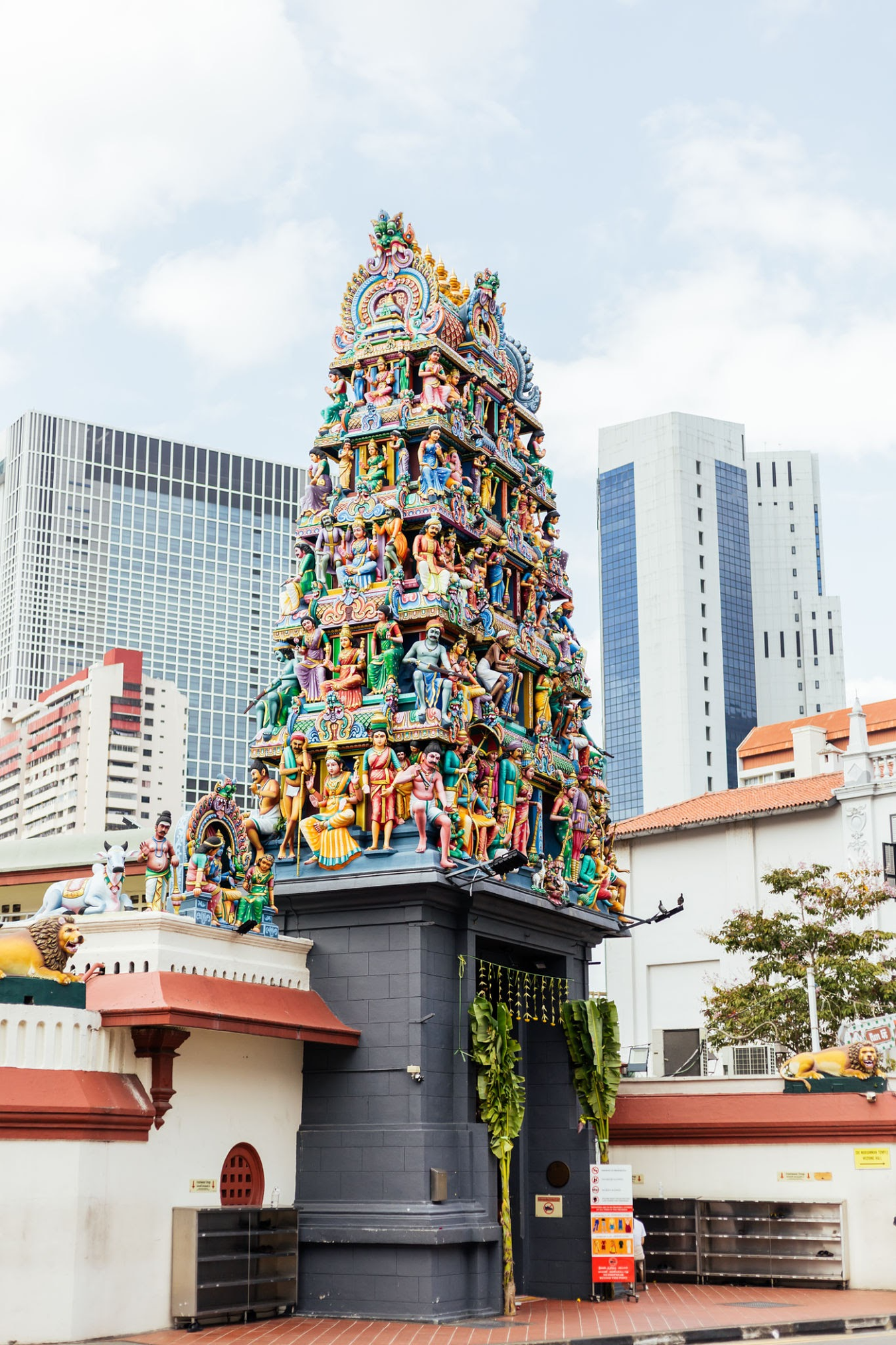
Sri Mariamman Temple (Est. 1827). Source: Creativebird / Getty Images
Masjid Sultan (Completed 1826). Source: MWayOut / Getty Images
National Museum of Singapore (Est. 1849). Source: TkKurikawa / Getty Images
1. Historic Religious Landmarks
Singapore’s earliest surviving monuments are places of worship built by immigrant communities and Malay royalty during the first two decades of British rule:
Masjid Sultan (Completed 1826): Located in Kampong Glam, this iconic mosque stands as one of Singapore’s most important Islamic landmarks and the spiritual focal point of the local Muslim community.
Sri Mariamman Temple (Built 1827): Situated in the heart of Chinatown, this vibrant Dravidian-style temple is the oldest Hindu temple in Singapore, renowned for its intricately sculpted gopuram (entrance tower).
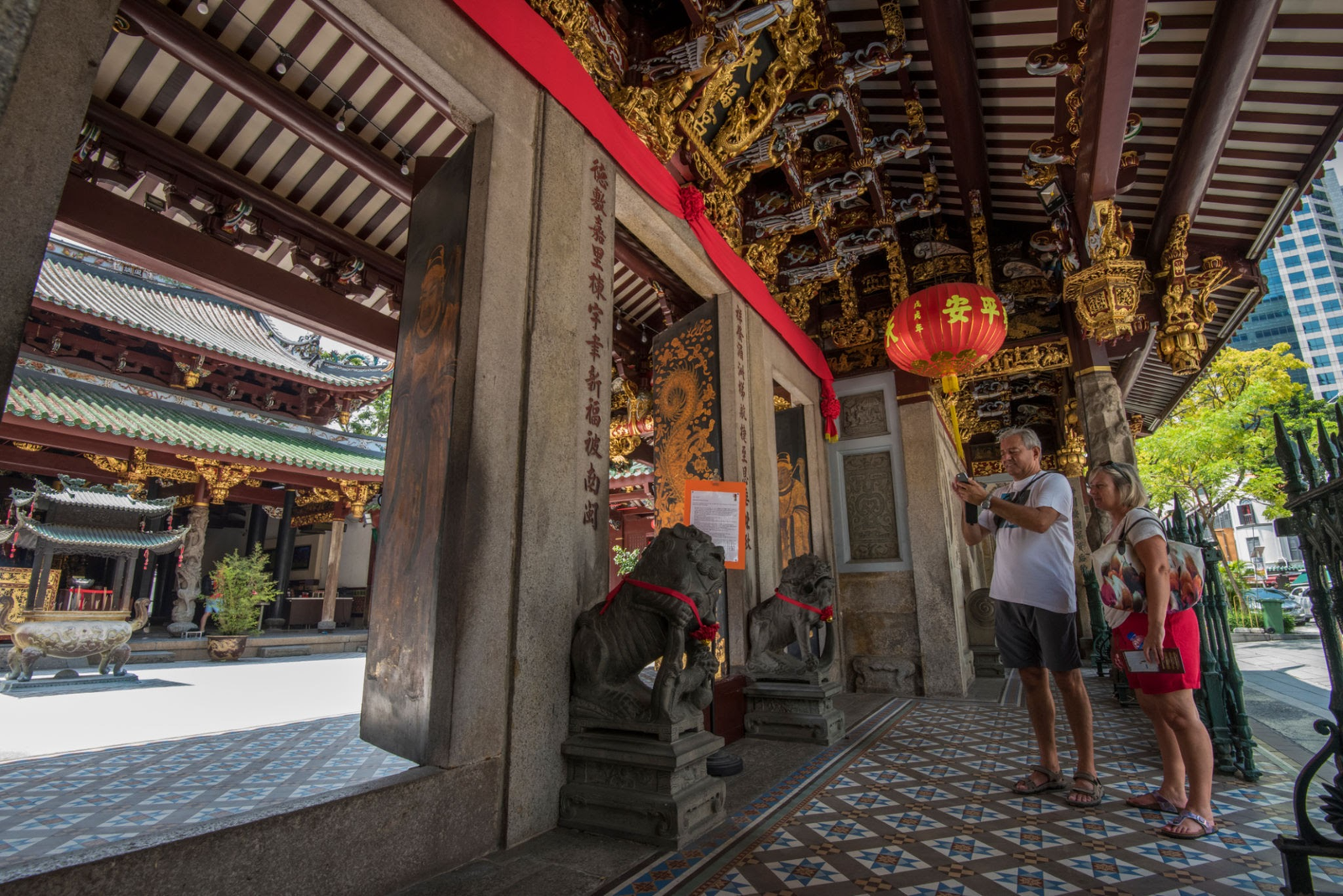
Thian Hock Keng Temple (Completed 1839): One of Singapore’s oldest and most significant Chinese temples, originally built by Hokkien immigrants to give thanks to Mazu, the Goddess of the Sea.
Other Historic Sanctuaries: Additional preserved religious landmarks include the Yueh Hai Ching Temple (one of the oldest Teochew temples) and the Lian Shan Shuang Lin Monastery, a major Buddhist complex.
2. Colonial Monuments & War Memorials
Alongside its sacred architecture, Singapore maintains key civic buildings, royal residences, and memorials honoring those who served and suffered during World War II:
Landmark
Category
Historical Significance
Istana Kampong Glam
Royal Heritage
Former seat of the Malay Sultanate in Singapore, anchoring the historic Kampong Glam district.
Victoria Theatre and Concert Hall
Civic & Performing Arts
Landmark British colonial-era neoclassical building serving as a cornerstone of Singapore’s performing arts scene.
Kranji War Memorial
WWII Memorial
Honors the men and women from the Commonwealth who died defending Singapore and Malaya against invading Japanese forces.
Civilian War Memorial
WWII Memorial
Commemorates the civilian victims who lost their lives during the Japanese Occupation of Singapore.
3. Major & Specialty Museums
Singapore’s museum landscape is anchored by four flagship national institutions covering regional ancestry, local heritage, nation-building, and contemporary art, complemented by specialized historical collections.
The Four Flagship Museums
National Museum of Singapore (Founded 1849): The oldest museum in the country, presenting Singapore’s nation-building journey and history from the 14th century onward through an immersive, storytelling-driven approach.
Asian Civilisations Museum: Specializes in the material history and artistic heritage of China, Southeast Asia, South Asia, and West Asia—the ancestral regions of Singapore’s diverse ethnic communities.
Peranakan Museum: The first museum of its kind in the world, dedicated to exploring Peranakan culture in Singapore, the former Straits Settlements of Malacca and Penang, and wider Southeast Asian Peranakan communities.
Singapore Art Museum (SAM): A contemporary art institution focusing on modern visual art practices across Singapore, Southeast Asia, and the broader Asian region.
Notable Specialty Museums
Changi Museum: Preserves the memory of the Japanese Occupation through paintings, photographs, and personal artifacts donated by former Prisoners of War (POWs).
MINT Museum of Toys: Houses an extensive private collection of 3,000 vintage toys and childhood memorabilia dating from the mid-19th century to the mid-20th century.
MUSEUMS AND MONUMENTS IN BAYELSA STATE The following museums and monuments are also tourist attractions in Bayelsa State. The White Graveyard at Twon-Brass in Brass LGA.…
Museums and Monuments in Nigeria Nigeria has 52 museums outlets spread across the country. These include National Museums Aba, Abakaliki, Abeokuta, Akure, Asaba, Bauchi, Benin,…
Nigeria Museums and Monuments A collection, documentation, conservation and presentation of Nigeria’s National Cultural properties to the public for the purposes of Education, Enlightenment…
Taraba Historical and Attractive Sites Taraba State ranks as one of the pace-setters in the field of Tourism. Below are some very historical and attractive…
Lagos colonial administration The historical evolution of Lagos Colonial administration started in August 1861 when Lagos was ceded to the British Government and…
Mbaise during colonial administration British Colonial administration in what is today known as Mbaise started in 1901 by Captain H.M. Douglas, the District Commissioner…
List of National Museums In Nigeria Nigeria has over 52 National Museums locations in Nigeria. There are: MUSEUMADDRESS/PHYSICAL LOCATIONNational Commission for Museums and Monuments,AbujaOffice of Head…
Sacred Trees of Kaler: Hidden African Heritage The sacred trees of Kaler are really fascinating! It’s incredible how certain places hold such deep spiritual and cultural significance,…
LAGOS MONUMENTS & BUILDINGS Lagos monuments and important ancient buildings include: National Art Theatre, Iganmu The Remembrance Arcade Peacock, Lekki Conservation Centre Lekki Conservation…
List of National Monuments In Nigeria There are over 65 National Monuments in Nigeria S/NNAME OF MONUMENT1Chief Okoroji’s House, Arochukwu Abia State2Obu House, Elu Ohafia Abia…
National Monuments in Nigeria Sixty-five (65) National Monuments and Sites have been declared across the country, while a hundred (100) additional ones were being…