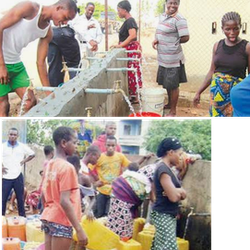
Housing, Households and Women in Nigeria: Key Findings from the 2025 NMI Survey
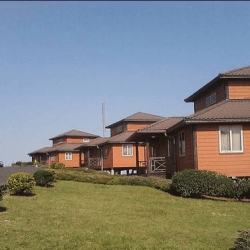
Malaria is closely tied to how people live: the water they drink, the toilets they use, the houses they sleep in, the fuel they cook with, and how well they can read health messages. The 2025 Nigeria Malaria Indicator Survey (NMIS) therefore opens with a chapter on housing, household population and respondent characteristics. This article expands the chapter’s key findings, building on the drinking water table we looked at earlier.
About the survey
The 2025 NMIS was run by the National Malaria Elimination Programme of the Federal Ministry of Health, working with the National Population Commission. Fieldwork took place from August to November 2025, covering 20,312 households and 23,815 women. The housing chapter describes those households and women before the report turns to malaria prevention, treatment and infection.
1. Drinking water: four in five households have an improved source
81% of households use an improved drinking water source: 96% of urban households and 66% of rural ones.
An improved source is one protected from contamination, such as a borehole, protected well, piped supply, or packaged water like sachets and bottles. Table 2.1 shows that boreholes are the most common source nationally, followed by sachet water and protected dug wells, and that piped water into the home is still rare. The 30-point urban-rural gap is among the largest in the chapter. Rural households are far more likely to rely on unprotected wells or surface water.
2. Sanitation: 70% have improved facilities, and 17% practise open defecation
70% of households use an improved sanitation facility (89% urban, 48% rural). However, 17% of households rely on open defecation.
Improved sanitation means a toilet that separates human waste from human contact, such as a flush toilet connected to a sewer or septic tank, a ventilated improved pit latrine, or a pit latrine with a slab.
Two points stand out:
The rural gap is wider than for water. Urban households are more than 40 percentage points more likely to have improved sanitation than rural ones, and fewer than half of rural households have it.
Open defecation is still common. Nearly one household in six has no toilet at all. That is a serious problem for diseases spread through contaminated water and soil, and the survey’s malaria focus is a reminder that health problems often cluster in the same households.
3. Household composition: 5.1 people per household, and 17% are female-headed
The average household has 5.1 people, and 17% of households are headed by a woman.
Household size shapes how crowded a home is, how many people share a sleeping space and how far resources like bed nets and water must stretch. In malaria surveys, size also determines how many people each net has to cover. The share of female-headed households is a common marker of household vulnerability and decision-making, because these households often have a single adult earner.
4. Rooms for sleeping: 36% have three or more
36% of households have three or more rooms for sleeping.
This is a rough measure of crowding. With an average of 5.1 people per household, many families share limited sleeping space. Crowded rooms can make it harder to protect everyone with a bed net, and they affect how well a home can be screened against mosquitoes.
5. Electricity: 57% of households have access, with a 50-point urban-rural gap
57% of households have electricity: 81% urban and 31% rural.
Electricity changes daily life in several ways: lighting after dark, refrigeration, phone charging and access to radio, television and the internet. The last of these matters for malaria programmes, because they depend on mass media and mobile messaging to reach people with prevention advice. The urban-rural gap is 50 points. Fewer than one rural household in three has power, against four in five urban households.
6. Clean cooking: only 36% of households use clean fuels
36% of households use clean fuels and technologies for cooking.
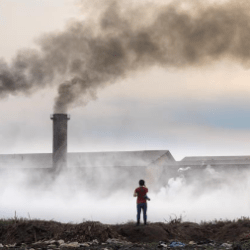
Clean cooking means fuels and stoves that produce little smoke, such as electricity, LPG, natural gas, biogas or solar cookers. The rest of the country mostly cooks with wood, charcoal, kerosene or similar fuels, which produce harmful indoor smoke, mainly affecting women and young children who spend most time near the cooking area.
7. Literacy: 61% of women are literate
61% of women in Nigeria are literate.
This figure comes from the women interviewed in the survey. Literacy affects whether women can read health leaflets, medicine instructions, product labels and signs at clinics. It also relates to how easily health messages reach households. Roughly four in ten women cannot read, so programmes cannot rely on printed material alone and need radio, community mobilisation and spoken communication as well.
What the findings add up to
The urban-rural divide runs through everything. Every indicator in the key findings that is split by residence (water, sanitation, electricity) favours urban households by a wide margin: 30 points for water, over 40 for sanitation and 50 for electricity.
Water is the best-served need, and clean cooking is the least. Four in five households have improved water, but barely a third cook with clean fuels.
Basic services are bundled. Households that lack one of them often lack others, so the same families face several disadvantages at once.
Context shapes malaria prevention. Crowded rooms, limited electricity for communication and limited literacy all affect how well nets, testing and treatment reach people.
Source: Nigeria Malaria Indicator Survey 2025
More
Philippines Internet Access: 56.1% of Households Internet access has become an important indicator of how households participate in modern economic, educational, social, and communication activities. this…
List of Federal Housing Estates, Nigeria LOCATIONNO. OF UNITSDETAILSLagos, FestacTown11,438Completed, and sold with about 45% currently under mortgage repayment arrangement, 1977Lagos, Ipaja Estate3,044Completed, Allocated on Cash…
Federal Housing Estates, Nigeria LOCATIONNO. OF UNITSDETAILSLagos, FestacTown11,438Completed, and sold with about 45% currently under mortgage repayment arrangement, 1977Lagos, Ipaja Estate3,044Completed, Allocated on Cash…
Federal Housing Authority (FHA), Nigeria Federal Housing Authority (FHA) ensures urban development across Nigeria The Federal Housing Authority (FHA), a wholly owned agency of the…
Ethiopia Rights of Women: Article 35 The Constitution of Ethiopia, Article 35: Rights of Women 1. Women shall; in the enjoyment of rights and protections provided…
Dressing, fashion among Hausa women Traditional Saki (Traditional Weaving). The traditional Hausa woven women dress is made up of two wrappers of saki. In some…