How Indonesia Is Governed From the Top Down: Provinces, Regencies and Villages
Indonesia is organised into four tiers of local government, from 38 provinces down to more than 84,000 villages. Here is how the system works, and where it departs from the standard pattern.
Indonesia spans thousands of islands and hundreds of ethnic groups, so it is no surprise that its administrative structure is both layered and flexible. Beneath the national government sit provinces, regencies and cities, districts, and finally villages. Along the way, a number of regions have special arrangements that give them unusual powers or names.
The four levels at a glance
Indonesia is divided into provinces (provinsi). Provinces are made up of regencies (kabupaten) and cities (kota). Regencies and cities are divided into districts (kecamatan), which in turn consist of villages (desa) and urban villages (kelurahan). As of February 2025, the numbers at each level are:
Level
Type
Head
Number
I
Province (provinsi)
Governor (gubernur)
38
II
Regency (kabupaten)
Regent (bupati)
416
II
City (kota)
Mayor (wali kota)
98
III
District (kecamatan and variants)
Head of district (camat and variants)
7,288
IV
Village or urban village (desa / kelurahan)
Village head (kepala desa) or lurah
84,048
Decentralisation since 1999
Local governments play a much larger role than they once did. The shift began with Law Number 22 of 1999 on Local Government, which was later revised by Law Number 32 of 2004, Law Number 23 of 2014 and the 2023 Omnibus Law on Job Creation.
The central government has kept control of some areas: foreign policy, defence (including the armed forces and national police), the legal system and monetary policy all remain national matters.
Another important change came in 2005, under Law 32 of 2004. Heads of local government, meaning governors, regents and mayors, have since been elected directly by popular vote. They serve five-year terms and can be re-elected once.
Level I: the provinces
A province is headed by a governor and has its own regional assembly, the Dewan Perwakilan Rakyat Daerah (DPRD). Governors and assembly members are chosen by popular vote for five-year terms, with one additional term allowed. Provinces were formerly known as Daerah Tingkat I (Level I Regions).
Indonesia has 38 provinces, and nine of them hold special status.
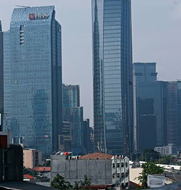
Jakarta
Jakarta is the country’s largest city and its de facto capital. Its governor has the power to appoint and dismiss mayors and regents within the region, and its local government is allowed to cooperate with cities in other countries.
Aceh
Aceh has a larger role in local government than most provinces. It applies its own Islamic Sharia law to Muslim citizens, has its own flag and provincial anthem, and allows local political parties. National decisions that directly affect Aceh’s administration must be referred to its local government or legislature.
Yogyakarta
Yogyakarta is the most unusual case. For centuries the region was ruled by the Sultanate of Yogyakarta, and the Sultan serves as governor in practice and in law because he is given priority in the selection. In the 2000s the central government proposed making the governor popularly elected, as elsewhere, while still giving the sultan significant political power. That debate ended with Law Number 13 of 2012 on the Specialty of Yogyakarta, approved on 31 August 2012. Under it, Yogyakarta is not formally a province but a region at province level. The Prince of Pakualaman, a hereditary position, serves as vice-governor.
The Papuan provinces
All provinces in Western New Guinea hold special status. In Papua, the local government has had a greater role since 2001, and the governor must be of Papuan origin. The region has been divided several times:
West Papua split from Papua in 2003, and a 2008 national regulation confirmed that special autonomy applies there too.
Central Papua, Highland Papua and South Papua split from Papua in 2022. Highland Papua is the only landlocked province in Indonesia.
Southwest Papua split from West Papua in 2022.
Level II: regencies and cities
Regencies and cities sit at the same level, each with its own government and legislative body. They are known collectively as Daerah Tingkat II (Level II Regions) and handle more day-to-day services than the provinces do, including public schools and public health facilities.
The difference lies in size, demographics and economy. A regency is generally larger in area, while a city has non-agricultural economic activity. A regency is led by a regent (bupati) and a city by a mayor (wali kota), each elected for five years and limited to two terms.
Level III: districts, with local variations
Regencies and cities are divided into districts, whose names and leaders vary by region:
Kecamatan are led by a camat, a civil servant who answers to the regent or mayor. They are found in most of Indonesia.
Distrik are led by a kepala distrik and are used in the provinces of Western New Guinea.
In the Special Region of Yogyakarta, subdivisions of regencies are called kapanewon (headed by a panewu), and subdivisions of Yogyakarta City are called kemantren (headed by a mantri pamong praja).
Level IV: villages
Districts are divided into desa (villages) and kelurahan (urban villages). They sit at a similar level, but a desa has more power over local matters than a kelurahan. A desa is a body with authority over local people in line with recognised local traditions, and its head, the kepala desa, is elected by popular vote. A kelurahan is headed by a lurah, a civil servant who reports directly to the camat.
Aceh is an exception: its districts are divided into mukim before being split into gampong.
One concept, many names
Most villages are called desa, but regional terms are common:
Gampong in Aceh
Nagari in West Sumatra (except the Mentawai Islands Regency)
Dusun in Bungo Regency, Jambi (elsewhere a dusun is a division below a desa)
Kampung in several Lampung and East Kalimantan regencies, and in the provinces of Western New Guinea
Kuwu in Cirebon and Indramayu regencies, West Java
Pekon in Pringsewu, Tanggamus and West Lampung regencies, Lampung
Lembang in Toraja and North Toraja regencies, South Sulawesi
Kalurahan in the Special Region of Yogyakarta
Bali has a double system: the desa dinas (service village) handles administrative functions, while the desa adat (cultural village) handles religious and cultural ones.
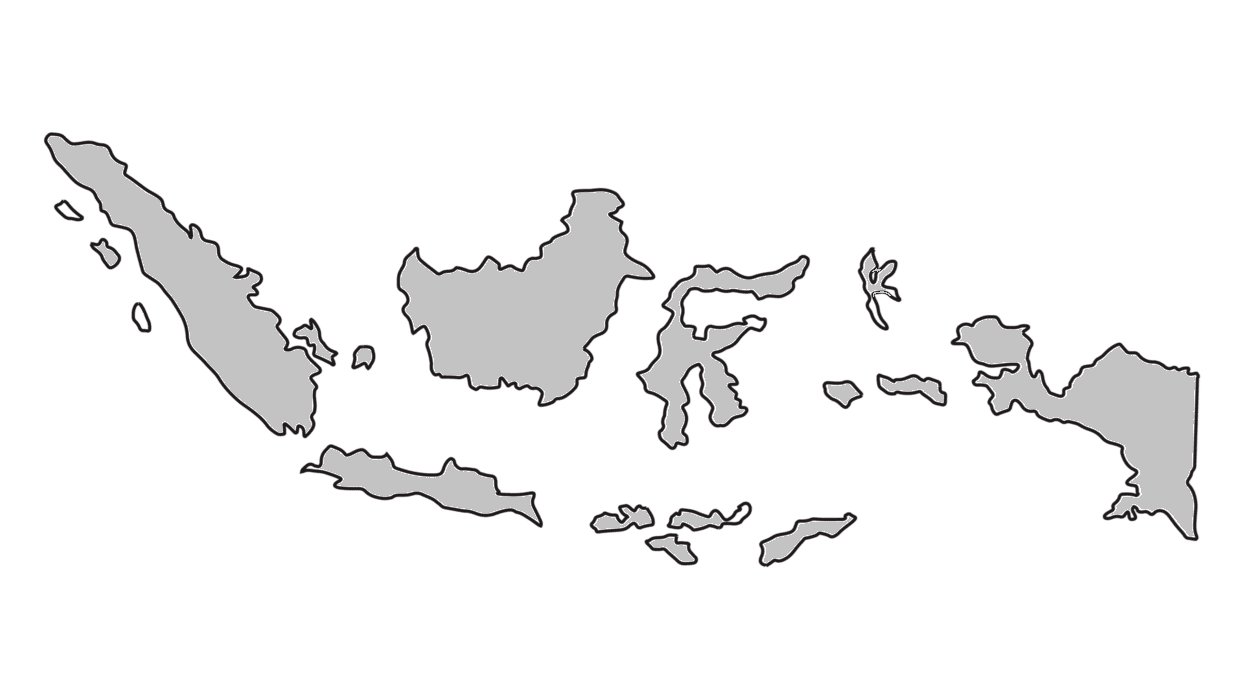
Map of Indonesia
A system built for diversity
Taken together, the structure shows a state trying to balance unity with variety. The same four tiers run from Sabang to Merauke, yet the system bends to fit local history, from a sultan serving as governor in Yogyakarta to Sharia law in Aceh to the many local names for the village. With more than 84,000 villages at the base, much of Indonesian governance happens at a very local scale.
Source
This article is based on Wikipedia’s “Subdivisions of Indonesia”, which cites Indonesian laws on local government and data from Statistics Indonesia (BPS) and the Ministry of Home Affairs. Figures are as of February 2025.
Top 10 Largest Provinces in Indonesia Indonesia’s total land area covers approximately 1,890,179.8 $\text{km}^2$, spread across 38 provinces. The scale ranges immensely: The Largest Province: Central…
I WANTED INTIMACY BUT HE TURN ME DOWN It sounds like Tiwa Savage shared a candid moment from her personal life, shedding light on the vulnerability even public…
Indonesia’s Provinces and Number of their Districts, Subdistricts ProvinceNumber of SubdistrictsIndonesia7,288Jawa Timur666Jawa Barat627Jawa Tengah576Sumatera Utara455Nusa Tenggara Timur315Sulawesi Selatan313Aceh290Papua Pegunungan252Sumatera Selatan241Lampung229Sulawesi Tenggara221Sumatera Barat179Sulawesi Tengah178Kalimantan Barat174Riau172Sulawesi Utara171Kalimantan Selatan156Banten155Jambi144Kalimantan Tengah136Papua Barat…
Indonesia’s Provinces and Population Indonesia’s 38 provinces by population, including the most populous provinces, regional population distribution, demographic insights, and key statistics on Indonesia’s…
List of Indonesia’s 38 Provinces and Capital Cities Indonesia is the world’s largest archipelago nation, spanning thousands of islands between Southeast Asia and Oceania. Administratively, the country is…
Top 10 Largest Languages in Indonesia Indonesia is home to more than 700 living languages. Here is how the biggest ones rank, based on national data.…
Ibibio Villages and Localities 1. Ibibio G.I. Jones (Gwilym Iwan Jones) occupies a complex and enduring position in the historiography and anthropology of southeastern…
List of Botswana Villages and their Districts NGWAKETSE DISTRICT Kanye Ranaka Lotlhakane West Gasita Lorolwana Kgomokasitwa Pitseng Lekgolobotlo Seherelela Lotlhakane Sese Sesung Magotlhwane Segwagwa Manyana Dipotsana Diabo…
List of Andorra Cities, Towns and Villages Andorra is divided into 7 parishes, each containing towns, villages, and hamlets. 1. Canillo Parish – Population: 4,633 Canillo (1,781)…