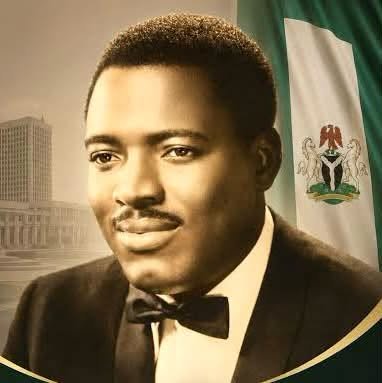
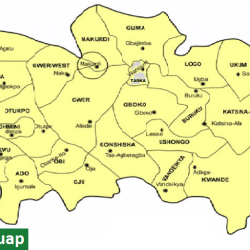
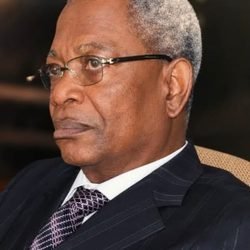
Joseph Sarwuan Tarka was a prominent Nigerian politician, statesman and human rights advocate, widely regarded as the “father of Middle Belt politics.” Born on 10 July 1932 in Igbor, in present-day Benue State, he devoted his life to championing minority rights, regional representation and structural autonomy within Nigeria’s complex federal system. He rose from rural science teacher to influential federal minister and senator, leaving a lasting mark on the nation’s political landscape. He died on 10 March 1980.
Key milestones
Early activism: Tarka entered national politics at 22, when he was elected to the Federal House of Representatives in 1954 for the Jemgbagh constituency.
The UMBC era: In 1957, he became President of the United Middle Belt Congress (UMBC), a political movement that defended the interests of minority ethnic groups in central Nigeria against the dominant regional powers.
Constitutional role: He represented the Middle Belt in the crucial pre-independence talks, and appeared before the Willink Commission in 1958, which was set up to investigate the fears of minority groups.
Federal executive career: Under General Yakubu Gowon’s military government, he served as Federal Commissioner for Transport (1967) and later Federal Commissioner for Communications (1971).
Second Republic: A founding member of the National Party of Nigeria (NPN), he was elected Senator for Benue East in 1979 and chaired the Senate Committee on Finance and Appropriation until his death in London in 1980.
JS Tarka
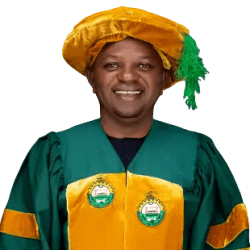
Living legacy: In recognition of his contribution to regional equity and state building, the Federal University of Agriculture, Makurdi was renamed Joseph Sarwuan Tarka University, Makurdi (JOSTUM) in 2019.