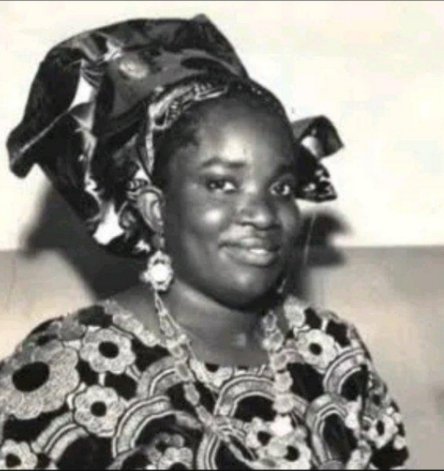
Victoria Mbakaan Tsendzuul (1936 – June 13, 1990), popularly known across Benue State and beyond as Madam Naira & Kobo, was an extraordinary businesswoman whose life challenged the traditional belief that large-scale business was exclusively a man’s domain. Traditionally honoured with the title Alomade u Tiv (The Plum of Tiv), she distinguished herself as one of the pioneering women entrepreneurs in Tivland and Nigeria.
From humble beginnings, she rose to become a successful entrepreneur, government contractor, transport investor, farmer, philanthropist and community developer. Her remarkable journey demonstrated that determination, financial discipline, courage and vision could overcome the barriers imposed by gender and social expectations.
Her story remains an important chapter in the history of women’s economic empowerment in Benue State.
1. Early Life and Family Background
Victoria Mbakaan Tsendzuul was born in 1936 in Mbamo, Gaambe-ya, Shitile, in the Katsina-Ala area of the then Benue Province.
She was born into the family of Mr Tsendzuul Tyungu, who served as a British colonial official, courier and translator, and Mrs Nyishor Tsendzuul, who came from the prominent Mbamo family of Gaambe-ya, Shitile.
Victoria grew up alongside her elder brother, Iyorlaha Tsendzuul. Following her father’s retirement, the family relocated to Makurdi, which was gradually emerging as an important administrative and commercial centre in the Benue Valley.
Her upbringing and exposure to changing social and economic environments would later become part of the foundation upon which she built her remarkable entrepreneurial career.
Her eventual recognition with the traditional title Alomade u Tiv reflected the extraordinary place she occupied in Tiv society.
2. Marriage and Early Career
Victoria’s first marriage was to Mr Gbehe Kange, a police officer. Unfortunately, the marriage ended without children.
In the 1950s, she worked as a medical aide at Makurdi General Hospital. During this period, she became known for her compassionate disposition and willingness to assist people.
However, her ambitions extended beyond her initial career.
In the 1960s, she moved to Gboko, which was then an important administrative headquarters of the Tiv people. There, she established a tailoring business that quickly became successful.
What began as a modest tailoring shop eventually provided the financial foundation for her expansion into larger and more sophisticated business ventures.
This transition marked the beginning of an extraordinary entrepreneurial journey.
3. The Rise of Madam Naira & Kobo: Building a Business Empire
Victoria became popularly known as Madam Naira & Kobo, a nickname that reflected her reputation for exceptional financial discipline.
In the Tiv business community, she was renowned for her ability to account for every amount of money, including the smallest denominations. She understood the importance of financial management and was reputed never to overlook even the smallest kobo.
Her nickname eventually became a household name and a symbol of business discipline, integrity and financial accountability.
Through determination and strategic investments, she expanded from tailoring into several major business sectors.
A. Government Contracting and Construction
Victoria established herself as a major government contractor during the Benue-Plateau era and subsequently in Benue State.
At a time when construction and large government contracts were predominantly controlled by men, she successfully competed in the business environment and earned recognition as a formidable entrepreneur.
Her achievements demonstrated that women could participate meaningfully in industries traditionally regarded as male-dominated.
B. Transportation and Cement Haulage
One of Victoria’s most remarkable business achievements was her entry into the transportation and cement-haulage industry.
Following the commissioning of Benue Cement Company Plc (BCC) in Gboko in the 1980s, she positioned herself to take advantage of the growing demand for commercial transportation and cement distribution.
She became one of the prominent private haulage operators in the region, owning several commercial vehicles, including:
Heavy-duty trailers used for cement distribution.
Articulated lorries.
Tippers and other commercial vehicles.
Her trucks became familiar sights along major commercial routes, including Benue–Onitsha, Benue–Jos and Benue–Gongola, now largely within present-day Taraba State.
She operated in a highly competitive industry alongside established male business figures, including Chief Denen Tofi.
At the Gboko Country Club, she reportedly earned another popular nickname: The Cash Queen, because of her reputation for paying cash and avoiding outstanding debts.
Her approach to business was straightforward: honour financial commitments, maintain discipline and protect one’s credibility.
C. Strategic Investments and Diversification
Victoria understood that building lasting wealth required diversification.
Rather than concentrating her resources in one business, she reinvested her profits in other economic opportunities.
Among her reported investments were:
Benue Cement Company Plc.
Benue Breweries.
Other Benue State enterprises.
She also established Madam Victoria Farms at Tsambe, a mechanised agricultural venture focused on food production and agro-allied activities.
Her investments reflected an understanding of the importance of agriculture, industrial development and commercial enterprise in economic growth.
By the 1980s, she had established herself among the notable Tiv women who had made significant contributions to the economic landscape, alongside other distinguished women, including Lucy Katsina-Alu.
4. Philanthropy and Community Development
Beyond her business achievements, Victoria believed that wealth should serve a broader social purpose.
She recognised that true success was not measured only by the accumulation of personal wealth but also by the positive impact one could make in the lives of others.
Her philanthropic activities reportedly included:
Providing housing and educational support for members of her community.
Supporting the development and welfare of her people.
Establishing Tsendzuul Memorial Secondary School in Tsambe in honour of her late father.
Supporting humanitarian and healthcare initiatives.
In her later years, she devoted considerable attention to humanitarian and healthcare development. She reportedly had plans to establish a comprehensive medical complex in Tivland before her death.
Her commitment to education and healthcare demonstrated her desire to create opportunities and improve living conditions for future generations.
Victoria’s life also provides an important example of entrepreneurship driven by courage, calculated risk-taking, innovation, strategic relocation and the ability to identify emerging business opportunities.
5. Death and Posthumous Recognition
Victoria Mbakaan Tsendzuul died on June 13, 1990, at a hospital on Lagos Island.
Although her death marked the end of an extraordinary life, her contributions to Tiv society and the business community continued to attract recognition.
Alomade u Tiv: The Plum of Tiv
In 1994, four years after her death, the Tiv Traditional Council reportedly conferred on her the prestigious traditional title of Alomade u Tiv, meaning The Plum of Tiv.
The honour recognised her pioneering contributions to business, philanthropy and community development.
It was a fitting tribute to a woman whose accomplishments had earned her a special place in Tiv history.
Recognition on the Great Tiv Wall of Fame
In 2022, Victoria was among 13 distinguished personalities selected for the first phase of the Great Tiv Wall of Fame project in Gboko.
The murals, painted by Ver Ikese, popularly known as Mr Artist, were displayed at the residence of Wantaregh Paul Unongo.
She was honoured alongside prominent Tiv personalities, including:
J. S. Tarka.
Pa Akiga Sai.
Bishop Usuh.
Chief Denen Tofi.
Chief Aper Aku.
Other distinguished sons and daughters of Tivland.
Her portrait carried the caption “Mama Naira & Kobo”, preserving her memory as one of Tivland’s remarkable business pioneers.
6. Her Place in the History of Female Entrepreneurship
Victoria Mbakaan Tsendzuul’s achievements were particularly significant because of the social and economic environment in which she operated.
During her lifetime, large-scale commercial activities, transportation, construction contracting and industrial investments were largely dominated by men.
She challenged this established order through practical achievement rather than rhetoric.
Contemporary academic work by Yio and Nomishan (2025) identifies her as a pioneering figure in Tiv female entrepreneurship, highlighting how her achievements challenged the assumption that large-scale business was exclusively a man’s domain.
Her story offers important lessons in:
Financial discipline: Her reputation as Madam Naira & Kobo demonstrated the importance of accounting for every kobo.
Courage: She entered industries in which women were underrepresented.
Diversification: She expanded from tailoring into construction, transportation, agriculture and investments.
Strategic thinking: She recognised opportunities created by industrial development, particularly the growth of Benue Cement Company.
Community responsibility: She used her resources to support education, healthcare and community development.
Female empowerment: She demonstrated that women could build and manage successful business enterprises.
A Woman Whose Legacy Transcends Generations
The story of Chief Victoria Mbakaan Tsendzuul is more than the biography of a successful businesswoman. It is the story of a woman who dared to challenge the limitations of her time and established herself in a world where major commercial success was largely associated with men.
From a medical aide in Makurdi to a successful tailor in Gboko, from a government contractor to a major cement-haulage operator, and from a businesswoman to a farmer, investor and philanthropist, her journey was one of determination, enterprise and service.
She demonstrated that wealth creation requires discipline, that opportunities exist for those willing to take calculated risks, and that true success becomes more meaningful when it benefits society.
Her life remains a source of inspiration for young entrepreneurs, particularly women who aspire to break barriers in business and leadership.
Madam Naira & Kobo did not merely make money; she made history.
She proved that a woman could build an empire, command respect in a male-dominated industry and leave behind a legacy that would outlive her.
More than three decades after her passing, her name continues to evoke admiration across Tivland and Benue State.
Victoria Mbakaan Tsendzuul, Alomade u Tiv, will forever be remembered as one of the women who helped redefine the possibilities of female entrepreneurship in Tivland.
More
Naira and Kobo development Development of Nigeria’s currency, the Naira and Kobo During the pre-colonial era, different cultures used a variety of items as…