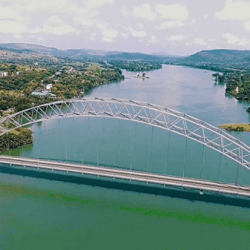
The 17 regions of Burkina Faso and their capitals after the 2025 administrative reform. New regional names, capitals, meanings, and why this historic change matters.
This explains the current regional structure, highlights the new region names, and explores the importance of the 2025 reform.
Burkina Faso’s 2025 Administrative Reform
In line with Law No. 40/98/AN and reinforced in 2025, Burkina Faso pursued deeper decentralization by granting more administrative and financial autonomy to local communities.
Key Objectives of the Reform
Strengthen state presence across the entire territory
Improve governance and security coordination
Promote local languages, culture, and history
Reduce colonial-era naming conventions
Enhance regional development planning
The reform also aligns with Burkina Faso’s broader vision of decolonization and endogenous governance, replacing externally imposed regional names with culturally meaningful ones.
How Burkina Faso Is Administratively Organized
Burkina Faso now follows a three-tier administrative structure:
Regions (17) – Led by governors
Provinces (47) – Led by high commissioners
Communes – Urban and rural local governments
Each region serves as a strategic administrative hub, with its capital city acting as the center of governance and public services.
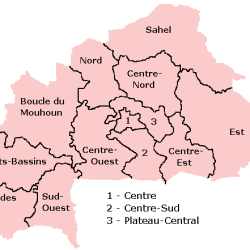
List of the 17 Regions of Burkina Faso and Their Capitals
Below is the official list of regions of Burkina Faso (2025–present) with their corresponding capitals:
Region
Capital City
Bankui
Dédougou
Djôrô
Gaoua
Goulmou
Fada N’Gourma
Guiriko
Bobo-Dioulasso
Kadiogo
Ouagadougou
Kuilsé
Kaya
Liptako
Dori
Nakambé
Tenkodogo
Nando
Koudougou
Nazinon
Manga
Oubri
Ziniaré
Sirba
Bogandé
Soum
Djibo
Sourou
Tougan
Tannounyan
Banfora
Tapoa
Diapaga
Yaadga
Ouahigouya
Newly Created Regions
Several regions were newly established or restructured in 2025 to improve administrative efficiency and territorial balance.
Sourou Region
Formed from Kossi, Nayala, and Sourou provinces, with Tougan as its capital. It is known for agriculture, fishing, and fertile plains.
Sirba Region
Created from Gnagna and Komondjari provinces. Bogandé serves as the capital, and the region is named after a major river.
Tapoa Region
Composed solely of Tapoa Province, with Diapaga as its capital. It plays a key role in conservation and cross-border trade.
Soum Region
Centered around Djibo, Soum has strong pastoral and ecological significance.
Meaning Behind the New Regional Names
One unique aspect of the regions of Burkina Faso is the cultural meaning embedded in each name.
Kadiogo – Named after a historic river near the Moogho Naaba’s palace
Guiriko – Refers to an ancient kingdom with Bobo-Dioulasso as its capital
Liptako – A Fulfulde expression symbolizing resilience
Tannounyan – Means “hills or cliffs,” reflecting the Cascades landscape
Yaadga – Honors the founders of the Yatenga Kingdom
These names reinforce Burkina Faso’s rich heritage and indigenous identity.
Why the Regions of Burkina Faso Matter
The regions of Burkina Faso are not just administrative zones; they are engines of economic development, cultural preservation, and national security.
Benefits of the Regional System
Improved service delivery
Better security coordination
Stronger local governance
Balanced regional development
Enhanced citizen participation
This structure ensures that governance reaches even the most remote areas of the country.
Economic and Strategic Importance of Regional Capitals
Each regional capital plays a vital role:
Ouagadougou (Kadiogo) – Political and administrative center
Bobo-Dioulasso (Guiriko) – Economic and cultural hub
Fada N’Gourma (Goulmou) – Eastern trade gateway
Dori (Liptako) – Strategic Sahelian center
Banfora (Tannounyan) – Tourism and agriculture hotspot
These cities anchor regional development initiatives and infrastructure growth.
FAQs About the Regions of Burkina Faso
1. How many regions does Burkina Faso have in 2025?
Burkina Faso has 17 regions as of July 2025.
2. What is the capital of Burkina Faso?
The capital is Ouagadougou, located in the Kadiogo Region.
3. Why were the regions renamed?
To promote indigenous culture, strengthen national identity, and move away from colonial-era names.
4. Which region is the largest by area?
The Liptako Region is one of the largest, covering over 23,000 km².
5. What is the newest region in Burkina Faso?
Regions such as Sirba, Sourou, Tapoa, and Soum were created or restructured in the 2025 reform.
6. Who administers the regions of Burkina Faso?
Each region is governed by a Governor appointed by the state.
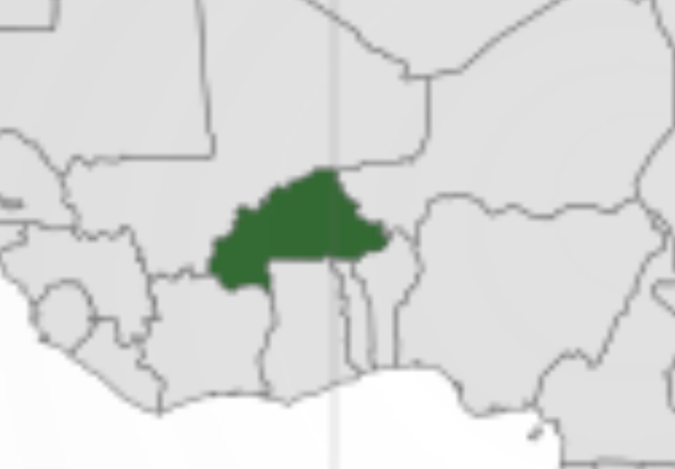
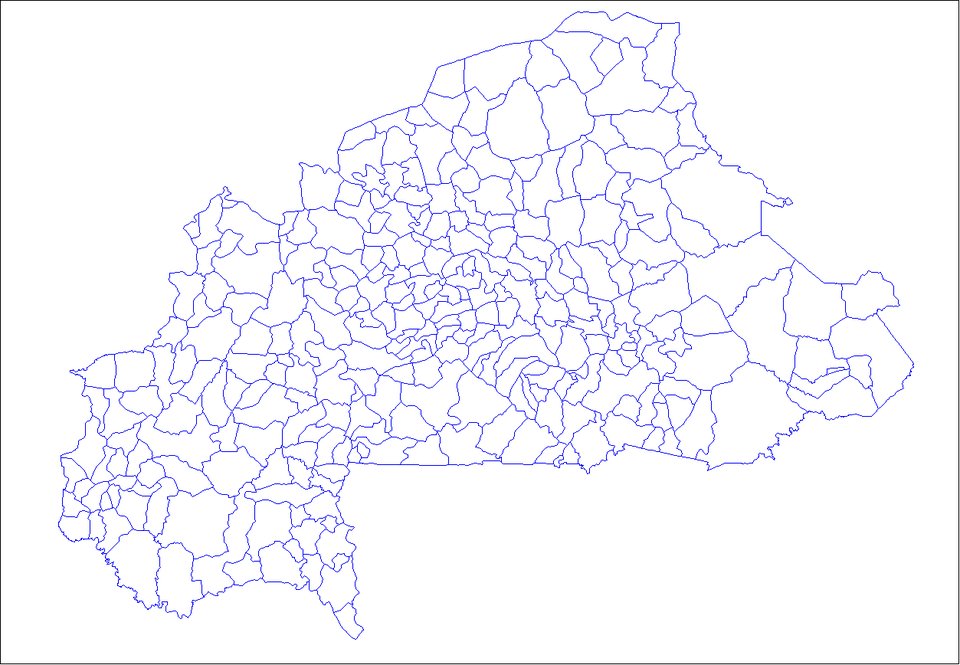
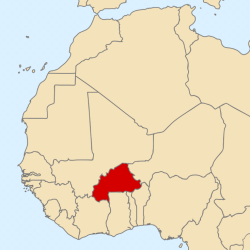
Burkina Faso on West Africa mapBurkina Faso administrative divisions
The regions of Burkina Faso and their capitals reflect a bold and strategic transformation of the nation’s administrative landscape. The 2025 reform strengthens governance, embraces cultural heritage, and supports long-term development across the country.
More
List of Burkina Faso regions and capitals Burkina Faso has 13 states (regions) namely: Boucle du Mouhoun Cascades Centre Centre-Est Centre-Nord Centre-Ouest Centre-Sud Est Hauts-Bassins Nord Plateau-Central…
List of Burkina Faso regions There are 13 regions (states) in Burkina Faso namely: Boucle du Mouhoun Cascades Centre Centre-Est Centre-Nord Centre-Ouest Centre-Sud Est Hauts-Bassins…
Most populated regions in Burkina Faso Burkina Faso 5 most populated regions are: Centre Hauts-Bassins Est Centre-Nord Boucle du Mouhoun List of regions by population, from…
Least populated regions in Burkina Faso Burkina Faso 5 least populated regions are: Centre-Sud Cascades Sud-Ouest Plateau-Central Sahel List of regions by population, from least to…
List of Chad regions and their capitals The 23 regions of Chad and their capitals are: Batha … Ati Chari-Baguirmi … Massenya Hadjer-Lamis … Massakory Wadi Fira…
Burkina Faso Burkina Faso is a country in West Africa. It is bordered by Mali to the northwest, Niger to the northeast,…
Burkina Faso capital Burkina Faso’s capital is Ouagadougou [Wagadugu]. The city is also the economic centre of the country. Ouagadougou has one of…
Burkina Faso language Although Burkina Faso is a multilingual country, the official language is French. it is the principal language for administrative, political…
Burkina Faso gold mining Mining of gold in Burkina Faso grew fast with more than 15 discoveries made since 2006. In 2017 mining company…
Burkina Faso ethnic groups Burkina Faso’s people belong to two major West African ethnic groups: the Voltaic and the Mandé (whose common language is…
What was the original name of Burkina Faso The original name of Burkina Faso was Upper Volta. Burkina Faso previously known officially as Republic of Upper Volta (1958–1984)…
How many states are in Burkina Faso There are 13 states (regions) in Burkina Faso, namely: Boucle du Mouhoun Cascades Centre Centre-Est Centre-Nord Centre-Ouest Centre-Sud Est Hauts-Bassins…
Burkina Faso map Maps of Burkina Faso Burkina Faso indicated with red color Burkina Faso, its major towns and neighboring areas Burkina Faso…
Burkina Faso meaning Burkina Faso means ‘Land of incorruptible people’ The country was previously known as Republic of Upper Volta. It was renamed…
Burkina Faso ministers, 2024 List of government ministers in Burkina Faso as of 2024 His Excellency Sir Appolinaire Joachimson KYELEM of TambélaThe Prime Minister…
List of Burkina Faso ministers List of Burkina Faso government ministers, 2024 His Excellency Sir Appolinaire Joachimson KYELEM of TambélaThe Prime Minister Colonel Major Kassoum…