Kupala Night in Belarus: Origins, Traditions, and Modern Revival
The festival known as Kupala Night (also “Kupalle”) in Belarus is among the oldest folk holidays in the Slavic world — a celebration deeply rooted in pagan traditions yet later intertwined with Christian observance.
Pagan Roots: In its earliest form, Kupala Night honored the elements — primarily the sun, water, earth, and fire — reflecting the agrarian community’s reverence for nature and fertility. The name itself is believed to derive from a Proto-Slavic root meaning “to bathe,” underscoring water’s central symbolic role.
Christian Overlay: With the spread of Christianity, the holiday became associated with John the Baptist. Thus, the pagan rituals of water and fire were merged with the Christian feast commemorating his nativity.
Preservation in Belarus: Among the Eastern Slavs, Belarus stands out as the region where many of the archaic forms of the holiday — especially those connected to water, fire, and natural magic — have been most faithfully preserved.
Thus, Kupala Night represents a living bridge between pre-Christian Slavic cosmology and the adopted Christian calendar — a synthesis that continues to fascinate modern observers.
When and Why It’s Celebrated
In Belarus (as well as in Russia), Kupala Night traditionally falls on the night of July 6–7 by the Gregorian calendar, corresponding roughly to June 24 on the old Julian calendar.
The timing links directly to the summer solstice — historically the longest day and shortest night of the year — symbolizing light, growth, fertility, and the generative power of nature.
Over time, the holiday acquired a rich symbolic set of purposes: purification, fertility, divination, protection from evil forces, and embracing the summer’s vitality.
Traditional Rites, Mythology & Symbolism
The magic and mysticism of Kupala Night have long inspired folklore, songs, and superstitions. Key elements and beliefs include:
🔥 Fire and purification
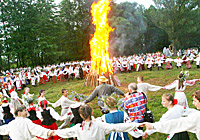
Bonfires are central: communities light fires on hills or near rivers and lakes. The fire symbolizes the Sun — a source of power and life. Jumping over the flames is among the most iconic rituals. Young people — sometimes couples — leap hand in hand: success promises health, good luck, and future happiness.
In some regions, an effigy — sometimes a wheel or a symbolic figure — would be burned, representing the Sun or an old year, thereby renewing the cycle of life.
💧 Water, cleansing, and healing
Bathing or swimming before sunset or during the night was often considered essential. Water — whether in rivers, lakes, or even steam baths — was believed to have special healing and cleansing properties on this night.
At dawn, some traditions included washing with dew, symbolic of purification and renewal.
🌿 Herbs, plants, and the legendary fern flower
Kupala Night was considered the ideal time to gather herbs and medicinal plants, believed to be at their peak potency. People collected herbs for healing, protection against evil, and good fortune.
A powerful myth associated with the holiday is the search for the “fern flower” — a magical bloom said to appear only on this enchanted night. According to legend, anyone who finds it gains the ability to see the future, discover hidden treasures, or achieve eternal happiness.
💑 Love, courtship, and divination
Young women wove wreaths from flowers and herbs — sometimes wearing them, sometimes floating them on water. The behavior of the wreaths on the water’s surface was interpreted as an omen for love, future marriage, or fidelity.
Jumping over the fire was often a test of bravery — couples who succeeded together were considered blessed with mutual love and harmony.
🔮 Mythical creatures & protection rituals
Folklore held that on Kupala Night, spirits such as water-nymphs, mermaids, and other supernatural beings roamed freely. To guard against their mischief, people used protective rituals — sometimes involving herbs, charms, or even fire — to safeguard themselves, their homes, and their livestock.
The intersection of fire, water, earth, and air on this night was believed to bring harmony between the natural and supernatural — a chance to reset, purify, and renew communal and individual life.
Kupala Night in Contemporary Belarus
Though centuries old, Kupala Night remains a living tradition — especially in Belarus, where many of the ancient customs have been preserved, revived, or transformed for modern celebration.
Public festivals and gatherings: In Belarus today, people gather on riverbanks, meadows, lakeshores, or parks to mark the night. Celebrations often include bonfires, traditional songs and dances, folk music, wreath-floating, and sometimes theatrical performances.
Cultural revival and tourism: Kupala Night has been embraced as part of Belarus’s cultural heritage. It attracts locals and tourists alike — many participate to reconnect with ancestral traditions, experience folklore, or simply enjoy communal merrymaking under the midsummer sky.
Modern reinterpretations: While some villages stick closely to old rituals, in cities and organized events the emphasis often shifts toward folk-art exhibitions, craft sales, music concerts, and symbolic reenactments rather than literal pagan rites. Still, the core motifs — fire, water, love, fertility, and renewal — remain.
The evocative traditional song Kupalinka — composed in 1921 based on folk motifs — remains emblematic of Kupala Night and Belarusian cultural identity.
Why Kupala Night Matters — Then and Now
Connection to nature and seasonal rhythms: Kupala Night harks back to an age when human life was closely tied to nature’s cycles. By celebrating fire and water, daylight and fertility, communities honored natural forces upon which their survival depended.
Ritual of purification and renewal: The symbolic acts of fire-jumping, water-bathing and herb gathering represent cleansing — of body and soul — and the forging of hope for future prosperity, health, and community well-being.
Cultural identity and continuity: As centuries passed and Christianization spread, many older traditions faded or changed. Yet in Belarus, much of the folklore associated with Kupala Night survived — offering a rare living window into pre-Christian Slavic heritage.
Symbolism of love, fertility, and social bonding: Through rituals like wreath-floating or fire-jumping, Kupala Night provided socially accepted occasions for young people to meet, bond, and contemplate future unions — blending superstition, community, and human desire for connection.
Modern cultural revival and celebration: Today, Kupala Night is a vibrant blend of folklore, community festival, and cultural tourism — a night where ancient myths, modern sensibilities, and communal joy converge.
Kupala Night in Belarus
Kupala Night stands as a remarkable example of how ancient beliefs and rituals can endure — evolving across centuries yet remaining deeply meaningful. In Belarus, it remains a night of magic and light, where fire and water, myth and music, community and nature come together — honoring the past while celebrating the present.
Mbaise culture, traditions and customs Mbaise people Mbaise people have rich culture, traditions and customs. Some of the activities are: Isu asusu Igbo Igoo Orji…
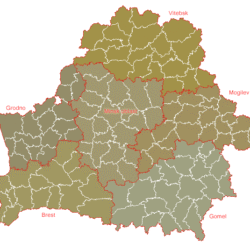
List of Belarus Districts and Regions Belarus is divided into six regions (voblasts), each comprising numerous districts that serve as the fundamental administrative units of local…
Landscapes of the Yelnya swamp of Belarus Landscapes of the Yelnya swamp captivate travelers with ancient bogs, rare birds, mystical sights, and untouched beauty. Discover why this…
Anthem of the Republic of Belarus Дзяржаўны гімн Рэспублікі Беларусь (Belarusian)Dziaržaŭny Himn Respubliki BiełaruśГосударственный гимн Республики Беларусь (Russian)Gosudarstvennyy gimn Respubliki Belarus The Belarus Anthem: History, Meaning…
World Heritage Sites in Belarus UNESCO World Heritage Sites in Belarus are: Białowieża Forest Mir Castle Complex Architectural, Residential and Cultural Complex of the Radziwill…