Nilo-Saharan Language Family: Classification, Distribution, and Shared Linguistic Features
The Nilo-Saharan language family represents one of Africa’s most diverse and widely dispersed linguistic phyla. Spoken primarily across Central, Eastern, and parts of Northern Africa, these languages reflect deep historical connections among peoples living from the Nile Valley to the Sahel and the Great Lakes region. Although the internal classification of Nilo-Saharan remains debated among linguists, the family is generally recognized as encompassing around 130 languages spoken by approximately 46 million people.
This article offers a comprehensive overview of the classification, geographical distribution, major branches, and shared linguistic features of the Nilo-Saharan languages.
1. Classification of the Nilo-Saharan Phylum
The Nilo-Saharan phylum is usually described as consisting of a large Eastern Sudanic branch alongside ten smaller, independent branches. These branches are:
Eastern Sudanic
Central Sudanic
Saharan
Songhay
Maban
Fur
Kuliak
Koman
Berta
Gumuz
Kunama
Together, these groups span a vast area from the Sahara Desert to East Africa.
2. Geographical Distribution
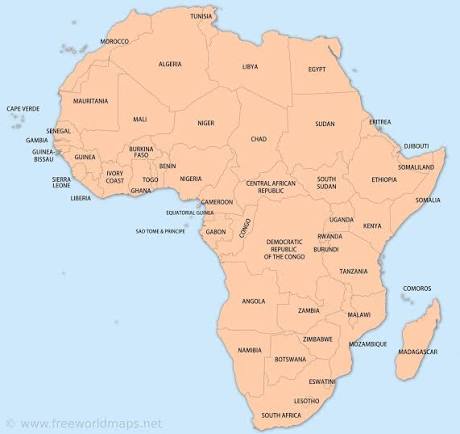
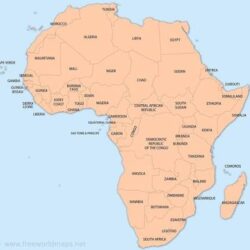
Nilo-Saharan languages are spoken across a wide belt of Africa, including:
North Africa: Egypt, Sudan, Chad
Central Africa: Central African Republic, Democratic Republic of the Congo
East Africa: Ethiopia, Eritrea, Kenya, Uganda, Tanzania, South Sudan
This wide distribution reflects ancient migration patterns, trade routes, and long-term contact with other major African language families such as Afro-Asiatic and Niger-Congo.
3. Eastern Sudanic Branch
The Eastern Sudanic branch is the largest and most diverse component of the Nilo-Saharan family. It is spoken by approximately 22 million people across Chad, Egypt, Sudan, South Sudan, Eritrea, Ethiopia, Kenya, Tanzania, and Uganda.
3.1 Nubian Languages
Spoken in southern Egypt and Sudan, the Nubian group includes:
Dongolawi
Nobiin
Midob
Hill Nubian
The extinct Old Nubian is believed to be the ancestor of modern Nobiin. Altogether, Nubian languages have around 2 million speakers.
3.2 Nera (Nara)
Spoken in western Eritrea, Nera has approximately 90,000 speakers.
3.3 Temein Group
Found in the Nuba Hills of Sudan, this small group includes:
Temein
Doni
Tese
These languages have fewer than 20,000 speakers combined.
3.4 Nyima Group
Also spoken in the Nuba Hills, Nyima languages include:
Nyimang (Ama)
Dinik
They are spoken by around 100,000 people.
3.5 Eastern Jebel Group
Located in eastern Sudan, this group includes:
Gaam (the largest language)
Aka
Kelo
Molo
Together they have about 80,000 speakers.
3.6 Surmic Languages
Spoken in southwestern Ethiopia and South Sudan, Surmic languages include:
Majang
Kwegu
Me’en
Suri
Murle
Didinga-Narim
Tennet
Kacipo-Balesi
The Surmic group has an estimated 400,000–500,000 speakers.
3.7 Daju Languages
Found in South Sudan and Chad, this group includes:
Shatt
Logorik (Liguri)
Daju Mongo (Dar Daju)
Dar Sila
Nyala (Daju Dar Dur)
Njalgulgule
They are spoken by roughly 250,000 people.
3.8 Taman Languages
Spoken in western Sudan and eastern Chad:
Tama
Sungor
Mararit
This group has about 200,000 speakers.
3.9 Nilotic Languages
The Nilotic group is the largest within Eastern Sudanic, with approximately 18.7 million speakers across Tanzania, Kenya, Uganda, South Sudan, Sudan, and Ethiopia. It is divided into three subgroups:
Western Nilotic
Dinka
Luo
Nuer (about 9.4 million speakers)
Eastern Nilotic
Bari
Kakwa
Teso (Ateso)
Karamojong
Turkana
Toposa
Lotuko (Otuho)
Maasai
Samburu (around 4.7 million speakers)
Southern Nilotic
Kalenjin
Datooga (about 4.6 million speakers)
4. Central Sudanic Branch
The Central Sudanic languages are spoken by nearly 10 million people across South Sudan, the Central African Republic, Chad, Cameroon, Uganda, and the Democratic Republic of the Congo.
Major groups include:
Lendu: Lendu, Ngiti (about 1.2 million speakers)
Mangbetu: Mangbetu, Lombi, Asoa (over 1.1 million speakers)
Moru-Madi: Lugbara, Aringa, Logo, Madi, Moru (over 4 million speakers)
Sara-Bongo-Bagirmi: Approximately 40 languages including Ngambay, Sara, Bagirmi (around 3 million speakers)
Kresh: Kresh (Gbaya), Aja (20,000–30,000 speakers)
5. Other Nilo-Saharan Branches
Saharan
Spoken around Lake Chad (Chad, Niger, Nigeria, Cameroon):
Kanuri
Teda
Daza
Zaghawa
Approximately 7.5 million speakers.
Songhay
Spoken in Niger, Mali, Burkina Faso, Benin, and Nigeria:
Zarma
Koyra Chiini
Koyraboro Senni
Dendi
Tadaksahak
Tasawaq
Around 4 million speakers.
Maban
Spoken along the Chad–Sudan–Central African Republic border:
Maba
Masalit
Marfa
Aiki
About 800,000 speakers.
Fur
Spoken in western Sudan and eastern Chad:
Fur
Amdang
Approximately 850,000 speakers.
Kuliak
Spoken in northeastern Uganda:
Ik
Soo
Nyangi
About 10,000 speakers.
Koman
Spoken along the Sudan–Ethiopia border:
Uduk
Kwama
Komo
Opuuo
Gule (extinct)
Roughly 50,000 speakers.
Berta
Spoken along the Sudan–Ethiopia border, with about 270,000 speakers.
Gumuz
Also spoken along the Sudan–Ethiopia border, with around 250,000 speakers.
Kunama
Spoken in Eritrea and Ethiopia:
Kunama
Ilit
About 200,000 speakers.
6. Shared Linguistic Features of Nilo-Saharan Languages
Despite their diversity, Nilo-Saharan languages share several important structural traits.
6.1 Phonology
Tone Most Nilo-Saharan languages are tonal, using two to four tones. Tones often serve grammatical functions rather than purely lexical ones. Some languages at the edges of the family, especially those in contact with Afro-Asiatic languages, have reduced or lost tonal distinctions.
ATR Vowel Harmony Many languages—particularly in Central Sudanic, Nilotic, and Surmic—use Advanced Tongue Root (ATR) vowel harmony, dividing vowels into “tense” (ATR+) and “lax” (ATR–) sets that cannot mix within a word.
Consonants Common features include:
Implosive consonants
Labial-velar stops (kp, gb)
Labiodental flaps (notably in Mangbetu and Kresh)
6.2 Morphology
Nominal Morphology
Case marking through suffixes or tone is widespread.
Grammatical gender is rare, except in some Nilotic languages.
Complex number systems are common, including singulative marking, where the singular form is marked and the plural is unmarked.
Verbal Morphology
Tense, aspect, person, and number are marked through affixes, sometimes with consonant mutation.
The perfective vs. imperfective distinction is particularly important.
Converbs (non-finite verb forms) are widely used to link actions in narratives.
6.3 Syntax
Word order varies significantly across the family:
VSO (Verb–Subject–Object) is common in eastern branches.
SOV (Subject–Object–Verb) is more frequent in western branches.
Some languages allow relatively free word order.
The Nilo-Saharan language family stands as a testament to Africa’s extraordinary linguistic diversity. Spanning vast regions and encompassing dozens of cultures, these languages share deep structural similarities while maintaining remarkable internal variation. Understanding their classification and features not only enriches linguistic scholarship but also sheds light on the historical and cultural connections of African societies.
Kwara tourist features Flower Garden As part of infrastructure stock gap closure and investment, Kwara state is desirous of developing its green space,…
New features in the 2023 Census The following are some of the new features in the 2023 PHC: a. The use of Computer-Assisted Personal Interviewing (CAPI)…