Ancient Egyptian language—its classification, history, scripts, phonology, grammar, and literature—one of the world’s oldest documented languages.
Ancient Egyptian Language
The Ancient Egyptian language is one of the oldest written languages in human history, with documented evidence spanning more than four millennia (c. 3000 BCE–1300 CE). Spoken by the people of ancient Egypt, it was the linguistic foundation of a civilization renowned for its architecture, religion, art, and literature. Most famously, the Egyptians developed a hieroglyphic writing system of exceptional originality, possibly contemporaneous with early Sumerian writing.
Classification Within Afro-Asiatic Languages
The Ancient Egyptian language forms one of the six primary branches of the Afro-Asiatic language family. It is:
Closely related to Semitic and Berber languages
More distantly related to Cushitic and Chadic languages
Geographical Distribution and Status
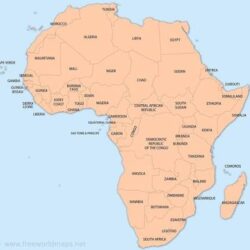
Distribution: Historically spoken along the Nile Valley in Egypt
Status:Extinct as a spoken language
Documentation period: Approximately 3000 BCE to 1300 CE
Despite its extinction, its final stage—Coptic—is still used today in the liturgy of the Egyptian Christian Church.
Historical Periods of the Egyptian Language
1. Old Egyptian (3000–2000 BCE)
First continuous texts appear
Found in Pyramid Texts and tomb inscriptions
Language of the Old Kingdom and First Intermediate Period
2. Middle Egyptian (2000–1300 BCE)
Considered the classical stage
Used for literary and religious texts such as Coffin Texts
Structurally similar to Old Egyptian
3. Late Egyptian (1300–700 BCE)
Grammatically distinct from earlier stages
Language of Ramesside administration and bureaucracy
4. Demotic (700 BCE–400 CE)
Written in Demotic script
Used for legal, administrative, and commercial texts
5. Coptic (400–1300 CE)
Written in an alphabetic script derived from Greek
First stage to clearly record vowels
Two main dialects: Sahidic and Bohairic
Oldest Egyptian Documents
The earliest Egyptian texts date to the Early Dynastic Period, including:
Royal seal impressions
Year labels recording events
Offering lists
Rock-cut desert inscriptions
Artifacts bearing royal names
These documents provide invaluable insight into early Egyptian administration and kingship.
Phonology of the Ancient Egyptian Language
Vowels
Knowledge of vowels is incomplete and reconstructed primarily from Coptic, Greek, and Assyrian sources.
Early vowel system:
Front: i, iː
Central: a, aː
Back: u, uː
Later stages introduced e, ə (schwa), and o.
Consonants
Approximately 26 consonants
Included uvular, pharyngeal, and glottal sounds uncommon in Indo-European languages
Stress
Typically falls on the last or penultimate syllable
Writing Systems of Ancient Egyptian
Hieroglyphic Script
Used for monumental and religious texts
Combination of:
Logograms
Phonograms
Determinatives
Written in columns or horizontal lines, usually right to left
Hieratic Script
Cursive adaptation of hieroglyphs
Used on papyrus for administrative and literary texts
No formal distinction between main and subordinate clauses
Adjectives follow nouns
Uses a construct state for direct genitives
Basic Vocabulary Examples
English
Egyptian
one
wc
man
zj
woman
zjt
house
pr
heart
lb
eye
irt
Ancient Egyptian Literature
Old Kingdom
Pyramid Texts
Autobiography of Harkhuf
Instructions of Ptahhotep
Middle Kingdom
Story of Sinuhe
Prophecies of Neferti
Dispute Between a Man and His Ba
New Kingdom
Book of the Dead
Great Hymn to the Aten
Report of Wenamun
Late Period
Victory Stela of King Piye
Stories of Setne Khamwas
These texts reveal Egyptian beliefs about kingship, morality, death, and the afterlife.
Egyptians
The Ancient Egyptian language is a cornerstone of human linguistic and cultural history. Its long evolution, complex grammar, and diverse writing systems reflect the richness of one of the world’s most enduring civilizations. Although no longer spoken, its legacy survives through inscriptions, literature, and the living tradition of Coptic worship.