Abdeen Palace: A Glimpse into Egypt’s Royal Legacy
Discover the rich history and grand architecture of Abdeen Palace, a symbol of Egypt’s royal legacy and a cornerstone of modern Cairo’s transformation.
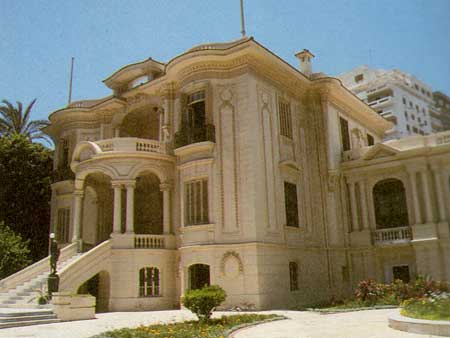
Abdeen Palace, situated in the heart of Cairo, marks a pivotal chapter in Egypt’s transition into modernity under the rule of Khedive Ismail. Upon ascending to the throne in 1863, Khedive Ismail envisioned a capital city that would rival European metropolises. His plan was ambitious—broad boulevards, European-style buildings, and stately palaces. At the heart of this transformation stood the majestic Abdeen Palace.
The site of the palace was originally the residence of Sultan Abidin Bey, a notable military commander during the rule of Mohamed Ali. Recognizing the strategic and symbolic value of the location, Khedive Ismail purchased the land from Abidin’s widow. He expanded it dramatically and began constructing what would become one of Cairo’s most iconic structures.
Construction and Architecture
The construction of Abdeen Palace commenced shortly after Khedive Ismail took power and extended over a decade. The palace’s architectural design blended European elegance with Oriental opulence. It was designed by a team of French, Italian, and Egyptian architects, making it a hallmark of cosmopolitan aesthetics.
The main structure showcases French neoclassical architecture. It features expansive marble staircases, intricately decorated ceilings, and expansive wings that served various official and domestic functions. European influence is unmistakable, yet local artistry in mosaics and carvings lend it a uniquely Egyptian flair.
Interior Design and Features
Stepping inside Abdeen Palace is like traveling back in time. The palace’s interior is a visual feast of grandeur, featuring gilded chandeliers, luxurious tapestries, and intricately painted ceilings. Each room and hall served a distinct purpose, from ceremonial receptions to private royal gatherings.
Three dominant influences—French, Italian, and Turkish—are reflected in the furnishings and interior décor. The Throne Room, the Mirror Hall, and the Dining Hall are among the most opulent spaces, adorned with imported materials and exquisite craftsmanship. These design elements collectively elevate Abdeen Palace to the stature of Europe’s grandest royal residences.
The Palace Grounds
Beyond the main building, the palace’s surrounding landscape is a serene blend of nature and design. The gardens feature rare species of palm trees, manicured lawns, and European-style fountains. These grounds were designed to not only impress visiting dignitaries but also to symbolize Egypt’s ambition to be seen as a modern, progressive nation.
In fact, the palace’s surroundings were instrumental in shaping the urban layout of downtown Cairo. Spacious squares and connecting boulevards were built to complement the palace, establishing a new blueprint for the city.
Transition to Government Property
After the monarchy was abolished in 1952, the Egyptian government took over Abdeen Palace. Although it ceased to be a royal residence, its significance didn’t wane. Over the decades, it has been used for official receptions and state ceremonies.
Under the leadership of subsequent presidents, efforts were made to preserve the palace’s heritage. Several parts were converted into museums and administrative offices, maintaining its active role in Egypt’s national narrative.
Abdeen Palace Museums
Today, Abdeen Palace houses several museums, each offering a window into different facets of Egypt’s regal and political history:
The Arms Museum: Displays a massive collection of weapons from various eras and regions.
Presidential Gifts Museum: Features unique gifts received by Egyptian presidents from foreign dignitaries.
Royal Family Museum: Showcases personal belongings, jewelry, and portraits of Egypt’s last monarchs.
These museums provide both locals and tourists with an educational and cultural experience, preserving the memory of Egypt’s royal lineage.
Political and Cultural Significance
Throughout its existence, Abdeen Palace has been at the heart of pivotal political events. From royal decrees to revolutionary decisions, the walls of this palace have witnessed Egypt’s evolving political landscape. It also stands as a cultural symbol, representing Egypt’s embrace of modernity while preserving its rich traditions.
In essence, Abdeen Palace isn’t just a building—it’s a living chronicle of Egypt’s journey from monarchy to republic.
Abdeen Palace in Modern Cairo
In today’s Cairo, Abdeen Palace remains a powerful icon. Its architectural influence is evident in the city’s urban planning, particularly in how surrounding neighborhoods were designed. Roads radiating from the palace reflect Khedive Ismail’s vision for a well-organized, European-style capital.
Despite the city’s expansion and modernization, the palace remains a timeless anchor, offering both a visual and historical counterpoint to Cairo’s ever-changing skyline.
Visitor Information and Tourism
Abdeen Palace is open to the public, allowing visitors to explore its grand halls and extensive museum collections. Here’s what you need to know:
Ras el-Tin Palace, Alexandria, Egypt The historic Ras el-Tin Palace is considered one of the oldest palaces existing in Egypt and Alexandria today. It is…
Legacy of Tin and Columbite Mining in Jos Explore the history of tin and columbite mining in Jos, Nigeria. Discover how British colonial interests shaped Plateau State’s growth…