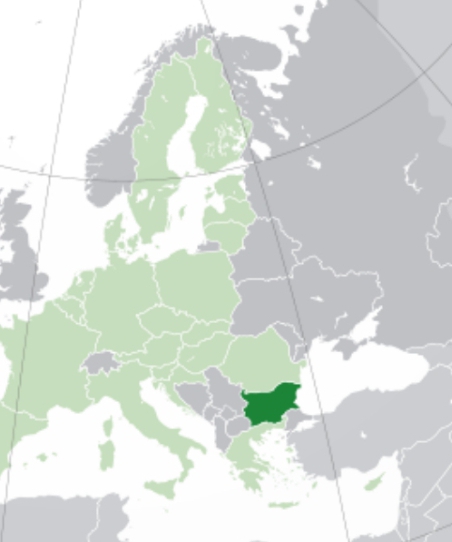
Bulgaria’s administrative structure reflects its long history, unitary form of government, and strong central authority. Designed to balance local governance with national oversight, the system has evolved over time to meet political and economic needs.
Bulgaria as a Unitary State
Bulgaria is a unitary state, meaning that all administrative power ultimately flows from the central government. Unlike federal systems, regional authorities do not have independent constitutional powers. Instead, they operate within a framework defined and supervised by the national government.
Since the late 19th century, the country’s territorial organization has changed several times. The number of administrative units has varied from as few as seven to as many as 26, reflecting different political eras and governance models.
Evolution of the Modern Administrative Structure
Between 1987 and 1999, Bulgaria was divided into nine large provinces (oblasti). This system was later replaced as part of broader political and economic decentralization reforms.
The current administrative structure, introduced in the late 1990s, consists of:
27 provinces, plus
Sofia City Province, which has a special metropolitan status
Each province is named after its administrative capital, reinforcing the link between regional governance and local urban centers.
Provinces of Bulgaria
Today, Bulgaria is divided into 28 provinces (oblasti) in total. These provinces serve as the main territorial units for state administration.
List of Provinces:
Blagoevgrad
Burgas
Dobrich
Gabrovo
Haskovo
Kardzhali
Kyustendil
Lovech
Montana
Pazardzhik
Pernik
Pleven
Plovdiv
Razgrad
Ruse
Shumen
Silistra
Sliven
Smolyan
Sofia Province
Sofia City (metropolitan province)
Stara Zagora
Targovishte
Varna
Veliko Tarnovo
Vidin
Vratsa
Yambol
Each province is headed by a regional governor, who is appointed directly by the Council of Ministers, emphasizing the centralized nature of the Bulgarian state.
Municipalities: The Local Level of Governance
Below the provincial level, Bulgaria is divided into 265 municipalities. Municipalities are the primary units of local self-government and are responsible for services such as:
Local infrastructure
Education and cultural institutions
Municipal planning and development
Each municipality is governed by:
A mayor, elected for a four-year term
A municipal council, also directly elected by residents
Despite these elected bodies, municipalities rely heavily on central government funding, which limits their financial independence.
Centralization and State Control
Although Bulgaria has elected local authorities, it remains a highly centralized state. The national government:
Appoints provincial governors
Controls major funding streams
Exercises strong oversight over regional and municipal administrations
This model aims to maintain national cohesion and policy consistency, but it also shapes ongoing debates about decentralization and local autonomy.
Bulgaria’s administrative divisions form a structured hierarchy designed to combine local representation with strong central governance. With 28 provinces and 265 municipalities, the system provides nationwide coverage while keeping key decision-making powers at the national level. As Bulgaria continues to develop economically and politically, discussions around decentralization and local empowerment remain an important part of its administrative future.
List of Bulgaria Ethnic Groups by Province Bulgaria’s ethnic composition across its 28 provinces and Sofia City. While ethnic Bulgarians remain the overwhelming majority nationwide, the regional…
List of Bulgaria Municipalities List of the municipalities of Bulgaria, grouped by province (oblast). Total: 265 municipalities Blagoevgrad Province (14) Bansko Belitsa Blagoevgrad Gotse…
World Heritage Sites in Bulgaria UNESCO World Heritage Sites in Bulgaria are: Boyana Church Madara Rider Rock-Hewn Churches of Ivanovo Thracian Tomb of Kazanlak Ancient…
List of Burkina Faso Provinces List of Burkina Faso provinces with regions, capitals, and geographic insights. This complete guide explains all 45 provinces in a…
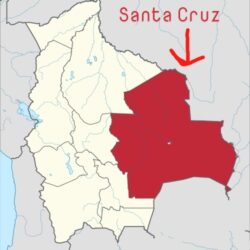
List of Santa Cruz Provinces and Capitals Provinces and Capitals in Santa Cruz Department of Bolivia The Department of Santa Cruz, Bolivia’s most populous and largest department,…
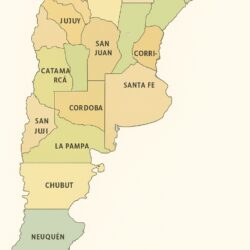
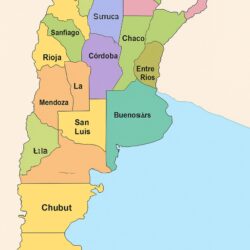
List of Argentina’s 23 Provinces Argentina is a federal republic divided into 23 provinces (provincias) and 1 autonomous city (Ciudad Autónoma de Buenos Aires), which…
List of Afghanistan Provinces List of provinces of Afghanistan with details such as ISO codes, capitals, languages, population, and area. Afghanistan is divided into…
List of Burundi provinces The provinces of Burundi are: Cankuzo Gitega Rutana Ruyigi Karuzi Kayanza Kirundo Muyinga Ngozi Bururi Makamba Rumonge Bubanza Bujumbura Mairie…
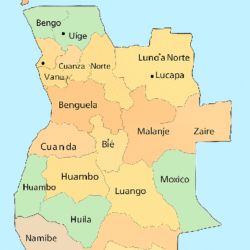
List of Angola provinces The provinces of Angola are: Bengo Benguela End Cabinda Cuando Cubango Cuanza Norte Kwanza Sul Cunene Huambo Huila Luanda Lunda…
List of 58 provinces (wilayas) of Tunisia The 58 provinces (wilayas) of Tunisia are: Adrar Aïn Defla Ain Guezzam Ain Salah Aïn Témouchent Algiers Annaba Batna Béchar…
List of South Africa provinces and capitals South Africa provinces and their capitals are as follows: Eastern Cape …. BhishoFree State …. BloemfonteinGauteng …. JohannesburgKwaZulu-Natal …. PietermaritzburgLimpopo…
List of South Africa Provinces South Africa’s 9 provinces are: Eastern CapeFree StateGautengKwaZulu-NatalLimpopoMpumalangaNorthern CapeNorth-WestWestern Cape Administration South Africa’s provinces are governed, in different ways, on…