Religion in Bulgaria: Insights Into Faith, Secularism, and Demographic Change
Religion in Bulgaria has long been intertwined with national identity, history, and culture. While the country’s constitution recognizes Orthodox Christianity as the traditional religion, Bulgaria is also firmly established as a secular state, guaranteeing freedom of belief and equality among religious communities. This dual identity creates a fascinating religious landscape—one that is deeply rooted in tradition yet increasingly shaped by modern social change.
Census data from 2001, 2011, and 2021 reveal notable shifts in religious affiliation, participation, and willingness to declare belief. Together, these trends highlight how faith in Bulgaria is evolving in response to migration, secularization, and personal choice.
Orthodox Christianity and the Bulgarian Constitution
Traditional Religion, Not a State Religion
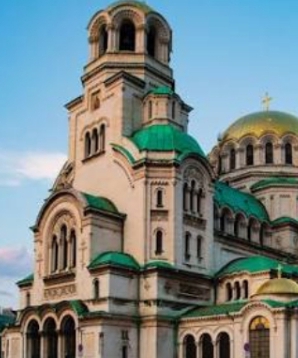
According to the Bulgarian Constitution, Orthodox Christianity is acknowledged as the traditional religion of the nation. This recognition reflects its historical role in preserving Bulgarian language, culture, and national consciousness during centuries of foreign rule.
However, this status does not grant Orthodoxy political authority or legal dominance. Bulgaria does not have an official state religion, and the government is prohibited from interfering in religious life.
Bulgaria as a Secular State
What Secularism Means in Practice
As a secular state, Bulgaria guarantees:
Freedom of religion and belief
Equal treatment of all religious denominations
The right to declare no religion
Importantly, participation in religious censuses has changed over time. In 2011, answering the question about religious affiliation became optional, a shift that had a major impact on the results.
Why the 2001 and 2011 Censuses Look So Different
Mandatory vs. Optional Declaration
2001 Census: Religious identification was mandatory, resulting in high declaration rates.
2011 Census: Declaration was optional, leading to over 21% of the population choosing not to respond.
This methodological difference explains the sharp statistical decline in Orthodox Christians—from over 80% in 2001 to under 60% in 2011—without necessarily indicating mass conversion or loss of faith.
Religious Structure of Bulgaria (2011 Census Explained)
Declared vs. Total Population
Among those who did declare a religion in 2011:
Orthodox Christians: ~76% of respondents
Muslims: ~10%
Irreligious: ~12%
When calculated against the total population, the picture changes:
Orthodox Christians: ~59%
Muslims: ~8%
Irreligious: ~9%
Undeclared: ~22%
This distinction is crucial for understanding modern religious statistics in Bulgaria.
Islam in Bulgaria: History and Geography
Muslim Communities and Regional Concentration
Islam is the second-largest religion in Bulgaria, with communities that include:
Ethnic Turks
Bulgarian Muslims (Pomaks)
Some Roma groups
Muslim populations are geographically concentrated, particularly in the Rhodope Mountains and parts of northeastern Bulgaria. Data from the 2001 census, which required declaration, remains especially useful for mapping these regions accurately.
Religion and Ethnicity: Insights from the 2001 Census
Clear Correlations
The 2001 census provides the clearest picture of how religion and ethnicity intersect:
Ethnic Bulgarians: Predominantly Orthodox Christian
Ethnic Turks: Overwhelmingly Muslim
Roma: Religiously diverse, including Orthodox Christianity, Islam, Protestantism, and irreligion
Because responses were compulsory, this census remains a key reference point for demographic studies.
Smaller Christian Denominations in Bulgaria
Catholics, Protestants, and Others
Though numerically small, Bulgaria is home to several historic Christian minorities:
Roman Catholics, concentrated in northwestern regions
Protestants, a fast-growing group since the late 20th century
Armenian Apostolic Christians, mainly in urban centers
Together, these communities contribute to Bulgaria’s religious diversity and pluralism.
The Rise of Irreligion and Non-Response
A Modern Trend
Between 2001 and 2021, Bulgaria saw:
A steady increase in people identifying as irreligious
A sharp rise in those choosing not to declare any belief
These trends reflect broader European patterns, where personal belief is increasingly viewed as private rather than institutional.
Religion in Bulgaria: A Historical Perspective (1900–2021)
Long-Term Stability, Recent Change
For most of the 20th century:
Orthodox Christians consistently made up over 80% of the population
Muslims remained between 12–17%
The major changes appear after 1990, influenced by:
Democratic transition
Emigration
Secularization
Census methodology changes
FAQs About Religion in Bulgaria
1. What is the official religion of Bulgaria?
Bulgaria has no official state religion, but Orthodox Christianity is recognized as the traditional religion.
2. Is Bulgaria a secular country?
Yes. The constitution guarantees separation of religion and state.
3. Why did Orthodox Christianity decline in the 2011 census?
Mainly because religious declaration became optional, not due to mass conversion.
4. Where do most Muslims in Bulgaria live?
Primarily in the Rhodope Mountains and northeastern regions.
5. Is irreligion growing in Bulgaria?
Yes. Both irreligion and non-declaration have increased since 2001.
6. Which census data is more reliable—2001 or 2011?
They serve different purposes: 2001 is better for declared affiliation; 2011 reflects personal choice and privacy trends.
Faith, Freedom, and Choice
Religion in Bulgaria today is best understood not as a story of decline, but of transformation. Orthodox Christianity remains a powerful cultural force, Islam continues as a significant and historic presence, and secularism ensures freedom for all beliefs—including none.
By viewing census data in context, Bulgaria emerges as a society where tradition and modernity coexist, shaped by history yet open to change
Uganda: Labour Force Characteristics, Trends & Insights Labour Force Characteristics reveal key employment trends, sectoral shifts, and income distribution among Uganda’s working-age population. Understanding this is essential…
Religion in Bosnia and Herzegovina Religion plays a central role in the history, identity, and social structure of Bosnia and Herzegovina. The country is widely…
Religion in Brazil by Region Religion in Brazil is a defining element of the country’s cultural identity and social structure. As the largest nation in…
HOW TINUBU APPOINTS HEADS OF AGENCIES BY RELIGION President Tinubu’s approach to appointing heads of agencies in Nigeria has sparked conversations around religious and ethnic diversity. Tinubu has…
Religion in Central African Republic The main religion in Central African Republic is Christianity and majority of the Christians in the country are Roman Catholics.…
Aksum religion In the 4th century AD, under King Ezana, Christianity was declared the empire’s official religion. The introduction of Christianity resulted…
Cape Verde population by religion Majority of Cape Verdeans are Christians. Roman Catholics make up the single largest religious community, close to 80% as of…
Cape Verde religion The vast majority of Cape Verdeans are Christians. This reflects centuries of Portuguese rule. Roman Catholics make up the single…