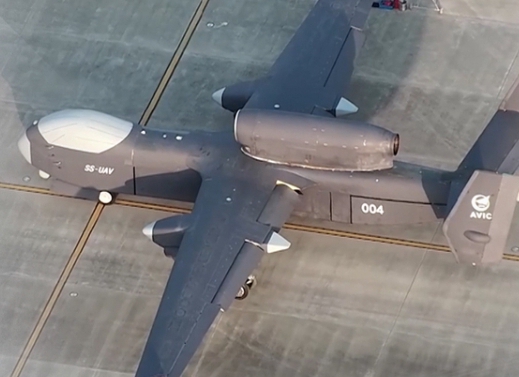
China’s 16-Tonne ‘Drone Mothership’ Makes Maiden Flight
China has successfully conducted the first flight of its domestically developed large unmanned aerial vehicle (UAV) known as “Jiutian”, marking a major step forward in the country’s advanced drone technology. The flight signals the arrival of a new generation of super-large, multi-role unmanned aircraft.
A Giant UAV Designed for Multiple Missions
Named after the ancient Chinese concept meaning “the highest skies,” Jiutian is a general-purpose aerial platform with a maximum takeoff weight of 16 tonnes, making it one of the largest UAVs ever developed in China.
The aircraft features a modular design and can carry a payload of up to 6 tonnes, allowing it to be rapidly reconfigured for a wide range of missions. These include:
Logistics and cargo transport
Forest firefighting
Meteorological operations and weather modification
Emergency response and disaster relief
This flexibility positions Jiutian as a versatile tool for both civilian applications and complex operational scenarios.
A “Drone Mothership” Concept
Beyond civilian use, Jiutian is also regarded as a super-large reconnaissance and strike platform. It is capable of carrying various air-to-air and air-to-ground missiles, significantly expanding its potential military role.
One of its most striking features is a specialized mission bay that allows it to launch, deploy, and coordinate swarms of smaller unmanned combat aerial vehicles (UCAVs). Acting as a “drone mothership,” Jiutian can manage these smaller drones in flight, enabling coordinated reconnaissance, electronic warfare, or strike missions.
This capability represents a fundamental shift in how unmanned systems could be used in future conflicts, emphasizing networked operations, swarm tactics, and extended reach.
A New Chapter in UAV Development
The successful maiden flight of Jiutian demonstrates China’s growing expertise in large-scale unmanned aviation platforms. By combining heavy payload capacity, modular mission design, and drone-swarm deployment, the Jiutian UAV sets a new benchmark for both civilian innovation and next-generation unmanned operations.
As testing and development continue, the aircraft is expected to play an increasingly important role in shaping the future of high-end UAV systems and aerial mission concepts.