Smart Burkina Faso: How Ouagadougou Entered the Era of Smart Security
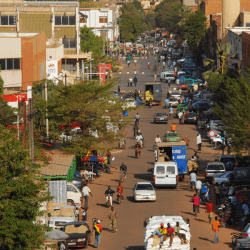
In 2018, Ouagadougou took its first steps into the world of smart cities with the launch of the SafeCity pilot project. Built through a partnership with Huawei Technologies, the initiative started modestly. At the time, it relied on just 45 camera sites, four LTE stations, a data center, and a command center.
Despite its limited scale, the system delivered convincing results. Video surveillance and secure communications quickly proved their value for the Defense and Security Forces. Encouraged by these early successes, the authorities decided to go further.
From Pilot Project to National Vision
Two years later, a ministerial decree officially launched the Smart Burkina Faso project. Unlike the pilot phase, this initiative was designed as a large-scale digital transformation serving national security. The ambition was clear and backed by significant investment, including a national contribution of 5 billion CFA francs.
The project was deployed in Ouagadougou and Bobo-Dioulasso, with results that reflect its scale. Today, the infrastructure includes:
650 km of national backbone
150 km of metropolitan fiber
16 eLTE sites
More than 900 cameras across over 300 locations
A modern data center
Drones
A state-of-the-art command center
As of April 30, 2025, implementation had reached 88.71% for physical infrastructure and 90.65% for budget execution.
Measuring Impact Beyond Infrastructure
Infrastructure alone does not define success. Its real value lies in measurable impact on daily life.
In road safety, more than 1,000 video requisitions have helped clarify accident circumstances and support awareness campaigns. Video surveillance has also become a key tool for traffic management, especially during peak hours.
When it comes to crime prevention, the results are equally striking. Over 70% of robberies recorded in Ouagadougou and Bobo-Dioulasso were captured on camera, significantly easing investigations and leading to faster arrests. Nearly half of previously identified high-crime areas are now considered safer.
The system has also strengthened security during major events such as FESPACO and SIAO, as well as during marches and public rallies, all of which now benefit from enhanced monitoring and coordination.
Strong Acceptance from Forces and Citizens
Perception surveys confirm this transformation. Among Defense and Security Forces, 98% say video surveillance improves their work, and 95% support expanding the system.
Public opinion is similarly positive. Seventy-one percent of citizens report feeling safer, and 92% are aware of the presence of cameras. Notably, 90% believe their privacy is not violated. In a field often marked by sensitivity and mistrust, this level of social acceptance is a strong signal of confidence.
Looking Ahead: Phase 2
With Phase 1 completed in April 2025, attention is now turning to Phase 2. The next stage aims to extend coverage to other regions of the country, integrate artificial intelligence for predictive analysis, and introduce an automated system for detecting and paying traffic fines. Discussions are already underway regarding funding and contractual arrangements.
A Quiet but Profound Shift
The Smart Burkina Faso project reflects a simple yet essential idea: technology does not replace human judgment. It strengthens it. By enabling faster responses, better coordination, and proactive decision-making, digital tools are reshaping how public security operates.
In a security environment marked by complexity and uncertainty, this alliance between innovation and public action is driving a quiet but profound revolution. Burkina Faso now stands among the pioneers in West Africa when it comes to integrating digital technology into security strategies.
Through Smart Burkina Faso, the country shows that it is possible to embrace smart city technologies without sacrificing citizens’ trust—and that security, too, can fully enter the digital age.
List of Burkina Faso Provinces List of Burkina Faso provinces with regions, capitals, and geographic insights. This complete guide explains all 45 provinces in a…
List of Burkina Faso Departments The provinces of Burkina Faso are divided into 351 departments. The well-defined administrative system helps manage its cities, towns, villages,…
World Heritage Sites in Burkina Faso UNESCO World Heritage Sites in Burkina Faso are: W-Arly-Pendjari Complex Ruins of Loropéni Ancient Ferrous Metallurgy Sites of Burkina Faso…
Runways of Burkina Faso airports Details of Burkina Faso airports runways Airport RunwayAribinda AirportGrassArly Airport03/21: 4,400 x 118, grassBanfora Airport03/21: 3,750 x 59, grassBarsalogho Airport05/23: 1,920 x 69, grassBobo Dioulasso Airport06/24: 10,800 x…
Burkina Faso airports and their location coordinates The location coordinates of Burkina Faso airports are: Airport CoordinatesAribinda Airport14°12′55″N 0°53′44″WArly Airport11°35′46.9″N 1°28′49.8″EBanfora Airport10°41′21.7″N 4°43′39.1″WBarsalogho Airport13°24′0.1″N 1°3′48.1″WBobo Dioulasso Airport11°9′35.3″N 4°19′52.4″WBogandé Airport12°58′53.0″N 0°9′45.4″WBoromo Airport closed11°45′51.9″N 2°55′47.4″WBoulsa Airport12°39′28.7″N 0°34′7.6″WDano Airport11°8′17.0″N 3°4′27.5″WDédougou…
Burkina Faso airports codes: ICAO, IATA ICAO and IATA codes of Burkina Faso airports The ICAO codes of Burkina Faso airports are: Airport ICAOAribinda AirportDFOYArly AirportDFERBanfora…
List of Burkina Faso airports Burkina Faso has over 30 airports. Thomas Sankara International Airport, Ouagadougou is the busiest. The airports in Burkina Faso are:…
Most populated regions in Burkina Faso Burkina Faso 5 most populated regions are: Centre Hauts-Bassins Est Centre-Nord Boucle du Mouhoun List of regions by population, from…