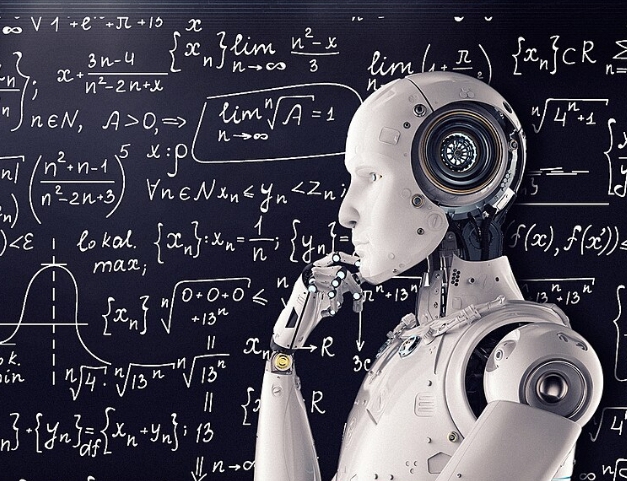
Artificial Intelligence (AI) refers to the capability of machines and computer systems to perform tasks that typically require human intelligence. These tasks include learning, reasoning, problem-solving, decision-making, language understanding, pattern recognition, and perception.
AI has become one of the most transformative technologies of the modern era, influencing industries such as healthcare, education, finance, transportation, manufacturing, entertainment, and communication.
The purpose of this training manual is to provide a clear understanding of AI fundamentals, key concepts, applications, benefits, limitations, and best practices.
What Is AI?
Artificial Intelligence is a branch of computer science focused on creating systems that can simulate human intelligence.
AI systems can:
Analyze data
Learn from experience
Recognize patterns
Make predictions
Automate tasks
Interact with humans
Examples of AI in Daily Life
Voice assistants
Recommendation systems
Navigation applications
Online customer support chatbots
Fraud detection systems
Facial recognition technology
Language translation tools
History of Artificial Intelligence
Early Foundations
The concept of intelligent machines has existed for centuries, but AI as a scientific discipline began in the 1950s.
Major Milestones
1950
Alan Turing proposed the idea of machine intelligence and introduced the Turing Test.
1956
The term “Artificial Intelligence” was officially introduced at the Dartmouth Conference.
1960s–1970s
Researchers developed early problem-solving and reasoning programs.
1980s
Expert systems became popular in business applications.
1997
IBM’s Deep Blue defeated world chess champion Garry Kasparov.
2011
IBM Watson won the television quiz show Jeopardy.
2020s
Generative AI systems became widely available for text, image, audio, and video creation.
Types of Artificial Intelligence
Narrow AI
Also known as Weak AI.
Designed to perform a specific task.
Examples:
Voice assistants
Recommendation engines
Email spam filters
Most AI systems in use today are Narrow AI.
General AI
Also known as Strong AI.
Would possess human-level intelligence across a wide range of activities.
Characteristics:
Reasoning
Learning
Planning
Creativity
Adaptability
General AI has not yet been achieved.
Super AI
A hypothetical form of AI that exceeds human intelligence in all domains.
Potential capabilities include:
Advanced reasoning
Scientific discovery
Strategic planning
Autonomous innovation
Super AI currently remains theoretical.
Core AI Concepts
Machine Learning
Machine Learning (ML) is a subset of AI that allows systems to learn from data without explicit programming.
Instead of following fixed instructions, ML models identify patterns and improve performance through experience.
Common Uses
Product recommendations
Image recognition
Medical diagnosis
Financial forecasting
Deep Learning
Deep Learning is a specialized branch of machine learning that uses neural networks with multiple layers.
Advantages:
Processes large datasets
Learns complex patterns
Powers advanced AI applications
Examples:
Speech recognition
Image generation
Self-driving technology
Neural Networks
Neural networks are computing systems inspired by the structure of the human brain.
They consist of:
Input layer
Hidden layers
Output layer
Neural networks help AI identify patterns and make decisions.
Natural Language Processing
Natural Language Processing (NLP) enables computers to understand, interpret, and generate human language.
Applications include:
Chatbots
Translation tools
Virtual assistants
Text analysis systems
Computer Vision
Computer Vision enables machines to understand visual information.
Applications include:
Facial recognition
Medical imaging
Security monitoring
Autonomous vehicles
How AI Learns
Data Collection
AI systems begin by gathering large amounts of relevant data.
Examples:
Images
Text documents
Videos
Audio recordings
Sensor readings
Training
The AI model studies data and identifies patterns.
Training involves:
Processing examples
Finding relationships
Adjusting internal parameters
Testing
After training, the model is evaluated using new data.
Testing determines:
Accuracy
Reliability
Performance
Deployment
Once validated, the AI model is integrated into real-world applications.
Examples:
Websites
Mobile applications
Business systems
Industrial operations
Categories of Machine Learning
Supervised Learning
Uses labeled data.
Example:
An AI learns to identify cats by studying images already labeled as cats.
Applications:
Classification
Prediction
Risk assessment
Unsupervised Learning
Uses unlabeled data.
The system discovers hidden patterns independently.
Applications:
Customer segmentation
Pattern discovery
Market analysis
Reinforcement Learning
The AI learns through rewards and penalties.
Applications:
Robotics
Gaming
Autonomous systems
Generative AI
What Is Generative AI?
Generative AI creates new content based on learned patterns.
It can generate:
Text
Images
Music
Audio
Video
Computer code
How Generative AI Works
The system is trained on large datasets.
It learns:
Structure
Style
Context
Relationships between data elements
The model then produces original outputs based on user instructions.
Common Uses
Content creation
Marketing
Education
Software development
Research assistance
Customer support
AI Applications Across Industries
Healthcare
Applications include:
Medical imaging analysis
Drug discovery
Disease prediction
Patient monitoring
Education
Applications include:
Personalized learning
Intelligent tutoring
Automated grading
Learning analytics
Finance
Applications include:
Fraud detection
Credit scoring
Trading analysis
Risk management
Manufacturing
Applications include:
Quality control
Predictive maintenance
Process automation
Supply chain optimization
Transportation
Applications include:
Route optimization
Traffic prediction
Fleet management
Autonomous vehicles
Benefits of AI
Increased Efficiency
AI automates repetitive tasks and reduces manual effort.
Improved Accuracy
AI can process large amounts of data with high precision.
Faster Decision-Making
AI systems analyze information rapidly.
Enhanced Productivity
Organizations can accomplish more with fewer resources.
Continuous Operation
AI systems can function 24 hours a day without fatigue.
Limitations of AI
Data Dependency
AI requires large amounts of quality data.
Bias
Poor or unbalanced training data can lead to unfair outcomes.
Lack of Human Judgment
AI cannot fully replicate human intuition, ethics, or emotional understanding.
Security Risks
AI systems may be vulnerable to attacks or misuse.
High Development Costs
Advanced AI projects often require significant investment.
Ethics and Responsible AI
Transparency
Organizations should explain how AI systems make decisions.
Fairness
AI should treat all users equitably.
Privacy
Personal information must be protected.
Accountability
Humans remain responsible for AI decisions and outcomes.
Safety
AI systems should be designed to minimize harm.
AI Terminology
Algorithm
A set of instructions used to solve a problem.
Dataset
A collection of information used for training and testing AI.
Model
A trained AI system capable of making predictions or generating outputs.
Training
The process of teaching an AI system using data.
Prediction
An output generated by an AI model.
Automation
The use of technology to perform tasks with minimal human intervention.
Neural Network
A computational structure inspired by the human brain.
Large Language Model
An AI model trained on vast amounts of text to understand and generate language.
Best Practices for Working With AI
Verify AI-generated information.
Protect sensitive data.
Understand system limitations.
Monitor AI outputs regularly.
Use high-quality training data.
Follow ethical guidelines.
Maintain human oversight.
Continuously evaluate performance.
The Future of AI
Future developments are expected in:
Healthcare innovation
Scientific research
Smart cities
Personalized education
Advanced robotics
Environmental monitoring
Business automation
As AI continues to evolve, organizations and individuals will need to develop AI literacy and responsible usage practices.
Artificial Intelligence is a powerful technology that enables machines to perform tasks traditionally associated with human intelligence. Through machine learning, deep learning, natural language processing, and computer vision, AI has transformed how organizations operate and how people interact with technology. Understanding AI fundamentals is essential for navigating the modern digital world and preparing for future technological advancements.
More
Retirement basics Retirees are given two retirement benefit modes: Programmed Withdrawal (PW) and Retiree Life Annuity (RLA). A retiree is required to…
Nigeria Army Intelligence Corps impact on Nigeria’s national interest or international obligation in support of world peace as provided for in the UN charter.…