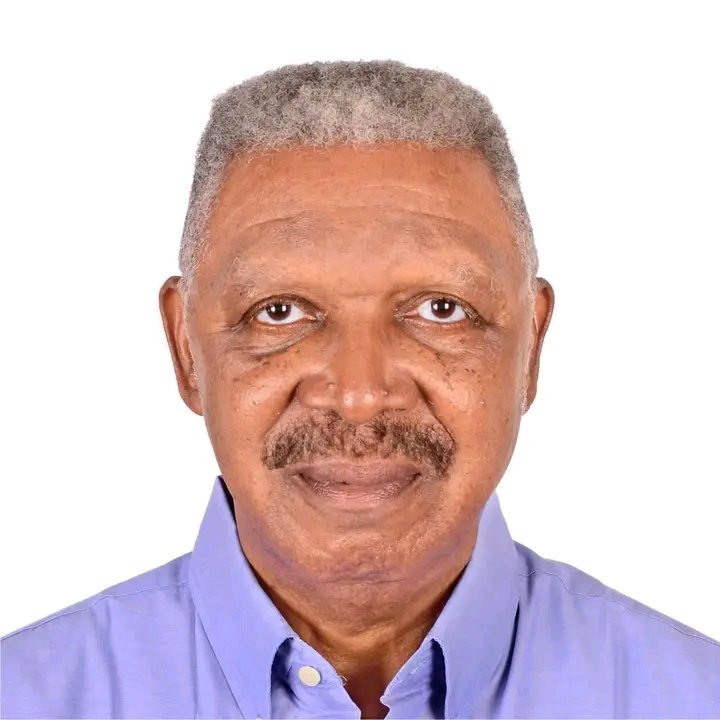
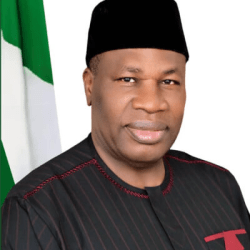
Professor Timothy Terver Iwokwagh Gyuse: A Distinguished Scholar, Urban Planner, Christian Leader and Mentor
Professor Timothy Terver Iwokwagh Gyuse is a distinguished Nigerian academic, urban and regional planner, environmental design expert, Christian minister, and leadership mentor whose career spans several decades of service in education, research, professional development, and Christian mission. His contributions to university education, urban planning, environmental management, institutional development, and spiritual formation have earned him recognition in Nigeria and beyond.
With more than 90 publications to his credit, extensive experience in university administration, and a long record of professional and Christian leadership, Professor Gyuse represents a remarkable blend of intellectual achievement, public service, and personal commitment to developing people and institutions.
From his early education in rural Benue to advanced studies and professional experience in Canada, the United States, and Nigeria, his life reflects a sustained commitment to scholarship, leadership, and service.
Early Life and Educational Foundation
Professor Gyuse was born on December 30, 1948, into the family of Ticha Ezekiel Iwokwagh Gyuse, a schoolteacher with the Dutch Reformed Church Mission (DRCM), and his wife, Esther Shinenge Gyuse. He was the first of their 12 children.
His educational journey began in 1955 at the DRCM Primary School, Mbaakon, where his father served as headmaster. In 1956, he moved with his father to DRCM Naa, also in Vandeikya Local Government Area, following his father’s transfer to develop the mission station.
In 1958, he returned to Mbaakon as a boarding pupil after his father was transferred to DRCM Aku, where Primary Five was not available. At the time, Mbaakon hosted the only DRCM Senior Primary School serving the areas now known as Ushongo, Kwande, Vandeikya, and Konshisha local government areas. Nearly 500 pupils from surrounding schools competed for only 40 available places, making admission highly competitive.
After completing Primary Six, he proceeded to St. Paul’s College, Wusasa, near Zaria, in 1961. The institution was then regarded as one of the leading secondary schools in Northern Nigeria.
He spent seven years at the college, earning his Cambridge University West African School Certificate in 1965 with Division I honours. In 1967, he obtained his London University Higher School Certificate, passing all his papers. He also distinguished himself in extracurricular academic competitions, winning several prizes, including the zonal stage of the national J. F. Kennedy Memorial Essay Competition in 1967.
In 1968, he gained admission to Ahmadu Bello University, Samaru, Zaria, to study Geography, following a brief period of teaching at St. Francis College, Otukpo. He graduated in 1971 with an Upper Second-Class honours degree, finishing at the top of his class.
Advanced Studies and International Professional Experience
Following his outstanding undergraduate performance, Professor Gyuse was retained by Ahmadu Bello University as an Assistant Lecturer in training. In 1972, he proceeded to the University of Calgary in Alberta, Canada, for postgraduate studies.
He earned a master’s degree in Urban Geography in 1974 and subsequently taught Urban Studies at the university as a sessional instructor for one year. He then undertook further studies, completing a Master of Environmental Design (M.E.Des.) degree in 1977, with a concentration in urban design. He also became a member of the Canadian Institute of Planners.
His commitment to research and practical problem-solving was evident even during his postgraduate years. He participated in research on the energy efficiency of public buildings in Canada as part of the Energy Efficiency Group.
After completing his studies, he joined Alberta Transportation, where he served as an Environmental Planner. In that role, he was responsible for advancing the introduction and integration of Environmental Impact Assessments (EIA) into transportation projects in Alberta. He also prepared the brief that supported the formal incorporation of EIA into the province’s transportation planning process.
This experience provided him with valuable international exposure to environmental policy, sustainable development, and evidence-based planning—expertise he later brought to Nigeria’s academic and professional communities.
Academic Career at the University of Jos
Professor Gyuse returned to Nigeria in late 1977 and joined the University of Jos, where he served until 1987, apart from a two-year period of leave of absence between 1982 and 1984.
At the University of Jos, he taught urban design in the Department of Architecture and Planning, alongside related courses in the Department of Geography and Planning. He played an important role in strengthening the university’s planning programmes and expanding postgraduate education.
Among his major contributions was the initiation of the master’s programme in Urban Environmental Management. He was also instrumental in the planning and eventual establishment of the university’s master’s programme in Planning.
Beyond classroom teaching and curriculum development, he undertook several administrative responsibilities, including serving as chairman of the Housing Allocation Committee. His work helped strengthen the university’s capacity to train professionals in urban design, planning, and environmental management.
Research and Policy Development at the National Institute for Policy and Strategic Studies
Between 1982 and 1984, Professor Gyuse served at the National Institute for Policy and Strategic Studies (NIPSS), Kuru, as a Senior Fellow at Reader level and head of the Science and Technology Division.
His work at the institute covered a broad range of urban, social, security, and national development issues. He conducted research on housing, the Land Use Act, and general planning, while also examining security-related developments, including the Maitatsine riots in Bulumkutu, Maiduguri, and Jimeta, Yola.
He also studied the disruptive effects of strikes involving the National Electric Power Authority (NEPA). In addition to leading research within the Science and Technology Division, he lectured participants in the institute’s Senior Executive Courses and coordinated research assignments for the Office of the Head of State.
His experience at NIPSS demonstrated his ability to connect academic research with public policy, governance, national security, and strategic decision-making.
International Academic Leadership in the United States and Asia
Professor Gyuse’s academic and leadership experience extended beyond Nigeria and Canada. In 1999, he moved to New York to serve as Academic Dean of The King’s College, then part of the International Leadership University (ILU), where he also served as a vice president.
As Academic Dean, he was responsible for the overall administration of the college’s academic programmes, reporting to the president, who served as vice chancellor. His responsibilities included staff recruitment, discipline, and accreditation.
He also taught Environmental and Earth Sciences, including Environmental Impact Assessment. His teaching and leadership activities extended to postgraduate Christian leadership education through the International School of Theology (ISOT) in Singapore, an ILU affiliate, as well as its extension programme in Malaysia.
These appointments reflected his multidisciplinary expertise and his capacity to contribute to academic administration, environmental education, and Christian leadership development across international settings.
Transformational Contributions at Benue State University
In 2002, Professor Gyuse returned to Nigeria and joined Benue State University, Makurdi, as Professor of Urban Design and Planning. His tenure at the institution became one of the most significant phases of his academic career.
As Head of the Department of Geography, he introduced master’s and doctoral programmes in systematic areas of Geography, alongside a master’s programme in Environmental Management. He also introduced postgraduate Urban and Regional Planning programmes leading to the Master of Urban and Regional Planning (MURP) and PhD qualifications.
In 2010, the Department of Urban and Regional Planning was established as a separate academic unit. Professor Gyuse designed its academic programme and served as Head of Department, helping to build it into a centre of professional training and academic excellence. The programme secured accreditation from the Town Planners Registration Council of Nigeria (TOPREC).
He also led the development of the five-year Bachelor of Urban and Regional Planning (BURP) programme, which received Senate approval and was verified by the National Universities Commission (NUC). The programme commenced in the 2013/2014 academic session.
His contributions extended to the creation of the Faculty of Environmental Sciences at Benue State University in 2013, where he served as the pioneer Dean.
Through these initiatives, Professor Gyuse helped establish a comprehensive framework for training professionals and researchers in Geography, Urban and Regional Planning, and Environmental Management.
His influence is also evident in the achievements of his former students. Over the years, he has supervised and mentored master’s and doctoral graduates who now work as professional planners in various organisations in Nigeria and abroad. Some have advanced to become professors in their respective fields.
University Administration and Institutional Service
In addition to his teaching, research, and programme-development responsibilities, Professor Gyuse served in several important leadership positions at Benue State University.
He was the pioneer Director of the Centre for Peace and Development Studies, a member of the university Senate, and chairman of numerous Senate committees. He also served as Deputy Director and Acting Director of Consultancy, a member of the Court of Governors of the College of Health Sciences, and a member of the university’s Governing Council.
These responsibilities reflected the confidence placed in his judgement, leadership abilities, and commitment to institutional development.
Contributions to Urban Planning and Professional Development in Nigeria
Professor Gyuse’s professional contributions have extended well beyond the universities where he taught.
In 1979, while at the University of Jos, he was invited to participate in the review of the urban master plans of Plateau State. He also contributed to the review of the Transportation Programme at Kaduna Polytechnic before its implementation.
His academic expertise has been widely sought through external examining and postgraduate assessment. He has served as an external examiner for master’s and doctoral students in Geography, Planning, and Architecture at several Nigerian universities, including the University of Benin, University of Calabar, University of Uyo, Federal University of Technology, Minna, and Ahmadu Bello University, Zaria.
His involvement in professional planning began early. On January 30, 1981, he was elected a full member of the Nigerian Institute of Town Planners (NITP) as a charter member, with membership number MNITP 182. On October 24, 1990, he became a Registered Town Planner (RTP 084), following the establishment of TOPREC by the Federal Government.
As a member of the institute, he contributed to professional education, policy development, and institutional activities. His service included participation in the Education Committee, Sokoto Conference Committee, and Abuja Master Plan Review Committee, as well as numerous seminars and conferences on housing and urban development.
In 2009 and 2010, he chaired the committee responsible for organising the Mandatory Continuing Professional Development Programme (MCPDP) for NITP and TOPREC. He also played a significant role in revitalising the Benue State Chapter of NITP.
In recognition of his contributions to the profession, he was inducted as a Fellow of the Nigerian Institute of Town Planners in 2010, with fellowship number FNITP 190. He is a member of the institute’s Fellows Section Committee and represents Benue State on the Town Planners Registration Council of Nigeria.
He has also served as chairman of TOPREC’s Professional Planning Examination Committee. As of 2026, he serves as chairman of the council’s Accreditation Committee.
His sustained involvement in professional regulation, accreditation, and continuing professional development has contributed to strengthening standards in urban and regional planning in Nigeria.
Christian Missionary Leadership and Institutional Development
Professor Gyuse’s life of service extends beyond academia and professional planning into Christian mission and leadership development.
In 1982, he joined the Great Commission Movement of Nigeria (GCMN), a Christian missionary organisation, as an associate and vocational staff member. In 1986, he took a break from academic teaching to become the full-time director of the organisation’s work in Nigeria.
During his leadership, he completed the design and implementation of the organisation’s two-acre headquarters campus in Jos. He also established Bethany Christian Academy in Barkin Ladi, near Jos, on a 50-acre campus. The school has grown into a recognised Christian secondary school.
He further oversaw the completion of the Agape Centre, an office and training complex in Jos. Under his leadership, the organisation’s Nigerian staff strength grew to more than 90 full-time employees, approximately 80 of whom were Nigerians.
In 1989, he became Director of West African Affairs, with responsibility for more than 300 full-time and associate staff members and 418 volunteers across 10 countries. He pioneered the organisation’s work in The Gambia and Guinea-Bissau.
He also established the West Africa International School of Theology, now known as the Africa Centre for Theological Studies in Lagos, and developed a 7,000-volume library to support its establishment and academic activities.
Professor Gyuse continues to serve on the organisation’s Board of Trustees. Together with his wife, Professor Elizabeth Gyuse, he remains actively involved in leadership development, speaking at leadership, marriage, and family-life conferences.
His missionary work demonstrates his commitment to institution-building, leadership formation, education, and the development of Christian communities across West Africa.
Pastoral Ministry and Church Leadership
Alongside his academic and missionary responsibilities, Professor Gyuse has maintained a long-standing commitment to pastoral ministry within the Anglican Church.
In 1992, he was ordained a deacon in the Anglican Diocese of Jos and was priested in 1993. He subsequently served as Diocesan Missioner for six years, during which he helped double the number of congregations in the diocese.
In 1998, he was preferred to the rank of Canon and received the Diocesan Merit Award in recognition of his service.
He also founded Trinity Chapel, a ministry to the University of Jos community. Within three years, the chapel had grown to nearly 400 students, reflecting his ability to combine spiritual leadership with effective community-building.
In 1999, he was commissioned as a missionary to the Diocese of New York, where he served as a supply priest for three years.
Upon returning to Nigeria in 2002, he resumed missionary work and spent three years serving as a missioner. During this period, he helped establish rural churches, including two congregations where he served as pastor.
In 2003, he was preferred to the rank of Archdeacon, also known as Venerable.
He currently pastors the Church of the Epiphany in New GRA, Makurdi, where his ministry focuses on reaching and nurturing people within an urban community.
His pastoral journey illustrates a lifelong dedication to evangelism, discipleship, church growth, and spiritual formation.
Publications, Research and Intellectual Legacy
Professor Gyuse is a prolific scholar whose publications span academic and spiritual subjects. He has more than 90 titles to his credit, including journal articles, book chapters, conference proceedings, and books.
His research interests and professional contributions encompass urban design, urban and regional planning, environmental management, housing, land use, public policy, and related development issues. His teaching, research, and professional engagements have helped connect academic knowledge with practical challenges in Nigerian society.
Beyond his written work, his intellectual legacy is reflected in the academic programmes he established, the institutions he helped develop, and the generations of planners, researchers, and scholars he has mentored.
His career demonstrates the importance of combining research, professional practice, institutional leadership, and public service to address complex developmental challenges.
Family Life and Personal Values
Professor Gyuse has been married to Professor Elizabeth Gyuse since 1974, a union spanning more than five decades. Their marriage has been marked by shared commitments to education, Christian ministry, leadership development, and service to others.
They have two children. Their son, Terna Iwokwagh, is a journalist based in South Africa. Their daughter-in-law, Dr. Koni Benson Gyuse, is a university lecturer in Cape Town, while their daughter, Ruth Shinenge, is an architect based in New York City.
The couple are grandparents to Sankara and Awra.
Their family life complements Professor Gyuse’s public career, reflecting a shared investment in education, professional achievement, and the development of future generations.
Retirement and Continued Service
On December 30, 2018, Professor Gyuse formally retired from Benue State University upon attaining the age of 70. However, retirement did not mark the end of his professional and intellectual contributions.
He subsequently spent time at Nasarawa State University, where he taught in the Department of Urban and Regional Planning and headed the Department of Environmental Management.
He continues to make his services available to organisations that can benefit from his knowledge and experience. Based in Makurdi, he remains engaged in spiritual formation, professional mentoring, and the development of young urban and regional planners.
His continued involvement in academic and spiritual life reflects his belief that experience and knowledge are best put to use in the service of others.
A Legacy of Scholarship, Leadership and Service
Professor Timothy Terver Iwokwagh Gyuse’s life and career represent an exceptional combination of academic excellence, professional expertise, institutional leadership, missionary commitment, and pastoral service.
From his early education in Benue State to his postgraduate studies and professional experience in Canada, and from university leadership to missionary work across West Africa, he has consistently demonstrated a commitment to developing people, strengthening institutions, and contributing to society.
His contributions to Geography, Urban and Regional Planning, Environmental Management, professional regulation, Christian education, and pastoral ministry have touched numerous individuals and organisations.
Perhaps one of the most enduring aspects of his legacy is the generation of professionals, scholars, church leaders, and young people he has taught, mentored, and inspired.
Even in retirement, Professor Gyuse continues to serve through mentoring, spiritual formation, professional engagement, and the sharing of his knowledge.
Professor Timothy Terver Iwokwagh Gyuse
His story is ultimately one of lifelong learning, purposeful leadership, and service—a reminder that the true measure of a distinguished career lies not only in personal achievements but also in the institutions strengthened, the lives transformed, and the legacy entrusted to future generations.
Profile of Professor David Iornem Professor David Iornem is a distinguished management consultant, university teacher, and prolific author whose influence spans academia, consultancy, and public…
Professor Who is a professor? A professor is a university lecturer of the highest rank. How do you get professor title?…
Professor A professor is a university lecturer of the highest rank. The title is not an academic qualification but a rank…
Benue State Law Courts Christian Fellowship As the Judiciary was growing, the spiritual dimension was also growing. From small prayer sessions conducted in offices, it blossomed…