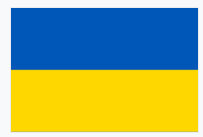
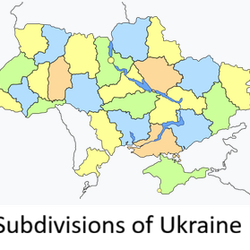
Ukraine is divided into 24 oblasts, the Autonomous Republic of Crimea and two cities with special status, Kyiv and Sevastopol, and most are led by governors appointed by the president.
The list of Ukraine Regions and Governors
No.
Region
Governor
1
Autonomous Republic of Crimea
Olha Kuryshko (presidential representative)
2
Vinnytsia Oblast
Nataliya Zabolotna
3
Volyn Oblast
Roman Romanyuk
4
Dnipropetrovsk Oblast
Oleksandr Hanzha *
5
Donetsk Oblast
Vadym Filashkin
6
Zhytomyr Oblast
Vitaliy Bunechko
7
Zakarpattia Oblast
Myroslav Biletskyi
8
Zaporizhzhia Oblast
Ivan Fedorov
9
Ivano-Frankivsk Oblast
Svitlana Onyshchuk
10
Kyiv Oblast
Tymur Tkachenko *
11
Kirovohrad Oblast
Andriy Raykovych
12
Luhansk Oblast
Oleksii Kharchenko
13
Lviv Oblast
Maksym Kozytskyi
14
Mykolaiv Oblast
Heorhiy Reshetilov (acting) *
15
Odesa Oblast
Oleh Kiper
16
Poltava Oblast
Vitaliy Dyakivnych
17
Rivne Oblast
Oleksandr Koval
18
Sumy Oblast
Oleh Hryhorov
19
Ternopil Oblast
Taras Pastukh
20
Kharkiv Oblast
Oleh Syniehubov
21
Kherson Oblast
Oleksandr Prokudin
22
Khmelnytskyi Oblast
Serhii Tiurin
23
Cherkasy Oblast
Ihor Taburets
24
Chernivtsi Oblast
Ruslan Osypenko
25
Chernihiv Oblast
Vyacheslav Chaus
26
Kyiv (city)
Vitali Klitschko (mayor)
27
Sevastopol (city)
—
A tour of Ukraine’s regions and the people who run them
Ukraine is the largest country lying entirely within Europe, and its 27 first-level regions differ as much as the landscapes between them. Carpathian valleys, black-earth farmland, Dnipro river towns, Black Sea ports and heavy-industry basins all sit inside one country. Each oblast is led by a governor, formally the head of the regional state administration, who is appointed by the president on the Cabinet’s recommendation. Since 2022, many governors also head the regional military administration. Elected regional councils sit alongside them, so the governor and the council are two different jobs.
The west: mountains, old cities and border crossings
Lviv Oblast, led by Maksym Kozytskyi, is the western anchor, with about 2.5 million people and a historic capital whose old town is a UNESCO World Heritage site. To the south, Zakarpattia (Myroslav Biletskyi) is one of the smallest regions at 12,777 km² and borders Slovakia, Hungary and Romania. Ivano-Frankivsk (Svitlana Onyshchuk) and Chernivtsi (Ruslan Osypenko) complete the Carpathian and Bukovinian belt. Chernivtsi is the smallest region of all at 8,097 km², yet it is among the more densely settled, at about 111 people per km². Further north, Volyn (Roman Romanyuk), Rivne (Oleksandr Koval) and Ternopil (Taras Pastukh) combine forest, lakes and a string of small historic towns. Ternopil has only three raions, the fewest of any region alongside Khmelnytskyi and Chernivtsi.
Podillia and the centre: the quiet agricultural heartland
Vinnytsia (Nataliya Zabolotna) and Khmelnytskyi (Serhii Tiurin) form the rolling Podillia farmland. Moving east, Cherkasy (Ihor Taburets) follows the Dnipro and holds Kaniv, where national poet Taras Shevchenko is buried. Kirovohrad (Andriy Raykovych) is one of the emptiest regions at about 37 people per km², and Poltava (Vitaliy Dyakivnych), the site of the 1709 battle, is a mostly agricultural region of 1.37 million people. Zhytomyr (Vitaliy Bunechko) bridges the central belt and the northern forests.
The north: forests, rivers and the Belarus frontier
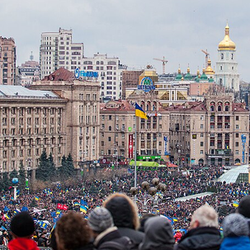
Chernihiv (Vyacheslav Chaus) is the least densely populated region, at roughly 31 people per km² across 31,865 km². Sumy (Oleh Hryhorov) lies further east along the Russian border. Kyiv Oblast, now led by Tymur Tkachenko, wraps around the capital and holds 1.8 million people in 28,131 km². Kyiv itself, with a population of nearly three million packed into 839 km², is a city with special status and by far the densest unit on the map, at about 3,531 people per km². Its mayor, Vitali Klitschko, is elected rather than appointed.
The south: ports, steppe and the lower Dnipro
Odesa Oblast (Oleh Kiper) is the biggest region by area at 33,310 km², with a long Black Sea coast, major ports and 91 hromadas, more than any other region. Mykolaiv (acting governor Heorhiy Reshetilov) is a shipbuilding centre on the Southern Bug. Kherson (Oleksandr Prokudin) and Zaporizhzhia (Ivan Fedorov) sit on the lower Dnipro, and both have had large parts of their territory under Russian occupation since 2022.
The east: industry and the Donbas
Kharkiv (Oleh Syniehubov) is home to Ukraine’s second-largest city, and the oblast has 2.6 million people. Dnipropetrovsk (Oleksandr Hanzha), with 3.1 million, is the second most populous oblast. Donetsk (Vadym Filashkin) is the most populous at about 4.1 million, and with roughly 155 people per km² it is the most densely populated oblast. Its de facto administrative centre is Kramatorsk because Donetsk city has been outside Ukrainian control since 2014. Luhansk (Oleksii Kharchenko) is largely occupied, and its de jure capital is Luhansk.
Crimea and Sevastopol
Russia annexed the Autonomous Republic of Crimea (about 1.97 million people) and the city of Sevastopol (about 386,000) in 2014. Ukraine and most of the international community do not recognise the annexation. Ukraine’s president is represented in Crimea by Olha Kuryshko, and Sevastopol has no Ukrainian governor in the list.
Ukraine Regions Ranked by Area Odesa Oblast is Ukraine’s largest region at 33,310 km², and the 27 regions together cover 603,628 km². The ranking Areas…
World Heritage Sites in Ukraine UNESCO World Heritage Sites in Ukraine are: Kyiv: Saint-Sophia Cathedral and Related Monastic Buildings, Kyiv-Pechersk Lavra L’viv – the Ensemble…
List of Niger State Governors And Deputies The Governors, their Deputies, duration in office and their political parties in Niger State from 1999 are: GovernorDeputy GovernorTook OfficeLeft…
Angola Governors and their provinces, 2024 The Governors of the Provinces of Angola as of January 2024 are: ProvinceGovernorBengoMaria Antónia NelumbaBenguelaLuís Manuel da Fonseca NunesEndPereira AlfredoCabindaMara…
List of Niger State Governors Niger State, located in the north-central geopolitical zone of Nigeria, is the largest state in the country by land area.…