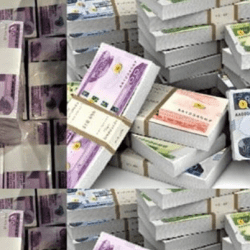
A Guide to the Local Currency in Belarus — Cash, Cards, and What Travelers Should Know
What is the currency of Belarus
The official currency of Belarus is the Belarusian ruble (ISO code: BYN).
Since 1 July 2016, a new version of the ruble has been in circulation, following a redenomination that removed four zeros. Under that reform, 10,000 “old” rubles became 1 “new” Belarusian ruble (BYN).
As of now, the circulating denominations are:
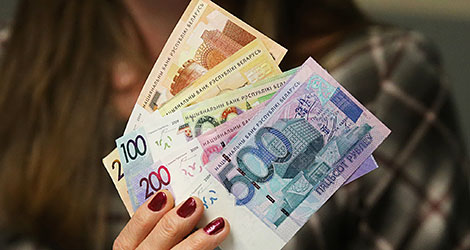
Banknotes: 5, 10, 20, 50, 100, 200, and 500 BYN.
Coins: 1, 2, 5, 10, 20, and 50 kopecks (sub-units), plus 1-ruble and 2-ruble coins.
This introduction of coins — for the first time in modern circulation — came with the 2016 redenomination; before then, only banknotes had been used in common transactions.
All new banknotes and coins are issued by the National Bank of the Republic of Belarus.
Where and how to obtain Belarusian rubles after arriving
Exchange offices and banks
There are plenty of exchange offices (“обменный пункт” / “exchange bureaus”) across Belarus — especially in major cities, near main streets, shopping centers, and transit hubs.
Major banks also provide currency exchange services. Many banks exchange major foreign currencies (notably US dollars and euros, sometimes Russian rubles) into BYN.
It is advised to use official/licensed bureaus or banks — using unlicensed exchangers (or exchanging damaged/marked bills) can result in refusal, or worse.
ATMs and cash withdrawals
In main cities (especially the capital, Minsk), ATMs are widely available — in bank branches, supermarkets, shopping malls, airports, and near tourist areas.
Many travellers report successfully using foreign-issued Visa or MasterCard cards to withdraw BYN. For example, on public forums some travellers say:
“Visa and Mastercard cards work normally in Belarus.” “Foreign cards don’t work at merchants which use sanctioned banks … You can also exchange dollars and euros nearly everywhere.”
Others caution that card acceptance can be inconsistent, depending on which bank operates the ATM or point-of-sale terminal:
“Some banks got sanctioned… Some terminals may reject foreign cards.”
Because of these limitations, many travellers carry cash (USD or EUR) on arrival, then exchange to BYN soon after arrival at a bank or exchange office — this tends to be more reliable than relying solely on cards.
Using cards — debit, credit and local cards in Belarus
In urban areas, many hotels, shops, restaurants, and larger businesses accept bank cards — including cards under international payment systems (notably Visa and Mastercard.
However — especially outside big cities — card acceptance may be limited. Some banks or retailers may not accept foreign-issued cards, or may charge high fees/commissions.
As an additional caveat: online or digital payment systems may also be unreliable, depending on banking sanctions or restrictions.
Because of these uncertainties, many locals use either:
Domestic bank cards (issued by Belarusian banks), or
Cash (BYN) for everyday purchases — especially in small shops, markets, public transport, taxis, and in rural areas.
Traveler’s cheques, and alternative payment/token systems
Traditional traveller’s cheques (e.g., American Express traveler’s checks) are no longer a practical option in Belarus — their sale and redemption are generally discontinued. This reflects global decline in traveller’s cheque usage.
For public transport in major cities (metro, buses, trams), special tokens or transport-cards are commonly used instead of coins. Tickets or transport cards are typically purchased at stations and from kiosks.
For vending machines, café machines, public phones (if available) — coins, tokens or local cards are used. Because coin usage is now enabled (since 2016), small transactions are more convenient than before.
Practical Advice for Visitors
Do not expect to get BYN outside Belarus — exchange it only after arrival. Foreign banks rarely stock Belarusian rubles.
Bring a mix of payment options: some cash (USD or EUR) to exchange upon arrival, plus an international debit/credit card as backup.
When exchanging cash, use official banks or licensed exchange offices and present a valid passport — avoid informal “street” exchangers.
If using cards: prefer ATMs of major banks in cities, and double-check with your card-issuing bank about international withdrawals in Belarus (especially if sanctions may apply).
Always carry some BYN in cash for day-to-day needs like public transport, small shops, markets, tipping, taxis — especially outside main cities where card infrastructure may be unreliable.
The Belarusian monetary system — with the current BYN ruble, a full set of coins, practical banknote denominations and growing ATM and card infrastructure — is functional for foreign travellers. That said, due to some banks not accepting foreign cards or imposing extra fees (especially in smaller towns), a pragmatic combination of cash (in BYN or exchangeable foreign currency) with a backup card remains the safest approach when travelling in Belarus.
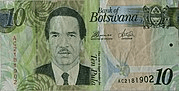
Botswana capital and currency The capital of Botswana is Gaborone and the currency is Pula. Gaborone (pronounced GAH-bə-ROH-nee) is also largest city of Botswana…
Botswana currency Pula is the currency of Botswana. It has the ISO 4217 code BWP and is subdivided into 100 thebe. Pula…
Pula, Botswana currency Botswana’s unit of currency is the Pula (BWP), which is divided into 100 Thebe (t). Major credit cards, including VISA,…
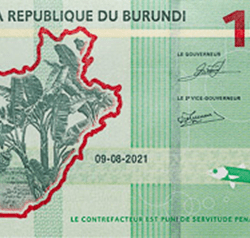
Burundi currency Burundi’s currency is the Burundian franc. It is subdivided into 100 centimes. Burundian franc is controlled by Bank of the…
Nigeria 1959 Currency On 1st July, 1959 the Central Bank of Nigeria issued the Nigerian currency notes in the denominations of Five (5)…
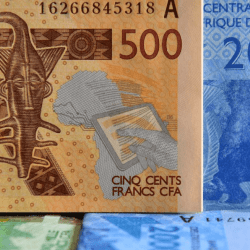
XOF currency country There are 8 XOF currency countries, namely: Benin Burkina Faso Côte d’Ivoire Guinea-Bissau Mali Niger Senegal Togo Those countries use…
Ethiopia currency The currency of Ethiopia is Birr. It is the official currency and primary unit of exchange in Ethiopia. The Birr…
Which currency is used in Ethiopia Birr is the currency that is officially used in Ethiopia. It is the primary unit of exchange in the country.…
XAF currency country There are 6 Central Africa Franc countries, namely: Cameroon Central African Republic Chad Republic of the Congo Equatorial Guinea Gabon…