Bolivia has a total population of 11,365,333 people, with a nearly equal gender distribution: 5,682,498 men and 5,682,835 women. This balance reflects a stable demographic structure at the national level.
Population Count by Department (Bolivia)
Department
Total Population
Men
Women
Total (Bolivia)
11,365,333
5,682,498
5,682,835
Chuquisaca
606,027
299,161
306,866
La Paz
3,030,917
1,504,480
1,526,437
Cochabamba
2,016,357
993,286
1,023,071
Oruro
571,471
282,808
288,663
Potosí
861,292
433,507
427,785
Tarija
534,210
264,496
269,714
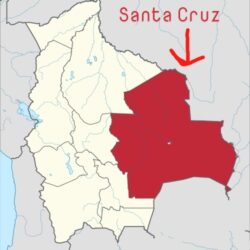
Santa Cruz(Holy Cross)
3,122,605
1,582,326
1,540,279
Beni(Me)
488,260
251,595
236,665
Pando
134,194
70,839
63,355
Notes
“Holy Cross” is the English translation of Santa Cruz
“Me” corresponds to the Beni department
Women slightly outnumber men at the national level
Santa Cruz and La Paz are the most populous departments
Population of Bolivia by Department
Most Populated Departments
Santa Cruz is the most populous department with 3.12 million people, driven by economic growth, migration, and urban expansion.
La Paz follows closely with 3.03 million inhabitants, remaining a major political, cultural, and administrative center.
Cochabamba, with 2.02 million residents, serves as a central hub for agriculture and internal trade.
Together, these three departments account for over 70% of Bolivia’s population, highlighting a strong concentration in key urban and economic regions.
Mid-Sized Population Centers
Potosí (861,292) and Chuquisaca (606,027) have moderate populations, shaped by historical mining activity and administrative importance.
Oruro (571,471) and Tarija (534,210) show balanced gender ratios and steady demographic patterns.
Least Populated Departments
Beni (488,260) and Pando (134,194) are the least populated, largely due to their geographic isolation, extensive forested areas, and lower population density.
Gender Distribution
Women slightly outnumber men nationally and in most departments.
Departments like Santa Cruz and Beni show a slightly higher male population, reflecting labor migration patterns.
Bolivia’s population distribution reveals a contrast between densely populated highland and eastern economic centers and sparsely populated Amazonian regions. Urbanization, economic opportunity, and geography continue to shape internal migration and demographic trends across the country.
List of ethnic groups in Bolivia Major Ethnic Groups in Bolivia are Mestizo (mixed Indigenous and European ancestry) Indigenous peoples White / European-descended Bolivians Afro-Bolivians Major…
Bolivia 37 Official Languages and Others Official Languages of Bolivia (37) (Recognized by the 2009 Constitution) Spanish (Castilian) Aymara Quechua Araona Baure Bésiro (Chiquitano) Canichana Cavineño…
World Heritage Sites in Bolivia UNESCO World Heritage Sites in Bolivia are: City of Potosí Jesuit Missions of the Chiquitos Historic City of Sucre Fuerte…
Most Populated Departments of Bolivia The most populated departments of Bolivia, ranked from highest to lowest population Most Populated Departments of Bolivia are Santa Cruz…
Pool Department, Republic of Congo The Pool Department is an essential administrative and geographical division in the Republic of Congo. It surrounds the Pool Malebo,…
Cuvette Department, Republic of Congo The Cuvette (Bowl) Department of the Republic of Congo is one of the country’s administrative regions, often described as a…