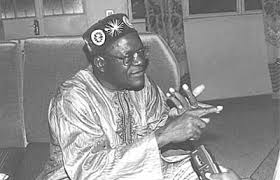
Ethnic Groups of Burkina Faso with Population Percentages
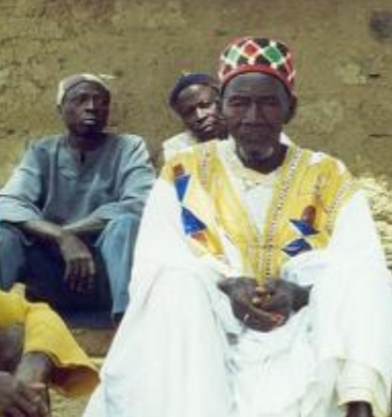
Burkina Faso is a culturally rich West African nation whose identity is deeply shaped by its ethnic diversity. With a population of around 23 million people, the country is home to numerous ethnic communities that have coexisted for centuries. These groups contribute to Burkina Faso’s traditions, social structures, agriculture, music, and political history, making ethnicity a central element of national life.
Major Ethnic and Cultural Groupings
Burkina Faso’s population broadly belongs to two major West African cultural groups:
Voltaic (Gur) peoples
Mandé peoples, whose shared trade language is Dioula
Together, these two groups form the backbone of the country’s ethnic composition, although many smaller communities also play an important role in shaping society.
The Mossi: The Largest Ethnic Group
The Mossi are the largest ethnic group in Burkina Faso, accounting for about 53.7% of the population.
Historical Origins
The Mossi trace their ancestry to warrior groups who migrated from northern Ghana around 1100 AD. Over time, they established powerful kingdoms in central Burkina Faso, most notably the Mossi Empire, which endured for more than 800 years.
Political and Cultural Influence
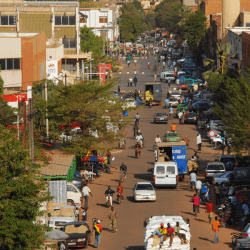
The Mossi are predominantly farmers and have historically maintained a strong centralized political system. Their traditional authority is symbolized by the Mogho Naba, the emperor of the Mossi, whose royal court remains in Ouagadougou, the capital city. Even today, the Mogho Naba holds significant cultural and ceremonial importance.
Other Major Ethnic Groups in Burkina Faso
Beyond the Mossi majority, Burkina Faso is home to many other ethnic communities, each with distinct traditions, languages, and livelihoods.
Key Ethnic Groups (2021 Estimates)
Ethnic Group
Percentage of Population
Mossi
53.7%
Fulani (Peuhl)
6.8%
Gurunsi
5.9%
Bissa
5.4%
Gurma
5.2%
Bobo
3.4%
Senufo
2.2%
Lobi
1.5%
Tuareg/Bella
0.1%
Other ethnic groups
12.8%
Foreign population
0.7%
Fulani (Peuhl)
The Fulani, also known as Peuhl, are traditionally pastoralists and are widely spread across West Africa. In Burkina Faso, they mainly inhabit northern regions, where cattle herding remains a key part of their cultural identity.
Gurunsi, Gurma, and Bissa Peoples
Gurunsi communities are found mainly in the south-central regions and are known for their distinctive painted architecture and rich spiritual traditions.
Gurma peoples primarily live in the eastern part of the country and maintain strong ties to ancestral customs.
Bissa, concentrated in southern areas, are traditionally farmers and traders, contributing significantly to local economies.
Bobo and Senufo Communities
The Bobo, located mainly in western Burkina Faso, are renowned for their masked dances and artistic heritage.
The Senufo, found in the southwest, share cultural ties with neighboring Côte d’Ivoire and Mali, particularly in music, sculpture, and initiation rites.
Minority and Nomadic Groups
Smaller groups such as the Lobi and Tuareg/Bella add further depth to Burkina Faso’s ethnic landscape. The Tuareg/Bella, though a very small percentage of the population, have historically been nomadic, navigating the Sahelian regions of northern Burkina Faso.
Foreign Communities
Burkina Faso also hosts a small foreign population (about 0.7%), including approximately 5,000 Europeans. These communities are mainly concentrated in urban centers and are involved in diplomacy, development work, education, and business.
Ethnic Diversity and National Identity
Despite its many ethnic groups, Burkina Faso has a strong sense of national unity. Interethnic coexistence, shared markets, and multilingual communication—especially through languages like Mooré and Dioula—help bridge cultural differences. Ethnic diversity is widely viewed as a strength rather than a division.
The ethnic groups of Burkina Faso reflect centuries of migration, kingdom-building, trade, and cultural exchange. From the historically dominant Mossi kingdoms to nomadic Fulani herders and artisan Bobo communities, each group contributes a vital thread to the nation’s social fabric.
More
Burkina Faso ethnic groups Burkina Faso’s people belong to two major West African ethnic groups: the Voltaic and the Mandé (whose common language is…
Burkina Faso Burkina Faso is a country in West Africa. It is bordered by Mali to the northwest, Niger to the northeast,…
Burkina Faso capital Burkina Faso’s capital is Ouagadougou [Wagadugu]. The city is also the economic centre of the country. Ouagadougou has one of…
Burkina Faso language Although Burkina Faso is a multilingual country, the official language is French. it is the principal language for administrative, political…
Burkina Faso gold mining Mining of gold in Burkina Faso grew fast with more than 15 discoveries made since 2006. In 2017 mining company…
List of Burkina Faso regions and capitals Burkina Faso has 13 states (regions) namely: Boucle du Mouhoun Cascades Centre Centre-Est Centre-Nord Centre-Ouest Centre-Sud Est Hauts-Bassins Nord Plateau-Central…
What was the original name of Burkina Faso The original name of Burkina Faso was Upper Volta. Burkina Faso previously known officially as Republic of Upper Volta (1958–1984)…
How many states are in Burkina Faso There are 13 states (regions) in Burkina Faso, namely: Boucle du Mouhoun Cascades Centre Centre-Est Centre-Nord Centre-Ouest Centre-Sud Est Hauts-Bassins…
List of Burkina Faso regions There are 13 regions (states) in Burkina Faso namely: Boucle du Mouhoun Cascades Centre Centre-Est Centre-Nord Centre-Ouest Centre-Sud Est Hauts-Bassins…
Burkina Faso map Maps of Burkina Faso Burkina Faso indicated with red color Burkina Faso, its major towns and neighboring areas Burkina Faso…
Burkina Faso meaning Burkina Faso means ‘Land of incorruptible people’ The country was previously known as Republic of Upper Volta. It was renamed…
Burkina Faso ministers, 2024 List of government ministers in Burkina Faso as of 2024 His Excellency Sir Appolinaire Joachimson KYELEM of TambélaThe Prime Minister…
List of Burkina Faso ministers List of Burkina Faso government ministers, 2024 His Excellency Sir Appolinaire Joachimson KYELEM of TambélaThe Prime Minister Colonel Major Kassoum…
Most populated regions in Burkina Faso Burkina Faso 5 most populated regions are: Centre Hauts-Bassins Est Centre-Nord Boucle du Mouhoun List of regions by population, from…
Least populated regions in Burkina Faso Burkina Faso 5 least populated regions are: Centre-Sud Cascades Sud-Ouest Plateau-Central Sahel List of regions by population, from least to…
List of Burkina Faso airports Burkina Faso has over 30 airports. Thomas Sankara International Airport, Ouagadougou is the busiest. The airports in Burkina Faso are:…