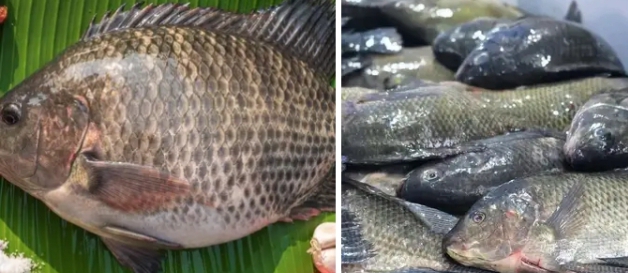
Tilapia farming continues to grow worldwide due to its fast growth rate, adaptability, and strong market demand. However, one critical factor determines success more than any other: proper feeding at each life stage. Using the correct feeding formulas improves survival, accelerates growth, reduces waste, and lowers production costs.
1. Fresh (0–1 g)
Type of feed: micronized powder or finely ground fishmeal.
Crude protein: 40–45%.
Fat: 8–10%.
Feeding rate: 30–10% of body weight/day.
Frequency: 6–8 feedings/day.
Goal: to ensure maximum survival and a rapid start.
Objective: To build resistance and prepare for transfer to tanks or cages.
Juveniles (20–100 g)
Feed type: 2–3 mm pellets.
Crude protein: 28–30%.
Fat: 5–6%.
Feeding rate: 4–3% of body weight/day.
Frequency: 2 meals/day.
Objective: To optimize feed conversion and minimize costs.
Adults (100–250 g and over)*
Feed type: 3–4 mm pellets.
Crude protein: 20–25%.
Fat: 4–5%.
Feeding rate: 3–2% of body weight/day.
Frequency: 2 feedings/day.
Objective: to maximize meat yield and prepare for market.
Key points to remember
High protein initially to support rapid growth.
Gradual reduction in protein and increase in energy with age.
Feeding frequency decreases as the fish grows.
Particle size adapted to mouth size to avoid waste.
Why Age-Specific Feeding Matters in Tilapia Farming
Tilapia nutritional needs change as they grow. Young fish require high protein for tissue development, while older fish need balanced energy to improve feed conversion efficiency.
Incorrect feeding can lead to:
Slow growth
High mortality
Feed wastage
Poor meat quality
Applying age-appropriate feeding strategies ensures optimal performance and profitability.
1. Fresh Tilapia (0–1 g)
Feed Characteristics
Type of feed: Micronized powder or finely ground fishmeal
Crude protein: 40–45%
Fat: 8–10%
Feeding Management
Feeding rate: 30–10% of body weight per day
Frequency: 6–8 feedings per day
Primary Goal
At this stage, the digestive system is still developing. The goal is maximum survival and rapid early growth. Fine particles allow easy ingestion and digestion while preventing starvation.
Expert Tip: Maintain stable water temperature and excellent oxygen levels to support high feeding frequency.
2. Fry Stage (1–5 g)
Feed Characteristics
Type of feed: Crumbles or 1–1.5 mm pellets
Crude protein: 35–40%
Fat: 7–8%
Feeding Management
Feeding rate: 10–6% of body weight per day
Frequency: 4 feedings per day
Primary Goal
This stage focuses on uniform and rapid growth. Consistent feeding prevents size variation and reduces the risk of cannibalism or stunting.
Best Practice: Use floating feed to monitor consumption and reduce waste.
3. Fingerlings (5–20 g)
Feed Characteristics
Feed type: 1.5–2 mm floating or sinking pellets
Crude protein: 30–35%
Fat: 6–7%
Feeding Management
Feeding rate: 6–4% of body weight per day
Frequency: 3–4 meals per day
Primary Objective
At this stage, fish develop stronger immune systems and body structure. The aim is to build resistance and prepare fish for transfer to grow-out systems such as tanks, ponds, or cages.
4. Juveniles (20–100 g)
Feed Characteristics
Feed type: 2–3 mm pellets
Crude protein: 28–30%
Fat: 5–6%
Feeding Management
Feeding rate: 4–3% of body weight per day
Frequency: 2 meals per day
Primary Objective
The focus shifts to feed conversion efficiency. Fish grow rapidly but require less protein as muscle development stabilizes.
Cost-Saving Tip: This is the stage where optimized feeding significantly reduces production costs.
5. Adult Tilapia (100–250 g and Over)
Feed Characteristics
Feed type: 3–4 mm pellets
Crude protein: 20–25%
Fat: 4–5%
Feeding Management
Feeding rate: 3–2% of body weight per day
Frequency: 2 feedings per day
Primary Objective
The final goal is to maximize meat yield and prepare fish for market. Overfeeding at this stage increases fat deposition and reduces profitability.
Key Points to Remember in Tilapia Feeding
High protein levels are essential during early life stages
Protein requirements decrease as fish grow
Feeding frequency declines with age
Pellet size must match mouth size to prevent waste
Monitor feeding behavior daily to adjust rations
These FEEDING FORMULAS FOR TILAPIA ACCORDING TO AGE are widely accepted benchmarks in intensive aquaculture systems worldwide.
1. How often should tilapia be fed daily?
It depends on age. Fresh fry require up to 8 feedings per day, while adults need only 2.
2. Can I use the same feed for all tilapia sizes?
No. Pellet size and protein levels must match fish size and growth stage.
3. What happens if protein levels are too low?
Low protein causes slow growth, weak immunity, and poor feed efficiency.
4. Is floating feed better than sinking feed?
Floating feed allows monitoring and reduces waste, especially in ponds and cages.
5. How do I calculate feeding rate accurately?
Weigh a sample of fish weekly and adjust feeding percentages accordingly.
6. Are these feeding formulas suitable for intensive farming?
Yes. These formulas are standard references for intensive and semi-intensive aquaculture systems.
Proper feeding is the backbone of profitable tilapia farming. By applying FEEDING FORMULAS FOR TILAPIA ACCORDING TO AGE, farmers can improve survival rates, achieve faster growth, reduce costs, and deliver high-quality fish to the market.
Consistent monitoring, correct pellet size, and balanced nutrition make all the difference between average and outstanding results.
Affar Population according to Zone and Wereda Population of Affar Region, Ethiopia, according to Zone and Wereda AREAPOPULATION ZONE 1641,584Dubti127,415Elidar116,100Asayita86,781Afambo32,533Mile136,349Chifra130,337Kori39,948 Zone 2489,698Erebti46,278Kunoba74,580Abala62,660Megale37,549Berahile110,469Dalol111,568Afdera46,594 Zone 3328,636Amibara118,688Awash Fentale60,399Gewane48,481Dulacha28,498Bure Mudayitu41,370Argoba Liyu31,200…
OROMIA Population according to Zone and Wereda Population of OROMIA Region, Ethiopia, according to Zone and Wereda OROMIA Region40,884,000 • West Wellega-Zone2,030,772Menesibu189,822Nejo204,670Gimbi106,075Lalo Asabi115,314Kiltu Kara77,613Boji Dirmeji66,397Guliso105,262Jarso71,780Kondala139,169Boji Chekorsa70,590Babo Gambel88,824Yubdo57,002Genji87,545Haru99,306Nole…
SOMALI Population according to Zone and Wereda Population of SOMALI Region, Ethiopia, according to Zone and Wereda SOMALI REGION6,657,000• Shinile-Zone685,803Ayisha87,137Denbel123,638Shinile154,493Erer116,606Mulo106,046Afdem97,884• Jijiga-Zone1,460,620Babile114,664Gursum41,155Jijiga428,759Awubere507,606Kebri Beyah248,569Harshin119,866• Degehabur-Zone715,117Degehamedo86,326Degehabur174,882Aware144,337Gashamo141,652Gunagudo167,920• Warder-Zone456,149Danot69,884Boh153,548Geladin145,728Warder86,990• Korahe-Zone468,210Shekosh72,967Kebridehar205,016Shilabo85,585Debewoin104,641• Fik-Zone519,203Selehad50,414Fik193,738Gerbo68,023Hamero89,374Segeg36,108Dihun37,321Legehida26,057Meyu Muluke18,169•…
BENISHANGUL-GUMUZ Population according to Zone and Wereda Population of BENISHANGUL-GUMUZ Region, Ethiopia, according to Zone and Wereda BENISHANGUL-GUMUZ Region1,251,000• Metekel Zone441,297Dangur80,442Guba24,323Wenbera91,288Mandura68,373Dibate103,620Bulen73,253• Asossa-Zone492,344Menge56,893Kurmuk23,818Asossa183,172Sherkole35,276Bambasi81,987Odabuldi-Guli79,982Homesha31,214• Kemashi Zone163,937Yaso19,819Sirba Abay29,198Kemashi34,409Agelo Meti34,638Belojegonfoy45,874• Pawe…
SNNP (Southern Nations, Nationalities and Peoples) Population according to Zone and Wereda Population of SNNP (Southern Nations, Nationalities and Peoples) Region, Ethiopia, according to Zone and Wereda SNNP Region13,044,044• Gurage-Zone1,870,368Kebena69,262Abeshge81,222Ezha117,812Kokir Gedabano126,271Sodo198,545Mesekan222,876Mareko95,509Endegagn66,159Gumer110,392Cheha166,715Enemorna Ener231,652Muhor…
South West Population according to Zone and Wereda Population of South West Region, Ethiopia, according to Zone and Wereda South West Region4,197,164• South Omo-Zone822,458Selamago38,678Debub Ari324,464Semen Ari92,679Hamer83,533Bena Tsemay73,206Dasenech73,220Male113,353Nyangatom23,326• Sheka-Zone314,447Masha64,082Anderacha35,615Yeki214,749•…
SIDAMA Population according to areas Population of SIDAMA Region, Ethiopia, according to its administrative areas SIDAMA REGION5,301,868Shebedino326,871Hawassa Zuria164,591Arbegona189,625Dale366,034Aleta Wendo282,689Dara221,180Hula180,426Bensa348,682Aroresa229,547Boricha346,371Gorche143,891Malga151,146Wensho121,596Loko Abeya132,781Chere162,774Bursa140,444Cheko229,623Bona Zuria169,262Wendo Genet240,182Hawassa City577,075 • Population…
GAMBELLA Population according to Zone and Wereda Population of GAMBELLA Region, Ethiopia, according to Zone and Wereda GAMBELLA Region525,000• Agnewak-Zone204,358Gambella Zuria 16,108Abobo 27,045Gog 30,468Jor 13,828Dima 13,770Gambella 103,139• Nuwer-Zone172,105Lare 51,906Jikawo 52,330Wantawa 32,753Akobo 35,117• Mezhenger-Zone91,407Godare 62,917Mengesh 28,489• Etang Special Zone57,132Etang 57,132 Ethiopia…
ADDIS ABABA Population according to its Sub Cities Population of ADDIS ABABA Region, Ethiopia, according to its sub cities ADDIS ABABA3,945,000Nefas Silk-Lafto-Sub City455,500Kolfe Keraniyo-Sub City617,526Gulele-Sub City385,332Lideta-Sub City290,466Kirkos-Sub City318,634Arada-Sub…
DIRE DAWA Population according to Zone and Wereda Population of DIRE DAWA Region, Ethiopia, according to Zone and Wereda DIRE DAWA551,000• SPECIAL ENUMERATION AREAS142,000Moyale Special Census Wereda77,150Afdem Special…
Imo LGAs according to senatorial districts Okigwe Senatorial District Ehime Mbano Ihitte/Uboma Isiala Mbano Obowo Okigwe Okigwe Onuimo Orlu Senatorial District Ideato North Ideato South Isu…