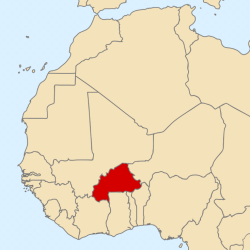
Languages of Burkina Faso: Population size per language, geographic distribution
Burkina Faso is one of West Africa’s most linguistically diverse countries. With an estimated 69 languages spoken nationwide, the country reflects a deep cultural mosaic shaped by history, migration, and ethnic identity. While French and English play administrative roles, indigenous languages remain central to daily life, community ties, and cultural expression.
A Multilingual Nation at Heart
Burkina Faso is officially recognized as a multilingual country, with around 60 indigenous languages spoken across its regions. These languages belong mainly to the Niger-Congo and Afroasiatic language families and are closely linked to ethnic groups and geographic areas.
In December 2023, the government announced a major linguistic shift: national languages were elevated to official status, while French was reclassified as a working language, alongside English. This move underscored the country’s desire to strengthen cultural identity and reduce reliance on colonial-era structures.
Most Widely Spoken Native Languages
According to the 2006 census, the most commonly spoken native languages in Burkina Faso include:
Language
Percentage of Population
Mooré
40.5%
Fula
9.3%
Gourmanché
6.1%
Bambara
4.9%
Bissa
3.2%
Bwamu
2.1%
Dagara
2.0%
San
1.9%
Lobiri
1.8%
Lyélé
1.7%
Bobo
1.4%
Sénoufo
1.4%
Nuni
1.2%
Dafing
1.1%
Tamasheq
1.0%
Kassem
0.7%
Gouin
0.4%
Dogon
0.3%
Songhai
0.3%
Gourounsi
0.3%
Ko
0.1%
Koussassé
0.1%
Sembla
0.1%
Siamou
0.1%
Other national languages
5%
Other African languages
0.2%
French
1.3%
Other non-indigenous languages
0.1%
Mooré: The Dominant Language
Mooré, spoken by the Mossi people, is by far the most widely used language in Burkina Faso. Spoken by about half of the population, it is especially dominant in the central region, including the capital city, Ouagadougou. Mooré serves as a key lingua franca in markets, local administration, and everyday communication.
Regional Language Distribution
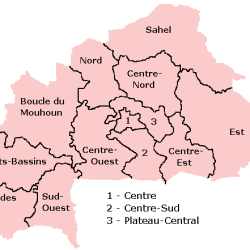
Language use in Burkina Faso often follows regional patterns:
Western Burkina Faso Dominated by Mandé languages, particularly Dyula (Dioula/Jula), which functions as a major trade language. Other languages include Bobo, Samo, and Marka.
Northern regions Fula (Fulfulde) is widespread, reflecting pastoralist communities and cross-border ties.
Eastern regions Gourmanché is the primary language, closely tied to local identity.
Southern regions Bissa is commonly spoken, alongside several smaller languages.
The Role of French and English
French, introduced during the colonial period, has long been the language of education, government, and formal communication. Although no longer an official language as of 2023, it remains a working language, particularly in administration and international affairs. English, while less commonly spoken, is gaining importance in diplomacy and regional cooperation.
Preserving Linguistic Heritage
Burkina Faso’s linguistic diversity is both a cultural strength and a challenge. Efforts to promote national languages in education, media, and governance aim to preserve heritage while improving inclusion. Radio broadcasts, literacy programs, and local-language schooling play a vital role in keeping these languages alive for future generations.
The languages of Burkina Faso tell a powerful story of identity, resilience, and cultural pride. From Mooré spoken in bustling city markets to lesser-known languages preserved in rural communities, each language adds a unique voice to the nation’s collective heritage. As Burkina Faso continues to redefine its linguistic policies, its rich multilingual character remains one of its greatest cultural assets.
Burkina Faso language Although Burkina Faso is a multilingual country, the official language is French. it is the principal language for administrative, political…
Languages of Bauchi State per Local Government Area The languages spoken in Bauchi State per Local Government Area (LGA) are as follows: LGALanguagesAlkaleriDass; Bole; Duguri; Giiwo; Guruntum-Mbaaru; Labir;…
Languages of Yobe State per LGA Yobe has many culturally distinct but homogenous ethnic groups. Those ethnic groups speak various languages. The languages include Manga, Kanuri,…
Burkina Faso Burkina Faso is a country in West Africa. It is bordered by Mali to the northwest, Niger to the northeast,…
Burkina Faso capital Burkina Faso’s capital is Ouagadougou [Wagadugu]. The city is also the economic centre of the country. Ouagadougou has one of…
Burkina Faso gold mining Mining of gold in Burkina Faso grew fast with more than 15 discoveries made since 2006. In 2017 mining company…
Burkina Faso ethnic groups Burkina Faso’s people belong to two major West African ethnic groups: the Voltaic and the Mandé (whose common language is…
List of Burkina Faso regions and capitals Burkina Faso has 13 states (regions) namely: Boucle du Mouhoun Cascades Centre Centre-Est Centre-Nord Centre-Ouest Centre-Sud Est Hauts-Bassins Nord Plateau-Central…
What was the original name of Burkina Faso The original name of Burkina Faso was Upper Volta. Burkina Faso previously known officially as Republic of Upper Volta (1958–1984)…
How many states are in Burkina Faso There are 13 states (regions) in Burkina Faso, namely: Boucle du Mouhoun Cascades Centre Centre-Est Centre-Nord Centre-Ouest Centre-Sud Est Hauts-Bassins…
List of Burkina Faso regions There are 13 regions (states) in Burkina Faso namely: Boucle du Mouhoun Cascades Centre Centre-Est Centre-Nord Centre-Ouest Centre-Sud Est Hauts-Bassins…
Burkina Faso map Maps of Burkina Faso Burkina Faso indicated with red color Burkina Faso, its major towns and neighboring areas Burkina Faso…
Burkina Faso meaning Burkina Faso means ‘Land of incorruptible people’ The country was previously known as Republic of Upper Volta. It was renamed…
Burkina Faso ministers, 2024 List of government ministers in Burkina Faso as of 2024 His Excellency Sir Appolinaire Joachimson KYELEM of TambélaThe Prime Minister…