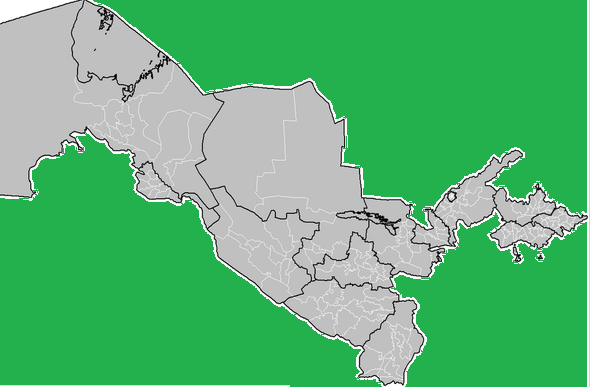
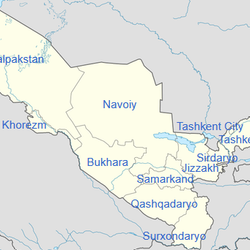
All 175 districts, numbered within each region as follows:
Karakalpakstan (16)
Amudaryo
Beruniy
Boʻzatov
Qanlikoʻl
Qoraoʻzak
Kegeyli
Qoʻngʻirot
Moʻynoq
Nukus
Taxiatosh
Taxtakoʻpir
Toʻrtkoʻl
Xoʻjayli
Chimboy
Shumanay
Ellikqalʼa
Xorazm (11)
Bogʻot
Gurlan
Xonqa
Hazorasp
Xiva
Qoʻshkoʻpir
Shovot
Urganch
Yangiariq
Yangibozor
Tuproqqalʼa
Navoiy (8)
Konimex
Qiziltepa
Xatirchi
Navbahor
Karmana
Nurota
Tomdi
Uchquduq
Bukhara (11)
Olot
Buxoro
Gʻijduvon
Jondor
Kogon
Qorakoʻl
Qorovulbozor
Peshku
Romitan
Shofirkon
Vobkent
Samarqand (14)
Bulungʻur
Ishtixon
Jomboy
Kattaqoʻrgʻon
Qoʻshrabot
Narpay
Nurobod
Oqdaryo
Paxtachi
Payariq
Pastdargʻom
Samarqand
Toyloq
Urgut
Qashqadaryo (14)
Chiroqchi
Dehqonobod
Gʻuzor
Qamashi
Qarshi
Koson
Kasbi
Kitob
Mirishkor
Muborak
Nishon
Shahrisabz
Yakkabogʻ
Koʻkdala
Surxondaryo (14)
Angor
Bandixon
Boysun
Denov
Jarqoʻrgʻon
Qiziriq
Qumqoʻrgʻon
Muzrabot
Oltinsoy
Sariosiyo
Sherobod
Shoʻrchi
Termiz
Uzun
Jizzakh (12)
Arnasoy
Baxmal
Doʻstlik
Forish
Gʻallaorol
Sharof Rashidov
Mirzachoʻl
Paxtakor
Yangiobod
Zomin
Zafarobod
Zarbdor
Sirdaryo (8)
Oqoltin
Boyovut
Guliston
Xovos
Mirzaobod
Sardoba
Sayxunobod
Sirdaryo
Tashkent region (15)
Bekobod
Boʻstonliq
Boʻka
Chinoz
Qibray
Ohangaron
Oqqoʻrgʻon
Parkent
Piskent
Quyichirchiq
Zangiota
Oʻrtachirchiq
Yangiyoʻl
Yuqorichirchiq
Toshkent
Namangan (11)
Chortoq
Chust
Kosonsoy
Mingbuloq
Namangan
Norin
Pop
Toʻraqoʻrgʻon
Uchqoʻrgʻon
Uychi
Yangiqoʻrgʻon
Fergana (15)
Oltiariq
Bagʻdod
Beshariq
Buvayda
Dangʻara
Fargʻona
Furqat
Qoʻshtepa
Quva
Rishton
Soʻx
Toshloq
Uchkoʻprik
Oʻzbekiston
Yozyovon
Andijan (14)
Andijon
Asaka
Baliqchi
Boʻston
Buloqboshi
Izboskan
Jalaquduq
Xoʻjaobod
Qoʻrgʻontepa
Marhamat
Oltinkoʻl
Paxtaobod
Shahrixon
Ulugʻnor
Tashkent City (12)
Bektemir
Chilonzor
Yashnobod
Mirobod
Mirzo Ulugʻbek
Sergeli
Shayxontohur
Olmazor
Uchtepa
Yakkasaroy
Yunusobod
Yangihayot
What the List of Uzbekistan’s 175 Districts Reveals
Uzbekistan’s districts are spread more evenly than you might expect, with every region holding between 8 and 16, but their names tell a messier story: about a third have a capital that does not share the district’s name.
An even spread, with one big cluster
The 14 top-level units hold between 8 and 16 districts each, with a median of 13 and a mean of 12.5. Karakalpakstan leads with 16, while Navoiy and Sirdaryo trail with 8 apiece. No unit holds more than 9.1% of the total.
Region
Districts
Share of 175
Karakalpakstan
16
9.1%
Tashkent region
15
8.6%
Fergana
15
8.6%
Samarqand
14
8.0%
Qashqadaryo
14
8.0%
Surxondaryo
14
8.0%
Andijan
14
8.0%
Jizzakh
12
6.9%
Tashkent City
12
6.9%
Xorazm
11
6.3%
Bukhara
11
6.3%
Namangan
11
6.3%
Navoiy
8
4.6%
Sirdaryo
8
4.6%
Grouped by geography, the picture shifts. The three Fergana Valley regions (Fergana, Namangan, Andijan) hold 40 districts, or 22.9% of the country’s total. The Tashkent area (the city plus the surrounding region) holds 27, or 15.4%, and the two southern regions (Qashqadaryo and Surxondaryo) hold 28, or 16.0%. The four western and central regions (Karakalpakstan, Xorazm, Bukhara, Navoiy) hold 46, or 26.3%, spread over by far the largest territory.
One in three capitals goes by a different name
Across the 163 districts outside Tashkent City, 56 (34%) have a capital whose name differs from the district’s own. The rate varies sharply by region: Sirdaryo tops the list at 62.5%, while Xorazm and Bukhara sit near 18%.
Region
Capital name differs
Of districts
Rate
Sirdaryo
5
8
62.5%
Jizzakh
6
12
50.0%
Tashkent region
7
15
46.7%
Samarqand
6
14
42.9%
Fergana
6
15
40.0%
Navoiy
3
8
37.5%
Qashqadaryo
5
14
35.7%
Surxondaryo
4
14
28.6%
Andijan
4
14
28.6%
Namangan
3
11
27.3%
Karakalpakstan
3
16
18.8%
Xorazm
2
11
18.2%
Bukhara
2
11
18.2%
The count is strict, so near-matches such as Sayxunobod (capital Sayxun), Tomdi (Tomdibuloq), Mirishkor (Yangi Mirishkor) and Nishon (Yangi Nishon) count as differences. Treating those four as matches lowers the total to 52, or 32%.
Uzbekistan
The pattern is worth a closer look. Sirdaryo and Jizzakh, the two highest, cover much of the Mirzachoʻl steppe area, which was developed for farming in the 20th century. That may explain why so many districts there were named after something other than their administrative town, but this list alone cannot show it. Names tied to people also appear here: Gagarin is the capital of Mirzachoʻl district, and Sharof Rashidov is a district name.
List of Uganda Districts by Region Uganda has 135 districts plus Kampala, grouped into four major regions. Central Region (Including Kampala) Buikwe Bukomansimbi Butambala Buvuma Gomba…
Uganda’s Districts by Region, Population Uganda Districts by Region with Populations (2014 Census & 2023 Estimates) Central Region (Including Kampala) DistrictPopulation (2014)Population (2023 est.)Buikwe422,771499,800Bukomansimbi151,413158,400Butambala100,840110,900Buvuma89,890154,200Gomba159,922180,300Kalangala54,29374,500Kalungu183,232189,200Kampala1,507,0801,766,500Kasanda271,544334,100Kayunga368,062427,100Kiboga148,218183,300Kyankwanzi214,693323,900Kyotera224,878271,100Luweero456,958558,100Lwengo274,953297,200Lyantonde93,753119,600Masaka297,004364,800Mityana328,964378,800Mpigi250,548305,300Mubende412,804641,800Mukono596,804757,500Nakaseke197,373254,900Nakasongola181,795233,400Rakai291,431338,900Sembabule252,597319,300Wakiso1,997,4183,519,300TOTAL9,529,23812,762,200 Eastern…
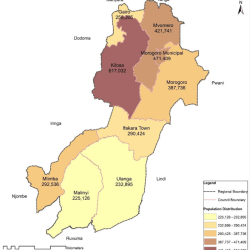
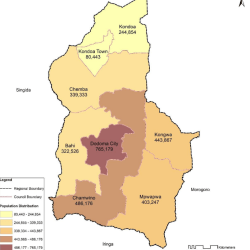
Largest districts by population in Morogoro Region, Tanzania 5 most populated districts in Morogoro Region, Tanzania are: Kilosa DistrictMorogoro MunicipalMvomero DistrictMorogoro DistrictMlimba District Population distribution in Morogoro Map…
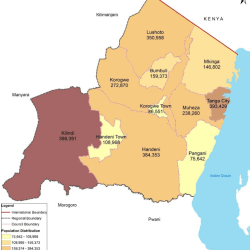
Largest Districts by population in Tanga Region, Tanzania 5 most populated Districts in Tanga Region, Tanzania are: Kilindi DistrictTanga CityHandeni DistrictLushoto DistrictKorogwe District Population distribution in Tanga region…
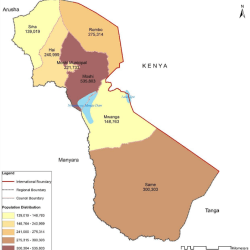
Largest Districts by population in Dodoma Region, Tanzania The 5 most populated Districts, in Dodoma Region, Tanzania are: Dodoma CityChamwino DistrictKongwa DistrictMpwapwa DistrictChemba District Population Distribution by Council,…
Ghana districts. Population, size of land area and capitals of districts The districts of Ghana and their population, land area and capitals are as follows: DistrictPopulationArea (km.²)CapitalAbura-Asebu-Kwamankese90,093324Abura-DunkwaAccra1,659,136185AccraAdansi East129,3251,380New EdubiaseAdansi West235,680828ObuasiAfigya Sekyere117,653770AgonaAfram…
List of South West Region Zones and Weredas (Towns) South West Region administrative areas: Zones and Weredas (Towns) South West Region South Omo Zone SelamagoDebub AriSemen AriHamerBena TsemayDasenechMaleNyangatom Sheka…
Uzbekistan Members of Parliament Uzbekistan’s parliamentary deputies, including their photographs, constituency information, political party affiliations and committee memberships. Akramova Zulayho AbdurazovnaParty affiliation: People’s Democratic…