Past Ministers of Education in Kenya: Leadership and Policy Evolution
The Ministry of Education in Kenya has played a central role in shaping the country’s human capital, national identity, and socio-economic development since independence. Over the decades, the ministry has been led by distinguished scholars, career administrators, diplomats, and seasoned politicians whose tenures reflected the country’s changing political systems, development priorities, and education reforms. This article provides a structured, historical overview of Kenya’s past Ministers and Cabinet Secretaries responsible for education, highlighting their periods of service and the broader policy context within which they operated.
Evolution of Kenya’s Education Leadership
Since 1963, Kenya’s education sector has evolved from a colonial legacy into a complex system encompassing basic education, higher education, science, technology, and vocational training. Ministerial titles and portfolios have changed over time, reflecting constitutional reforms, decentralization, and the expansion of education subsectors. Earlier administrations operated under a “Minister for Education” framework, while later governments introduced specialized ministries such as Higher Education, Science and Technology, and eventually the Cabinet Secretary system under the 2010 Constitution.
Ministers and Cabinet Secretaries in the Post-Independence Era
Early Independence Period (1964–1969)
Hon. J. D. Otiende Minister for Education (1964) One of the earliest leaders of the education ministry after independence, tasked with laying the foundations of a national education system.
Hon. Mbiyu Koinange Minister for Education (1964–1967) A prominent nationalist figure, his tenure focused on Africanization of the education system and expansion of access for Africans.
Hon. Joseph Nyaga Minister for Education (1967)
Hon. J. G. Kiano Minister for Education (1968–1969) Played a role in early policy formulation during Kenya’s formative post-independence years.
Consolidation and Expansion Era (1970s)
Hon. Taita Arap Towett Minister for Education (1973, 1974, 1976–1979) Oversaw major education expansion during a period of rapid population growth and increasing demand for schooling.
Hon. Dr. Zachary Onyonka Minister for Education (1975)
Hon. Moses M. Mudavadi Minister for Basic Education (1979) Focused on primary and secondary education during a period of curriculum consolidation.
Structural Reforms and Diversification (1980s)
Hon. Joseph Kamotho Minister for Higher Education (1980–1983) Led the higher education portfolio during the expansion of universities and teacher training institutions.
Hon. Prof. Jonathan Ng’eno Minister for Basic Education (1980–1985) A respected academic whose leadership emphasized teacher development and education planning.
Hon. Peter Oloo Aringo Minister for Education, Science and Technology (1986–1989; 1994; 2001) Served multiple non-consecutive terms, reflecting continuity in education leadership during political transitions.
Reform and Modernization Period (1990s–2000s)
Hon. Stephen Musyoka Minister for Education and Human Resource Development Oversaw education during a time when human capital development became a national policy priority.
Hon. Henry Koskey Minister for Education (1999–2000; 2001–2002)
Hon. Prof. George Saitoti Minister for Education, Science and Technology (2003–2007) Played a key role in Free Primary Education implementation, a landmark reform that dramatically increased school enrollment nationwide.
Hon. Prof. Sam Ongeri Minister for Education (2008–2012) Supervised curriculum reviews and expansion of secondary education access.
Transition to the Cabinet Secretary System (2013–2018)
Hon. Mutula Kilonzo Minister for Education (2012–2013) Served during the transition period leading to the 2010 Constitution’s implementation.
Hon. Prof. Jacob Kaimenyi Cabinet Secretary, Ministry of Education, Science and Technology (2013–2015) Oversaw early reforms under the devolved governance framework.
Hon. Prof. Margaret Kamar Minister for Higher Education, Science and Technology Focused on higher education policy, research, and innovation.
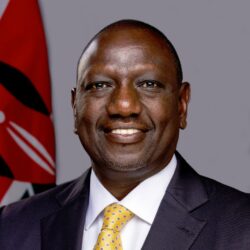
Hon. William Ruto Minister for Higher Education, Science and Technology Later became Deputy President and President of Kenya, reflecting the ministry’s role as a training ground for national leadership.
Hon. Sally Kosgey Minister for Higher Education, Science and Technology
Contemporary Leadership (2016–2022)
Hon. Fred Matiang’i Minister for Education (2016–2018) Widely noted for enforcing education standards, examination reforms, and institutional accountability.
Amb. Amina Mohamed Minister for Education (2018–2019) Brought diplomatic and administrative experience to the education sector.
Prof. George Magoha Minister for Education (2019–2022) A former university vice-chancellor, he led the rollout of the Competency-Based Curriculum and major infrastructure initiatives.
Significance of Ministerial Leadership in Education
The history of Kenya’s education ministers reflects the country’s broader political and development trajectory. From post-independence nation-building to free primary education, higher education expansion, and competency-based learning reforms, ministerial leadership has been instrumental in shaping policy direction and implementation capacity.
Education remains one of Kenya’s most strategic sectors, accounting for a significant share of public expenditure and directly influencing workforce quality, innovation, and social mobility. The contributions of past ministers and cabinet secretaries continue to inform current reforms and long-term national development goals.
Through decades of leadership, Kenya’s education ministry has evolved into a cornerstone of national progress, guided by individuals whose decisions have shaped generations of learners and the future of the nation.
Kenya Ministers: Government of William Ruto Cabinet of the Republic of Kenya under President His Excellency Dr. William Samoei Ruto, C.G.H., reflecting recent reorganizations. This includes…
List of Ministers of Education in Nigeria, from 1958 Nigeria’s Ministers of Education since 1958 when the Federal Ministry of Education was created are: NameDurationPartyAja Nwachukwu1958 – 1965NCNCRichard Akinjide1965…
OPEC: Formation, Membership, and Evolution The Organization of the Petroleum Exporting Countries (OPEC) was founded in September 1960 in Baghdad, Iraq with the signing of…
Evolution of Strategic Food Reserves in Nigeria The concept of strategic food reserves in Nigeria has evolved significantly, shaped by the country’s socio-economic needs, agricultural policies, and…
Nigeria’s Industrial Policy Direction Many industrial policies have been designed and implemented since political independence of Nigeria in 1960. A review of the changing…