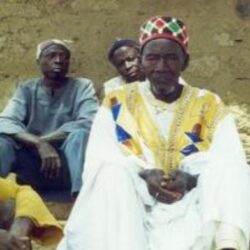
Ethnic Groups of Benin: Composition and Characteristics
The Republic of Benin is one of West Africa’s most ethnically diverse countries, with over 40 distinct ethnolinguistic groups present within its population. These groups belong to several different language families and cultural traditions, contributing to the nation’s rich social mosaic.
Overview of Major Ethnic Groups
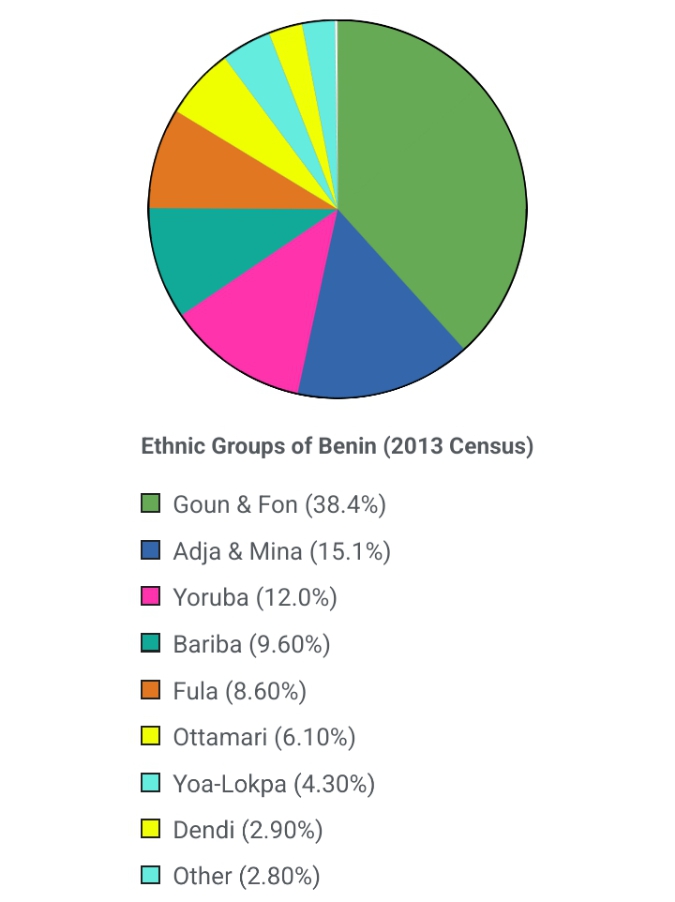
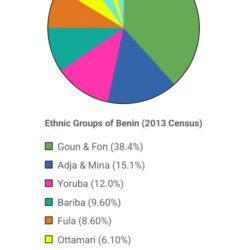
According to the CIA World Factbook and demographic sources, the largest ethnic groups and their approximate proportions of the population (based on the most recent estimates) are as follows:
Fon and related groups: ~38.4%
Adja and related groups: ~15.1%
Yoruba and related groups: ~12%
Bariba (Baatonu) and related groups: ~9.6%
Fulani (Peul) and related groups: ~8.6%
Ottamari (Gua) and related groups: ~6.1%
Yoa-Lokpa and related groups: ~4.3%
Dendi and related groups: ~2.9%
Other ethnic groups and foreigners: ~2.8% combined
These figures are derived from national census and estimates and reflect Benin’s ethno-linguistic complexity.
Ethnolinguistic Classification
Benin’s ethnic diversity is rooted in a variety of language families historically present across West Africa:
1. Niger–Congo Language Family
This is the predominant language family in Benin and includes several major subgroups:
Gbe Languages (Kwa branch):
Fon: The largest ethnic group in Benin, concentrated in southern regions around Abomey, Cotonou, and the central south. Fon culture is historically associated with the Kingdom of Dahomey.
Adja: Found largely in the southwest; historically significant as founders of early Dahomey states and cultural progenitors of other Gbe peoples.
Gun (Ogu/Egun): A Gbe-speaking group in the southeast, particularly in the Ouémé region, culturally interlinked with both Fon and Yoruba populations.
Ayizo, Xwla, Xueda, Tɔfin, etc.: Other Gbe language communities occupying southern and central belts.
Yoruba (Beninois Yoruba): A significant Beninese population of the broader Yoruba ethnolinguistic group, especially in southeastern and central departments. These communities maintain historical and cultural ties with neighboring Nigeria.
Gur Languages: Groups such as the Bariba/Baatonu, Yom, Betamaribe (Bariba), Biali and Waama occupy northern provinces, each with distinct cultural identities.
Benue–Congo and Mande Subgroups: Smaller groups, including certain Yoruba communities and historically the Boko/Busa peoples in eastern Benin, represent these branches.
2. Nilo-Saharan Language Group
Dendi: A smaller population concentrated along the Niger River in the far north. The Dendi language, historically linked to the Songhai Empire, remains an important lingua franca in parts of northern Benin, especially in Muslim communities.
3. Afroasiatic Languages
Hausa: Present mainly as a merchant and trading community in the north, the Hausa represent the Afroasiatic language family within Benin’s ethnolinguistic landscape.
Regional and Cultural Distribution
Southern Benin
The south is dominated by Gbe-speaking populations, particularly the Fon, Adja, Gun, and related groups. These communities are historically linked to the Kingdom of Dahomey (c. 1600–1900), which played a central role in Benin’s pre-colonial political and cultural development.
Central Benin
This region includes a mix of Yoruba-speaking communities and Gbe groups such as the Maxi (Collines region) and Ayizo, often overlapping culturally with both northern and southern traditions.
Northern Benin
More ethnically diverse in terms of language families, the north is home to Bariba, Fulani herders, Yom, Biali, and Otamari peoples, reflecting historical migrations and interactions with populations in Burkina Faso and Nigeria.
Demographic Trends and Modern Context
Benin’s ethnic groups are not static categories but dynamic identities shaped by centuries of migration, trade, state formation, and cultural exchange. Modern demographic data shows shifts in population shares among groups such as the Fulani, whose proportion has increased significantly over recent decades.
Moreover, urbanization, cross-border ties, and multilingualism are prominent features of contemporary Benin society, with many citizens speaking multiple indigenous languages alongside French, the official language.
More
Bosnia and Herzegovina Ethnic Composition Bosnia and Herzegovina is one of the most ethnically diverse countries in Southeast Europe. Its social fabric has been shaped…
KOGI ETHNIC COMPOSITION Kogi State is highly heterogeneous and Its central location coupled with the diverse states and ethnic groups surrounding it. The…
Benue ethnic composition Benue State comprises several ethnic groups namely: Tiv, Idoma, Igede, Etulo, Abakwa, Nyifon, Undir, Ugee, Jukun, Afia, Utonkon, Izzi, Uzza…
List of Benin Ethnic Groups The ethnic Composition of Benin Republic covering major ethnolinguistic groups, language families, regional distribution, and some historical context. According to…
Uganda: Labour Force Characteristics, Trends & Insights Labour Force Characteristics reveal key employment trends, sectoral shifts, and income distribution among Uganda’s working-age population. Understanding this is essential…
List of ethnic and racial groups in Brazil 1. Official Racial Groups in Brazil Brazil officially recognizes five self-identified racial categories: Pardo (Mixed-race) – 45.3% People of mixed…
Tribes and ethnic groups in Niger State The three most populated ethnic groups in Niger State are:NupeGbagyiHausa Others include:KadaraKoroBarabaKakandaGanaganaDiboKambariKamukuPanguDukkawaGwada And Ingwai Niger State also has numerous settlers…
List of Bulgaria Ethnic Groups by Province Bulgaria’s ethnic composition across its 28 provinces and Sofia City. While ethnic Bulgarians remain the overwhelming majority nationwide, the regional…
List of ethnic groups in Bolivia Major Ethnic Groups in Bolivia are Mestizo (mixed Indigenous and European ancestry) Indigenous peoples White / European-descended Bolivians Afro-Bolivians Major…