Niger-Congo Languages: Classification, Distribution and Number of Speakers
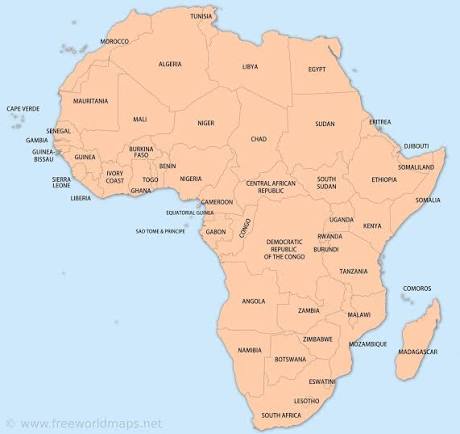
The Niger-Congo language family is the largest language phylum in Africa and one of the largest in the world. It predominates in sub-Saharan Africa, extending geographically from Senegal in the west to Kenya in the east, and southward to South Africa.
Although its internal classification is still debated, most linguists agree that Niger-Congo consists of nine major families (or sub-families), with Dogon often treated separately due to its uncertain status.
Major Niger-Congo Families
Atlantic The westernmost branch, spoken along the Atlantic coast. Major languages include Wolof and Fula (Fulani). Fula extends far inland into the savanna regions as far as Sudan.
Mande Spoken mainly in western Africa. Well-known Mande languages include Bambara, Dyula, Malinke, Mandinka, and West and East Maninkakan.
Kru Found in the forest regions of southern Liberia and southwestern Ivory Coast.
Gur (Voltaic) Spoken mainly in Burkina Faso, Ivory Coast, Ghana, Togo, and Benin. The largest Gur language is Moore.
Kwa Located in the southern regions of Ivory Coast, Ghana, Togo, and Benin. Important languages include Akan, Baule, and Ewe.
Adamawa-Ubangi Spoken in Cameroon, southern Chad, and the Central African Republic. Major languages include Gbaya, Banda, and Zande.
Benue-Congo By far the largest Niger-Congo family. It is divided into:
Non-Bantoid languages, such as Yoruba and Igbo (mainly in Nigeria)
Bantoid languages, which include the Bantu languages
The Bantu languages spread across most of central, eastern, and southern Africa. Major Bantu languages include Swahili, Rwanda (Kinyarwanda), Shona, and Zulu.
Ijoid Spoken in the Niger Delta, including Defaka and the Ijo language cluster.
Kordofanian Geographically isolated from the rest of Niger-Congo, spoken in the mountains of central Sudan.
Dogon Spoken in Mali. Its classification within Niger-Congo remains controversial.
Number of Speakers
More than 600 million people speak a Niger-Congo language. Approximately 330 million of these speak a Bantu language.
Approximate number of speakers (in millions):
Family
Speakers (millions)
Benue-Congo
500.0
Atlantic
30.0
Kwa
25.0
Mande
25.0
Gur
24.0
Adamawa-Ubangi
12.0
Kru
3.0
Ijoid
2.5
Dogon
0.6
Kordofanian
0.5
Note: About two-thirds of Benue-Congo speakers speak a Bantu language. Swahili, counting both first- and second-language speakers, has an estimated 50–100 million speakers.
Oldest Written Records
The earliest attestations of Niger-Congo words appear in Portuguese documents from the 16th century and in a work by an Italian mathematician from the same period.
The first book in a Niger-Congo language was a Kongo catechism, published in 1624.
The first grammar of a Niger-Congo language was also written on Kongo, in 1659.
Shared Linguistic Features of Niger-Congo Languages