The cuisine of Bosnia and Herzegovina is a rich reflection of the country’s history, geography, and cultural diversity. Shaped by Ottoman, Austro-Hungarian, and broader Balkan influences, Bosnian food is known for its comforting flavors, simple preparation methods, and emphasis on high-quality, natural ingredients.
Culinary Influences and Characteristics
Bosnian cuisine blends traditions from neighboring Balkan countries with strong Turkish roots inherited from the Ottoman period. Spices are used sparingly, allowing the natural flavors of vegetables, grains, and meats to stand out. Many dishes are slow-cooked, often using water rather than heavy sauces, resulting in meals that are hearty but not overly rich.
Meals are typically prepared from scratch, and food quality—especially freshness and origin—is highly valued.
Common Ingredients
Bosnian cooking relies heavily on seasonal and locally sourced foods. Common ingredients include:
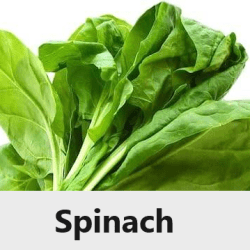
Vegetables such as potatoes, onions, tomatoes, peppers, cabbage, spinach, zucchini, and beans
Dairy products like pavlaka (soured cream) and kajmak (a creamy milk spread)
Fruits, especially plums, which are widely used in desserts and brandies
Paprika, garlic, and mild herbs for seasoning
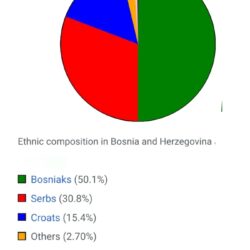
Due to religious traditions, beef and lamb are the most common meats, particularly among Bosnian Muslims, while pork is more common among Croat and Serb communities.
Signature Meat Dishes
Meat plays a central role in Bosnian cuisine, especially in celebratory meals.
Some of the most popular dishes include:
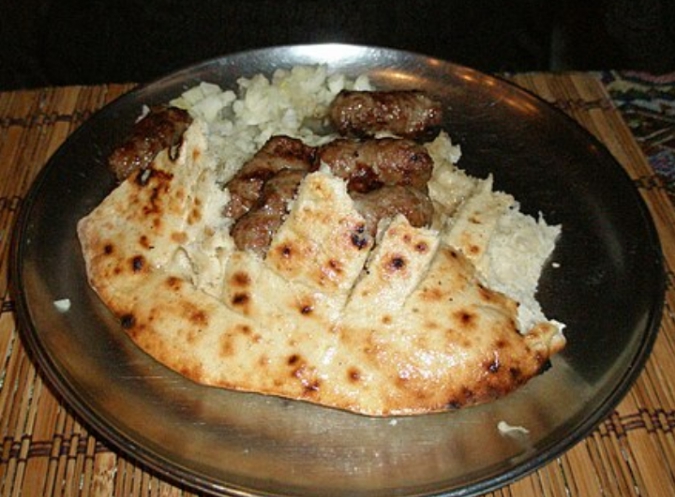
Ćevapi – small grilled sausages made from minced beef or lamb, served with flatbread (somun), onions, and kajmak
Pljeskavica – a seasoned meat patty
Begova čorba – a thick and flavorful chicken and vegetable soup
Punjena paprika – bell peppers stuffed with minced meat and rice
Sogan-dolma – onions filled with meat and herbs
Ćufte – traditional meatballs
Meso ispod sača – lamb or veal slow-cooked under a covered dome with hot embers
Burek – flaky pastry filled with meat; variations filled with cheese (sirnica), spinach (zeljanica), potatoes (krompiruša), or squash (tikvenjača) are collectively known as pita
Sarma – cabbage rolls stuffed with meat and rice
Bosanski lonac – a layered meat and vegetable stew cooked over an open fire
Stews and Traditional Dishes
Stews and baked dishes are staples of everyday cooking:
Đuveč – a vegetable-based stew
Gulaš – a paprika-seasoned meat stew
Kačamak – cornmeal and potato dish
Kljukuša – baked potato batter, typical of Bosanska Krajina
Sataraš – a vegetable dish made with peppers, tomatoes, and onions
Appetizers and Meze
Before main meals, Bosnians often serve meze, a selection of small dishes that may include cured meats, cheeses, bread, and vegetable spreads.
Cheeses and Dairy Products
Bosnia and Herzegovina produces several distinctive dairy products:
Livno cheese – a firm yellow cheese from western Bosnia
Vlašić cheese – a salty mountain cheese
Smoked Bosnian cheese
Kajmak – creamy and rich, often served with grilled meats
Pavlaka – similar to crème fraîche
Cheese aged in sheep’s skin, especially in Herzegovina
Desserts and Sweets
Desserts show strong Middle Eastern influence, especially from Ottoman traditions:
Baklava
Tufahija – stewed apple stuffed with walnuts
Hurmašica – syrup-soaked pastry
Kadaif
Tulumba – fried dough in syrup
Halva
Krempita, šampita, and krofne (cream cakes and doughnuts)
Palačinke (crêpes)
Rahatlokum (Turkish delight)
Bread, Relishes, and Seasonings
Bread is essential at every meal. Common varieties include:
Somun, especially during Ramadan
Pogača, lepinja, djevrek, and uštipci
Popular spreads and seasonings include ajvar, pindjur, and Vegeta.
Beverages
Alcoholic Drinks
Wine production is concentrated in Herzegovina, particularly around Mostar and Međugorje. Local specialties include:
Education in Bosnia and Herzegovina Education in Bosnia and Herzegovina has a rich and layered history shaped by religious traditions, imperial rule, socialism, and modern…
Religion in Bosnia and Herzegovina Religion plays a central role in the history, identity, and social structure of Bosnia and Herzegovina. The country is widely…
Languages of Bosnia and Herzegovina Language in Bosnia and Herzegovina is closely tied to history, identity, and politics. While the country is linguistically unified in…
Bosnia and Herzegovina Ethnic Composition Bosnia and Herzegovina is one of the most ethnically diverse countries in Southeast Europe. Its social fabric has been shaped…