COUNTRIES WITH SELF SERVICE BIRTH REGISTRATION AND ONES WITH OFFICE BASED SYSTEM
List of countries that do allow online self-service birth registration (or have highly digital processes including online registration), and those that don’t
🌐 Countries with Online Self-Service Birth Registration
These countries allow parents (or responsible parties) to start a birth registration process online — often fully digital with certificates issued electronically — without mandatory in-person submission:
Fully or Highly Digital Self-Service
Estonia – Births are digitally registered via national systems; parents can access and use digital certificates online. Estonia’s e-government treats births as digital events through its population register and e-ID systems.
Portugal – Uses Nascer Cidadão and Civil Online Portal, letting parents register a child’s birth digitally (often directly from hospitals) and access certificates online.
Denmark – Birth events are recorded digitally directly into central registries; parents receive and access digital birth certificates online through official portals.
Singapore – Birth registration can be completed online via the LifeSG platform and Singpass authentication, with certificates available electronically.
Kenya – Recently launched a national digital birth register that allows digital registration at hospitals and parents to complete the process electronically.
Countries With Online Platforms for Registration or Certificate Requests
These systems may not be pure self-service from scratch (some still involve health facility reporting), but offer online components:
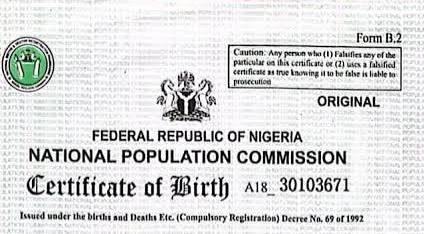
Nigeria – NPC online self-service portal lets parents register births and obtain certificates online with NIN (though some local follow-up may still happen at offices).
United Arab Emirates (e.g., Dubai) – Online applications for birth certificates exist through government portals (e.g., Mabrouk Ma Yak or health authority systems), though birth notifications may start at hospitals.
Mexico & several Central American states – Portals allow download and processing of civil documents including birth certificates (but core registration may involve in-person aspects).
Countries without Fully Online Self-Service Birth Registration
These countries rely mostly on paper, in-person or hybrid processes where you cannot fully register a birth online yourself from start to finish.
Major Countries With No Direct Online Self-Service
United States – Births are not registered by parents online; hospitals submit details to state registries. Certificates can be ordered online but not the registration itself.
India – Uses digital civil registration systems (CRS) for issuing certificates, but birth registration usually starts via hospitals/local authorities; parents can apply for certificates online, yet initial self-service registration is limited.
Bangladesh – Has online applications for status and certificates, but birth registration remains largely office/field oriented in many areas.
Australia (nationwide) – While some states (e.g., NSW) are introducing digital certificate access online, the standard birth registration process across states still involves either forms or hospital reporting.
Namibia (and similar African countries) – Birth registrations largely remain manual, with digital systems not universal.
Saudi Arabia – No comprehensive self-service online birth registration for parents (government portals like Absher focus on related services, and birth registration processes remain administrative).
Countries With Partial Digital Services (Forms, Downloads, Status Checks)
These may have online components such as:
Online forms or certificate ordering, but (no complete registration online) — e.g., many Latin American countries, parts of Africa, and parts of Asia.
Hybrid systems where health facilities upload births electronically but parents cannot self-register completely online.
Some digital ID systems (e.g., Vietnam’s VNeID) exist, but they do not equate to self-service birth registration by citizens online.
Category
Example Countries
Self-Service Online Birth Registration?
Fully Online / Digital Self-Service
Estonia, Portugal, Denmark, Singapore, Kenya
✅ Yes (digital registration + certificates)
Online + Hybrid Platforms
Nigeria, UAE, Mexico
🟡 Partial (online app/certificate with some constraints)
No Full Online Self-Service
USA, India, Bangladesh, Saudi Arabia, Australia (majority)
❌ No (offline core process)
Online Certificate Request Only
Many countries (e.g., Costa Rica, Belize)
🟡 Certificates online, not end-to-end registration
👉 Online self-service birth registration means parents can start and complete the legal birth registration process digitally themselves, including the issuance of a birth certificate. 👉 Many countries allow online certificate ordering or portal access to records, but that’s not the same as full online self-service registration.
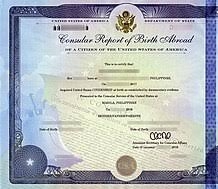
🇺🇸 How Birth Registration Works in US
1. Who Is Responsible for Registering the Birth?
In the U.S., parents do NOT register a birth themselves online.
Instead:
Hospitals or birth attendants (doctor, nurse, or licensed midwife) are legally responsible for initiating birth registration.
The birth is registered with the state’s Vital Records Office (not a federal office).
Each state has its own Vital Records system, but the process is broadly the same nationwide.
2. Hospital Births (≈ 98–99% of all U.S. births)
This is the standard process:
Step 1 — Parents complete a “Birth Worksheet”
Shortly after delivery, hospital staff give parents a form called a:
Facility Worksheet for Live Birth Certificate
Parents provide:
Baby’s full name
Date, time, and place of birth
Sex
Parents’ full names
Parents’ dates & places of birth
Address
Marital status
Education & race/ethnicity (for statistics)
Social Security Number request (optional)
Parents sign the worksheet to confirm accuracy.
Step 2 — Hospital enters data into an electronic system
Hospital staff enter the worksheet data into the state’s Electronic Birth Registration (EBR) system.
The attending physician or midwife certifies the medical facts.
The State Vital Records Office receives the record electronically.
The state registrar reviews and officially files the birth record.
At this point, the child legally “exists” in state records.
3. Home Births or Non-Hospital Births
This process is more manual:
Step 1 — Birth report submission
A licensed midwife or the parents submit a birth report form to the local or state registrar.
Supporting documents may be required:
Proof of pregnancy
Proof of birth location
Parents’ IDs
Witness affidavits
Step 2 — Data entry by registrar
The registrar enters the data into the state’s system.
Extra verification is often done to prevent fraud.
4. Can Parents Register a Birth Online Themselves?
No.
There is:
No federal birth registration portal
No state that allows parents to self-register a birth online from scratch
Parents:
Do not log into a government site and register the baby.
Do not upload documents to complete registration digitally.
Must rely on hospitals or registrars.
5. When and How Is the Birth Certificate Issued?
Once the birth is registered:
The record is stored permanently by the state.
Parents can request certified copies.
Ways to get a birth certificate:
In person – State or county Vital Records office
By mail
Online ordering – Through:
State Vital Records websites
VitalChek (official national provider)
Certificates are:
Printed on security paper
Mailed to the requester
Rarely issued as digital PDFs
6. Key Features of the U.S. System
Feature
USA
Who initiates registration?
Hospital or birth attendant
Parent self-service online registration
❌ Not allowed
National birth register
❌ No
State-level registration
✅ Yes
Electronic hospital reporting
✅ Yes (all states)
Digital birth certificate (PDF)
❌ Almost never
Online ordering of certificate
✅ Yes
7. Why the U.S. Does NOT Use Online Self-Service
Main reasons:
Fraud prevention – Strong reliance on hospitals as trusted reporters.
Decentralized government – 50 states + territories run separate systems.
Legal identity importance – Birth records underpin citizenship, passports, and Social Security.
Legacy laws & systems – Many statutes require in-person or certified reporting.
In the United States, birth registration is done by hospitals or midwives using electronic systems connected to state Vital Records offices. Parents cannot register a birth online themselves. Parents only provide information and later request birth certificates online.
REGISTRATION AS A SERVICE BOAT OPERATOR NPA appoints Managing Agents to monitor Service Boat Pilotage Movements NPA register Service Boat Agent appointed by any Service Boat…
REGISTRATION AS CLEARING AND FORWARDING AGENTS Letter of Application to GM Marine & Operations, HQ with the following documents: Certificate of Company Registration Memorandum and Article…