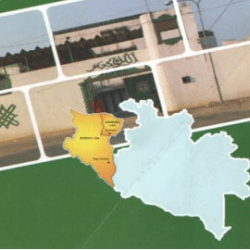
Abinsi: Benue”s First Town and Headquarters of Benue Province (1906 – 1927)
During the colonial era, the British governed this region under what they called “Benue Province” (established in 1926). Surprisingly, Makurdi was not the first headquarters. That honor belongs to Abinsi, a riverside town that once played a central role in administration and trade in the Benue Valley.
This information explores four key questions:
Where is Abinsi?
When did it become a headquarters, and who ruled then?
Why was it important?
Why and when was the headquarters moved?
Where Is Abinsi? A River Town of Strategic Importance
sits on the southern bank of the in present-day Guma Local Government Area. It is historically part of the Jukun Wanu environment—the riverine branch of the Jukun people.
According to (1931), Abinsi is a Jukun Wanu town, and the Wanu are “masters of the river.” This detail is crucial: before roads and railways, the River Benue served as the main highway for movement, trade, and communication. Any settlement along it—especially one like Abinsi—was bound to be significant.
1906–1928: The Era of Aku Ajidoku Agabi
At the heart of Abinsi’s rise was , a powerful Jukun leader.
Appointed District Head by the British in 1906, he ruled until 1928. His authority extended beyond land—he controlled the river through fleets of canoes, a key reason the British respected and relied on him.
As Meek (1931) noted, his influence over river transport made him indispensable to colonial administration.
1926: The Birth of Benue Province—and Abinsi’s Rise
In 1926, the British reorganized their territories, merging parts of Muri, Yola, and Nassarawa Provinces to create Benue Province (National Archives Kaduna, 1926).
They needed a headquarters—and Abinsi was the obvious choice.
Why Abinsi?
River Access: Boats from could easily reach it
Thriving Trade: A major market for fish, yams, and salt
Political Stability: A loyal and powerful local ruler in Aku Ajidoku Agabi
From 1926 to 1927, Abinsi served as the first headquarters of Benue Province.
A Bustling Center of Trade and Governance
River Port and Commerce
Before roads existed, the River Benue was everything. Abinsi became one of the most active ports between Lokoja and .
(1933) described how Jukun Wanu traders loaded canoes with dried fish for Hausa merchants.
By 1920, the (UAC) had established a trading post in Abinsi, buying goods like fish, shea butter, and animal hides (Hopkins, 1973).
Colonial Administration
Abinsi wasn’t just a trading hub—it was also a political center.
A British District Officer was stationed there in 1926
Administrative work was conducted from Aku Ajidoku Agabi’s residence
Taxes were collected from Jukun, Tiv, and Idoma communities
Land disputes were resolved
For a brief period, Abinsi functioned as the nerve center of colonial governance in the region.
1927: Why the Headquarters Moved to Makurdi
Despite its early importance, Abinsi’s time as provincial headquarters was short-lived.
In 1927, the British relocated to Makurdi—and for good reason:
1. The Railway Advantage
The eastern railway from reached Makurdi in 1927 (Jaekel, 1997). Unlike Abinsi, Makurdi now had both rail and river access.
2. Seasonal Flooding
Official colonial reports from 1927 noted that Abinsi was flooded for up to four months each year, making it unsuitable for administration.
3. Infrastructure Plans
The British began constructing a bridge in Makurdi in 1928, completed in 1932—further cementing its importance.
By 1927, administrative offices had moved. A year later, in 1928, Aku Ajidoku Agabi passed away, marking the end of an era.
1927–1932: Abinsi’s Second Life as Tiv Division Headquarters
Abinsi did not fade into obscurity immediately.
In 1927, the British created the Tiv Division, and Abinsi became its headquarters until 1932.
Why Keep Abinsi?
It sat at the edge of Tiv territory
The British were cautious about placing headquarters deep within Tiv land
Existing administrative buildings made it convenient
However, by 1932, the headquarters was moved to —closer to the heart of Tiv country (Downes, 1933).
Abinsi Today: A Living Historical Site
Today, Abinsi remains a vibrant fishing town in Guma LGA.
It still hosts a five-day market cycle
Remnants of colonial infrastructure, including the old UAC building, still stand
Oral accounts (e.g., Aku Abinsi, 2023) continue to preserve its legacy
Key Historical Timeline
1926–1927: Headquarters of Benue Province
1927–1932: Headquarters of Tiv Division
1976: Creation of Benue State, with Makurdi as capital
Why Abinsi Matters in Benue History
Abinsi’s story is more than a footnote—it is foundational:
First Administrative Center: The British first used the name “Benue” in governance here in 1926
Indirect Rule in Action: It highlights reliance on local leaders like Aku Ajidoku Agabi
River-Based Economy: Demonstrates the central role of the River Benue before railways
Early Tiv Administration: Served as the first base for colonial governance over Tiv areas
To forget Abinsi is to overlook how colonial administration truly began in the Benue Valley.
Jukun people
Abinsi, located on the southern bank of the River Benue, was the original headquarters of Benue Province in 1926, during the reign of Aku Ajidoku Agabi (1906–1928). Its strategic position as a river port and administrative hub made it indispensable—until flooding and the arrival of the railway shifted power to Makurdi in 1927.
Even after that transition, Abinsi remained relevant as the headquarters of Tiv Division until 1932, before the role moved to Gboko.
The historical record is clear, supported by sources such as National Archives Kaduna (1926), Meek (1931), Downes (1933), Jaekel (1997), and the Federal Republic of Nigeria (1976).
Abinsi may no longer be a political capital—but it remains a crucial starting point in the story of governance in the Benue Valley.
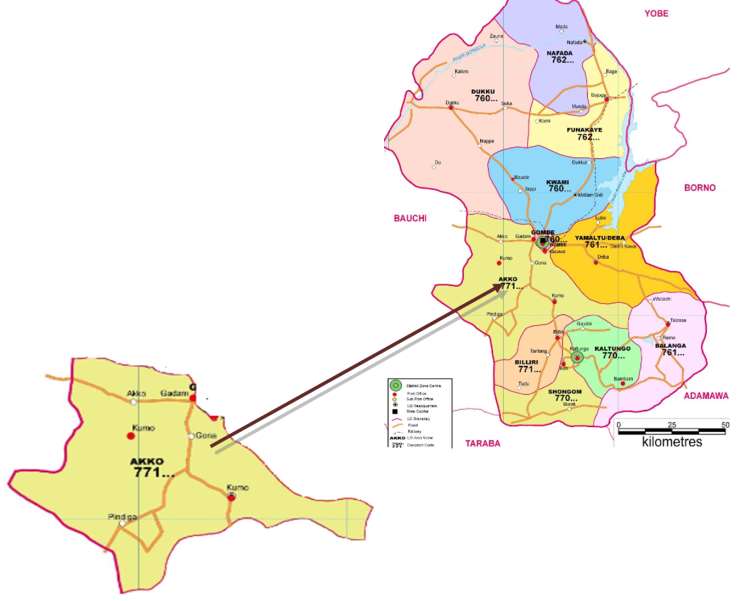
Distance of Funakaye communities, LGA headquarters and Gombe town, the state capital Approximate distance of Funakaye communities, LGA headquarters and state capital CommunityDistance from LGA HeadquartersDistance from State HeadquartersASHAKA GARI9.45KM78.01KMBAGE12.34KM78.93KMBAJOGA0 KM71.12KMRIBADU32.4KM45.44KMWAWA34.28KM57.54KMWUROBAPPARU14.58KM76.37KM Funakaye is…
Jukun of Abinsi, Benue state Jukun people in Benue state are located largely in Abinsi as well as in Makurdi, Guma and Logo LGAs. Abinsi…
Craco: The Beautiful Ghost Town of Italy Perched on a dramatic cliffside in the Basilicata region of southern Italy, Craco is a breathtaking ghost town that tells…
TOWN TELEPHONE CODES IN ONDO STATE 1. Akure 0342. Ido-Ani 0513. Ifon 0514. Ikare 0505. Okitipupa 0596. Ondo 0347. Owo 051 Ondo State Ondo is a…
Bida town Bida is a town in Niger State, Nigeria. The town is the capital of Nupe nation. CLIMATEBida emirate is on…
HOTEL DIRECTORY: BIDA TOWN NAME OF HOTELTEL. NOTYPE OF ROOMNOFACILITIES AVAILABLEMusalim Guest House Wadata Area & Annex G.R.A. Bida0803884540DoubleSmall87A/C., T.V., & RefrigeratorLand Work Guest…
HOTEL DIRECTORY: NEW BUSSA TOWN NAME OF HOTELTEL. NOTYPE OF ROOMNOFACILITIES AVAILABLEHydro Hotel 26, Wawa Road, Off F.G.G.C0803884540SingleDoubleSuite2495Fridge, T.V., A/C. Dish, Conference Hall, MultipurposeWhite House…
Largest areas by population in Korogwe Town Council, Tanzania 10 most populated areas in Korogwe Town Council, Tanzania are: MtongaManunduMagungaOld KorogweBagamoyoKiloleKwamsisiMajengoKwamndolwaMgombezi LARGE. List of areas by population in Korogwe Town…
Largest areas by population in Handeni Town Council, Tanzania 10 most populated areas in Handeni Town Council, Tanzania are: KwamagomeChanikaMdoeKwenjugoMaleziMabandaMlimaniVibaoniKidelekoMsasa LARGE. List of areas by population in Handeni Town Council…