Tehsils of Balochistan, Pakistan, Literacy Levels, From Most to Least Literate
How literate are Balochistan tehsils
Tehsils
Literacy Level
Karezat Tehsil
74.18%
Darug Tehsil
65.37%
Turbat Tehsil
63.65%
Pasni Tehsil
59.71%
Nushki Tehsil
59.04%
Quetta Sadar Tehsil
56.66%
Ziarat Tehsil
54.20%
Mand Tehsil
54.19%
Mastung Tehsil
53.70%
Kan Mehtarzai
53.65%
Moola Tehsil
52.68%
Pishin Tehsil
52.50%
Sibi Tehsil
52.40%
Gwadar Tehsil
51.60%
Chaman Tehsil
51.36%
Kuchlak Tehsil
50.59%
Duki Tehsil
50.48%
Shahrig Tehsil
50.12%
Kohlu Tehsil
49.76%
Zehri Tehsil
49.38%
Ormara Tehsil
49.08%
Kharan Tehsil
48.63%
Gadani Tehsil
48.57%
Nok Kundi Tehsil
48.57%
Saranan Tehsil
48.33%
Barshore Tehsil
47.61%
Nal Tehsil
47.26%
Tump Tehsil
47.17%
Bori Tehsil
46.82%
Panjgur Tehsil
46.19%
Saeed Muhammad Kanrani Tehsil
45.90%
Kingri Tehseel
45.37%
Muslim Bagh Tehsil
45.36%
Bostan Tehsil
45.19%
Dhadar Tehsil
45.10%
Hub Tehsil
44.35%
Kalat Tehsil
44.19%
Qilla Abdullah Tehsil
44.00%
Khuzdar Tehsil
43.85%
Manjipur Tehsil
43.85%
Sariab Tehsil
42.99%
Awaran Tehsil
42.90%
Shaheed meharabad zehri
42.85%
Kardigap Tehsil
42.71%
Hayrvi Tehsil
42.60%
Sohbatpur Tehsil
42.30%
Khattan
41.86%
Zhob Tehsil
41.27%
Mashkay Tehsil
41.21%
Faridabad Tehsil
41.09%
Bela Tehsil
40.98%
Lehri tehsil
40.79%
Khost Tehsil
40.35%
Hurramzai Tehsil
39.67%
Dalbandin Tehsil
39.10%
Dasht e Goran
38.85%
Machh Tehsil
38.80%
Balnigor Tehsil
38.77%
Paroom Tehsil
38.64%
Kallag Tehsil
38.40%
Usta Muhammad Tehsil
38.17%
Thal Chutyali Tehsil
38.10%
Panjpai Tehsil
37.67%
Dasht Tehsil
37.25%
Dasht Tehsil
36.79%
Sar-Kharan Tehsil
36.70%
Jhatpat Tehsil
36.70%
Gandavah Tehsil
36.35%
Gishkaur Tehsil
36.34%
Gidder
36.31%
Dak Tehsil
36.29%
Harnai Tehsil
36.28%
Gulistan Tehsil
36.12%
Sinjawi Tehsil
35.88%
Sonmiani Tehsil
35.80%
Panhwar Tehsil
35.38%
Buleda Tehsil
35.36%
Jiwani Tehsil
35.28%
Bhag Tehsil
35.24%
Mangocher Tehsil
35.22%
Chaman Saddar Tehsil
35.18%
Patkain Tehsil
35.06%
Dera Murad Jamali
34.93%
Tohumulk Tehsil
34.81%
Musakhel Tehsil
34.51%
Grisani Tehsil
34.40%
Surab Tehsil
34.34%
Uthal Tehsil
33.95%
Luni Tehsil
33.80%
Dera Bugti Tehsil
33.75%
Barkhan Tehsil
33.62%
Khad Koocha Tehsil
33.22%
Balanari Tehsil
32.21%
Karkh Tehsil
32.14%
Wadh Tehsil
31.83%
Besima Tehsil
31.83%
Suntsar Tehsil
31.69%
Killa Saifullah Tehsil
30.77%
Hoshab Tehsil
30.71%
Sui Tehsil
30.59%
Tamboo Tehsil
29.32%
Zamuran Tehsil
28.97%
Tamboo Tehsil
28.80%
Gowargo Tehsil
27.57%
Johan Tehsil
27.49%
Jhal Magsi Tehsil
26.82%
Korak Jhao Tehsil
26.71%
Jhal Jhao Tehsil
26.62%
Toisar Tehsil
26.06%
Loiband Tehsil
25.81%
Maiwand Tehsil
25.75%
Mirpur Tehsil
24.86%
Tiyar Essot Tehsil
24.71%
Gandakha Tehsil
24.59%
Mekhtar Tehsil
24.55%
Yakmach
24.36%
Saroona Tehsil
24.22%
Sherani Tehsil
23.86%
Chagai Tehsil
23.77%
Shahgori Tehsil
23.55%
Meer Hassan Tesil
22.99%
Sangan Tehsil
22.67%
Gresha Tehsil
22.10%
Sambaza Tehsil
21.65%
Ornach Tehsil
21.58%
Talao Tehsil
21.41%
Kanraj Tehsil
20.32%
Gichk Tehsil
20.15%
Kahan Tehsil
19.87%
Taftan Tehsil
19.70%
Badini Tehsil
19.15%
Gazg Tehsil
18.75%
Washuk Tehsil
18.10%
Dobandi Tehsil
18.10%
Nag Tehsil
18.02%
Landhi Tehsil
17.60%
Chattar Tehsil
17.21%
Mashkel Tehsil
16.33%
Liari Tehsil
16.09%
Baiker Tehsil
15.62%
Dureji Tehsil
15.58%
Sani Tehsil
15.58%
Baba Kot Tehsil
15.41%
Lakhra Tehsil
15.31%
Zimri Plaseen Tehsil
15.02%
Shinki Tehsil
14.93%
Ashwat Tehsil
14.51%
Aranji Tehsil
12.11%
Kashatu Tehsil
9.64%
Kutmandai Tehsil
8.93%
Sakran Tehsil
Baghbana Tehsil
Amuri tehsil
Chilgazi tehsil
Shaheed Jahangir Abad
Phelawagh Tehsil
Gayab Tehsil
Solband Tehsil
Jaffarabad Tehsil
Chiltan Tehsil
Zarghoon Tehsil
Khanozai Tehsil
Qamar Din Karez Tehsil
Balochistan: What Tehsil Literacy Rates Tells
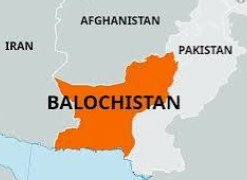
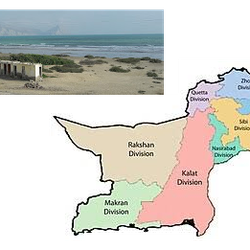
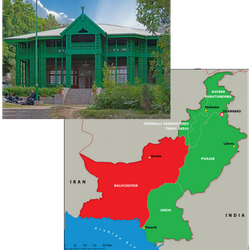
Balochistan is Pakistan’s largest province by area and one of its least densely populated. Averages for a place this size hide enormous differences. Look at literacy at the tehsil level, the administrative tier between a district and its villages, and the picture changes sharply from one valley or coastline to the next.
The content above ranks the province’s tehsils by literacy rate using figures from the 2023 census. This post explains how to read it, what stands out, and what to be careful about before drawing conclusions.
What the ranking shows
The range is enormous. The most literate tehsil, Karezat, sits at 74.18%. The lowest figure in the table, Kutmandai, is 8.93%. That is a gap of more than 65 percentage points inside a single province.
Only a minority of tehsils clear the halfway mark. Just 18 tehsils report literacy above 50%, ending with Shahrig at 50.12%. Most of the table sits well below that line, and a long tail falls under 25%.
The top 10
Rank
Tehsil
Literacy
1
Karezat
74.18%
2
Darug
65.37%
3
Turbat
63.65%
4
Pasni
59.71%
5
Nushki
59.04%
6
Quetta Sadar
56.66%
7
Ziarat
54.20%
8
Mand
54.19%
9
Mastung
53.70%
10
Kan Mehtarzai
53.65%
A few patterns are worth noting.
Karezat leads by a wide margin. Its lead over second-placed Darug is almost nine points, which is larger than the gap between Darug and the tehsil in ninth place.
The Makran coast and its hinterland do well. Turbat and Pasni are in the top four, and Gwadar (51.60%) and Ormara (49.08%) are not far behind. Coastal and market towns tend to have more schools, more commerce and more reasons to read and write.
Quetta Sadar is high but not first. At 56.66% the provincial capital’s core tehsil ranks sixth. Being the capital helps, but it does not put Quetta at the top.
Several tehsils in the central and northern belt appear. Nushki, Ziarat, Mastung, Pishin (52.50%) and Chaman (51.36%) all sit in the upper tier.
The bottom of the table
The lowest rates are:
Tehsil
Literacy
Kutmandai
8.93%
Kashatu
9.64%
Aranji
12.11%
Ashwat
14.51%
Shinki
14.93%
Zimri Plaseen
15.02%
Lakhra
15.31%
Baba Kot
15.41%
Sani and Dureji (tied)
15.58%
In these tehsils, fewer than one in six people can read and write. Several tehsils known for very large land areas also appear low in the table, including Washuk (18.10%), Mashkel (16.33%) and Gichk (20.15%). That fits a familiar problem: when settlements are sparse and far apart, schools are hard to build, staff and keep running.
Why the gaps are so wide
The content measures outcomes, not causes, so the following are reasons to consider rather than conclusions the data proves.
Distance and density. Balochistan has vast areas with small, scattered populations. Getting a school within reach of every child is far more expensive than in a compact district.
Urban versus rural. Towns and market centres generally have more schools and more teachers, and more daily use for literacy.
Access for girls. Female literacy is typically much lower than male literacy in rural Pakistan, which pulls down the overall rate.
Infrastructure and security. Roads, electricity, teacher attendance and local conditions all affect whether schools stay open.
Economic pressure. Where children work with livestock, farms or family trades from an early age, school attendance falls.
A tehsil is not a district. Tehsils vary hugely in size and population. A high rate in a small tehsil rests on far fewer people than the same rate in a large one.
Literacy is a basic measure. It records whether people can read and write, not how well they do it or the quality of the education behind it.
Why this matters
A single provincial figure can suggest a uniform problem with a uniform solution. This ranking shows otherwise. Some tehsils already look like the rest of urban Pakistan, while others are far behind. Planning for schools, teachers and adult literacy programmes works better when it is aimed at the places that need it most, and a tehsil-level table is a practical starting point for that.
Source: CENSUS 2023, BALOCHISTAN: AREA, POPULATION BY SEX, SEX RATIO, POPULATION DENSITY, URBAN POPULATION, HOUSEHOLD SIZE AND ANNUAL GROWTH RATE
List of Tehsils in Balochistan, Pakistan A tehsil is an administrative subdivision between a district and its villages or union councils. Tehsils support local governance, revenue…
Tehsils of Balochistan, Pakistan, by Land Area, From Largest to Smallest TehsilLand Areain km²Nok Kundi Tehsil16,092Awaran Tehsil13,075Mashkel Tehsil11,663Turbat Tehsil9,742Zhob Tehsil9,322Taftan Tehsil9,318Gichk Tehsil8,387Dalbandin Tehsil7,791Yakmach7,572Washuk Tehsil7,494Aranji Tehsil7,456Jhal Jhao Tehsil6,381Tohumulk Tehsil6,347Khuzdar Tehsil6,112Besima Tehsil6,014Karkh Tehsil5,352Pasni…
Most Populated Tehsils of Pakistan A complete numbered ranking of Pakistan’s tehsils by population, based on the 2023 census, with provincial breakdowns and notes on…
Population Density of Balochistan Tehsils Balochistan’s tehsils in Pakistan, from most to least densely populated. Density is given in people per square kilometre (ppl/km²) and…
List of Chad regions by population, from least to most populated Regions of Chad according to size of population, from least to most populated are: RegionPopulation (2023)Tibesti52,626Ennedi-Ouest109,753Borkou154,865Ennedi-Est175,321Bahr el Gazel407,256Salamat470,256Kanem505,839Lac509,258Sila591,300Batha748,395Wadi Fira792,394Guéra824,161Mayo-Kebbi Ouest858,593Hadjer-Lamis870,231Chari-Baguirmi884,924Moyen-Chari902,311Mandoul1,002,346Tandjilé1,007,812Logone…
List of Tanzania regions by population size. From most to least populated Tanzania regions by population size. From most to least populated RegionPopulationDar es Salaam4,364,541Mwanza2,772,509Mbeya2,707,410Kagera2,458,023Tabora2,291,623Morogoro2,218,492Kigoma2,127,930Dodoma2,083,588Tanga2,045,205Mara1,743,830Geita1,739,530Arusha1,694,310Kilimanjaro1,640,087Simiyu1,584,157Shinyanga1,534,808Manyara1,425,131Ruvuma1,376,891Singida1,370,637Mtwara1,270,854Pwani1,098,668Rukwa1,004,539Iringa941,238Lindi864,652Njombe702,097Zanzibar West593,678Katavi564,604Pemba North211,732Pemba South195,116Zanzibar North187,455Zanzibar South and Central115,588…
List of Tanzania districts by population size. From most to least populated Tanzania districts by population size from most to least populated are: DistrictPopulationKinondoni1,083,913Temeke768,451Geita709,078Ilala634,924Kasulu626,742Bariadi603,604Kahama594,891Arumeru514,651Mbozi513,600Sengerema498,993Tarime490,731Kigoma Rural489,271Kilosa488,191Masasi440,987Dodoma Rural438,866Kondoa428,090Karagwe424,287Njombe419,115Lushoto418,652Nzega415,203Magu415,005Kibondo413,777Mpanda410,452Biharamulo409,389Mbinga403,819Moshi Rural401,369Singida Rural400,377Bukombe395,298Bukoba Rural394,020Muleba385,184Sumbawanga Rural371,749Urambo369,329Iramba367,036Ngara334,409Musoma Rural329,824Igunga324,094Dodoma Urban322,811Kilombero321,611Kwimba314,925Rungwe306,380Maswa304,402Babati302,253Mufindi282,071Arusha281,608Uyui281,101Muheza278,405Shinyanga…
List of Tanzania districts by population size. From least to most populated Tanzania districts by population size from least to most populated are: DistrictPopulationKusini31,853Mafia40,557Lindi Urban41,075Pangani43,920Kaskazini ‘B’52,492Kati62,391Liwale75,128Bukoba Urban80,868Chake82,998Micheweni83,266Kaskazini ‘A’84,147Mtwara Urban92,156Mkoani92,473Kisarawe95,323Wete102,060Makete105,775Iringa Urban106,371Musoma Urban107,855Ileje109,847Singida Urban114,853Mwanga115,145Ruangwa124,009Ludewa128,155Ngorongoro129,362Songea…
Least populated regions of Chad The 10 least populated regions of Chad are: Tibesti Ennedi-Ouest Borkou Ennedi-Est Bahr el Gazel Salamat Kanem Lac Sila Batha…
Least populated provinces in Burundi The 10 least populated Burundi provinces are: Cankuzo Mwaro Muramvya Bururi Rutana Bubanza Rumonge Ruyigi Makamba Karuzi List of Burundi…
Least populated regions in Burkina Faso Burkina Faso 5 least populated regions are: Centre-Sud Cascades Sud-Ouest Plateau-Central Sahel List of regions by population, from least to…
Least populated Angola province The least populated Angola province is Bengo with a population of 356,641 (2014). The 10 least populated provinces of Angola…
Least populated provinces of Angola The 10 least populated provinces of Angola are: Bengo Cuanza Norte Namibe Cuando Cubango Lunda Sul Zaire Cabinda Moxico Lunda…