The word “Indonesia” began as a scholarly label for a region before it became the name of a nation. Here is how it travelled from European study halls to the banners of independence.
Today the name Indonesia is so closely tied to the nation that it is easy to forget it was once an outsider’s invention. The country’s name was coined in the nineteenth century, popularised by scholars, and only later claimed by the people it described.
A name built from two languages
The usual explanation of the name is that it joins “India” with nesos, the ancient Greek word for island. Put together, the two parts mean “Indian islands”, a description of the archipelago as seen from a European and Indian-Ocean perspective.
Two names proposed in 1850
The idea of giving the archipelago’s inhabitants a collective name took shape in 1850. That year the English ethnologist George Windsor Earl proposed two terms for the people of what he called the “Indian Archipelago or Malay Archipelago”: Indunesians and Malayunesians. He preferred the second, because he thought the first was too general.
In the same journal, James Richardson Logan took a different step. Rather than naming a people, he adopted “Indonesia” as a geographical term for the Indian Archipelago. His usage is the one that survived.
From geography to scholarship
The word gained academic weight through the German ethnographer Adolf Bastian of the University of Berlin. Between 1884 and 1894 he published a five-volume work whose title used the term: Indonesien oder die Inseln des Malayischen Archipel, or “Indonesia, or the Islands of the Malay Archipelago”. Appearing in the title of such a large study gave the word far greater scholarly currency than it had before.
Why the Dutch used other names
Despite Bastian’s influence, Dutch scholars largely kept to their own vocabulary. They tended to write of the Malay Archipelago (Maleische Archipel) or the Netherlands East Indies (Nederlandsch Oost Indië). Everyday alternatives included Dutch East Indies, Indië, and de Oost, meaning “the East”. A less common choice was Insulinde.
In other words, the colonial power had a well-established set of names, and “Indonesia” was not among its favourites.
The turn of the century: a name for a nation
That changed after 1900. The word became increasingly common in both academic and public use, and, crucially, Indonesian nationalist organisations adopted it. For them it was more than a geographic label: it expressed national unity and the goal of freedom from colonial rule. A name that had been imposed from outside became a banner raised from within.
An early champion in The Hague
One of the early promoters of the name was Soewardi Soerjaningrat, better known as Ki Hajar Dewantara. In November 1918 he established the Indonesisch Persbureau in The Hague, a press bureau that carried the word “Indonesia” in its own name. Founding it in the Dutch capital, at the heart of the colonial administration, meant the name was being put forward directly to the audience that preferred other terms.
Timeline
1850: Earl proposes “Indunesians” and “Malayunesians”; Logan uses “Indonesia” as a geographical term.
1884–1894: Bastian publishes his five-volume Indonesien, giving the term wider scholarly currency.
After 1900: The name spreads in academic and public use and is adopted by nationalist organisations.
November 1918: Soewardi Soerjaningrat founds the Indonesisch Persbureau in The Hague.
The history of the name shows how a word can change owners. It began as a classification made by European scholars, spread through scholarship, and was then taken up by the very people it described, who turned it into a symbol of unity and self-rule.
Source
This article is based on the history of the name set out in Wikipedia’s “Indonesia” article, which cites Brown (2004), Earl (1850), Elson (2008) and Logan (1850).
More
How Ghana got its name How Ghana got its names: Wagadugu, Gold Coast, Ghana The Republic of Ghana is named after the medieval Ghana Empire…
How Nigeria got its name Who Named Nigeria & In What Year? The name “Nigeria” was given to the country by a British journalist and…
How Port Harcourt got its name Port Harcourt named after Lewis Vernon Harcourt.Mr Harcourt was the British Secretary of State for the Colonies. In August 1913,…
How Ebonyi state got its name Ebonyi State got its name from a River, the Aboine River also called Abonyi River. The name Abonyi was Anglicized…
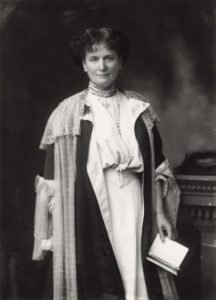
How Flora Shaw gave Nigeria its name The name “Nigeria” was given to the country by a British journalist and Times editor named Mrs. Flora Shaw on January 8,…
PENDA GOT COMMENDATIONS FROM KUSUV ELDERS Hon. Benjamin Iornumbe Penda on 18th November, 2023 received commendations from some elders of Kusuv clan of Tiv nation. Kusuv…
How Bantu people got to Angola The first to settle were the Bochmanes – great hunters, of pygmoid stature and pale, brownish in color. The Bantu…
How Angola got independence from Portugal The Portuguese arrived Angola in 1484 and took took colonialism. From the 1950s onwards, the formation of more explicit political…