Afrikaans Language: Number of Speakers per Country
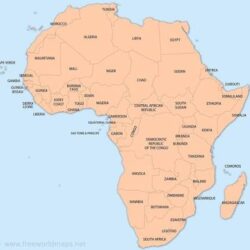
Afrikaans is a West Germanic language primarily spoken in South Africa, where it ranks as the third most spoken language after Zulu and Xhosa. It also has smaller speaker communities in neighboring countries such as Lesotho, Swaziland, Zambia, Botswana, and Namibia, as well as among expatriates in Australia, New Zealand, the UK, the USA, and Canada.
Speakers of Afrikaans
Afrikaans is spoken by approximately 6 million people worldwide. The distribution of speakers by country is as follows:
Country
Number of Speakers
South Africa
5,500,000
Namibia
90,000
Zambia
41,000
Botswana
20,000
USA
16,000
Swaziland
13,000
Australia
13,000
Canada
2,400
Status of Afrikaans
Afrikaans is one of the official languages of South Africa, but its use has been gradually declining in favor of English and indigenous African languages.
Varieties of Afrikaans
Afrikaans is not uniform across the country; it has three main dialects:
Cape Afrikaans
Spoken in the Western Cape.
Influenced by Malay and English.
Orange River Afrikaans
Prevalent in the northwestern Cape.
Influenced by Nama, an indigenous language.
Eastern Cape Afrikaans
Spoken in the rest of the country.
Serves as the basis of standard Afrikaans.
Historical Documents in Afrikaans
Afrikaans has a rich literary history dating back to the 19th century:
1869 – Bayānu ddīn (Exposition of the Religion)
Translation of an Islamic text into Afrikaans written in Arabic script.
1875 – The Association of True Afrikaners
Published the first newspaper, magazine, and literary texts in Afrikaans.
1933 – Translation of the Bible
A landmark in the development and standardization of the language.
Languages of Bauchi State per Local Government Area The languages spoken in Bauchi State per Local Government Area (LGA) are as follows: LGALanguagesAlkaleriDass; Bole; Duguri; Giiwo; Guruntum-Mbaaru; Labir;…
Languages of Yobe State per LGA Yobe has many culturally distinct but homogenous ethnic groups. Those ethnic groups speak various languages. The languages include Manga, Kanuri,…
How much is president Tinubu salary per month The salary per month of Nigeria’s president is N1,171,568.20. The president of Nigeria earns N1,171,568.20 monthly and N14,058,818.4 annually as…
How much is president salary per month The salary per month of Nigeria’s president is N1,171,568.20. The president of Nigeria earns N1,171,568.20 monthly and N14,058,818.4 annually as…