Berber Language: Number of Speakers, Classification, Distribution, Syntax, Vocabulary
The Berber language, also known as Amazigh, is one of the oldest living language families in the world. Spoken mainly across North Africa, it represents the linguistic heritage of the indigenous Berber (Amazigh) people. Despite centuries of political, cultural, and linguistic pressure, the Berber language has survived and continues to evolve in modern times.
Today, the Berber language is spoken by more than 18 million people and holds official or national status in several countries. Its revival through education, media, and standardized writing systems has strengthened Amazigh identity and cultural pride.
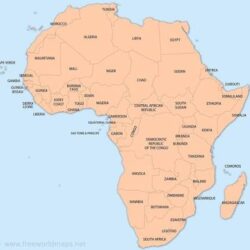
Geographical Distribution of the Berber Language
The Berber language is primarily spoken in four main countries:
Morocco
Algeria
Niger
Mali
In addition to these core regions, Berber-speaking communities are found in:
Mauritania
Tunisia (especially Djerba)
Libya
Egypt (Siwa Oasis)
Northern Burkina Faso
There is also a large Berber diaspora in France, resulting from historical migration and colonial ties.
Number of Berber Language Speakers Worldwide
The estimated number of Berber language speakers exceeds 18 million, distributed as follows:
Country
Estimated Speakers
Morocco
8,000,000
Algeria
7,000,000
France
1,500,000
Niger
800,000
Mali
500,000
Libya
200,000
Burkina Faso
35,000
Egypt
30,000
Tunisia
30,000
These figures highlight the Berber language as one of the most widely spoken indigenous languages in Africa.
Official Status and Language Policy
For many decades, the Berber language faced marginalization, especially in Morocco and Algeria, where it was excluded from education and official use before 1990. However, attitudes have changed significantly.
In Morocco, Berber became an official language in 2011, alongside Arabic.
In Algeria, it has been recognized as a national language since 2002 and later gained official status.
In Niger and Mali, the Berber language is recognized as a national but not official language.
Today, Berber is taught in some schools and universities, marking a major step toward linguistic equality.
Major Varieties of the Berber Language
The Berber language consists of several dialects, often considered independent languages by linguists. The six major varieties are:
Each variety has unique phonological and grammatical traits, yet they share a common linguistic foundation.
Historical Origins and Oldest Written Evidence
The earliest written records of the Berber language date back to around 200 BCE. These include bilingual inscriptions written in Tifinagh, discovered in Dugga, Tunisia.
Additional pre-Islamic inscriptions have been found in Algeria and Morocco, confirming the ancient roots of the Berber language long before Arabic influence.
Phonological Features of the Berber Language
Vowel System
Most Berber languages use three main vowels:
a
i
u
A fourth vowel, schwa (ə), appears in many dialects, though linguists debate whether it is phonemic. Some varieties, such as Tuareg, also include æ, e, and o, and uniquely distinguish vowel length.
Consonant System
The Berber language has absorbed several sounds from other languages, particularly Arabic, as well as French and Spanish.
Key features include:
Pharyngeal and uvular sounds borrowed from Arabic
Emphatic consonants, some inherited from Proto-Berber
A contrast between lax and tense consonants, often marked by length
Spirantization in northern dialects, where stops become fricatives
Occasional confusion between glides [w], [j] and vowels u, i
Writing Systems Used for the Berber Language
Tifinagh Script
The Tifinagh alphabet, derived from ancient Berber writing, is used today in Morocco for public signage and education. Modern Tifinagh:
Is written left to right
Contains 33 letters
Other Scripts
Arabic script is still used in many regions
Latin-based alphabets are common for Kabyle and in Niger and Mali
Morphology of the Berber Language
Nominal Morphology
Case: Free vs. annexed state
Gender: Masculine (unmarked) and feminine (marked with -t)
Number: Singular and plural (including broken plurals)
Articles: None
Pronouns: Independent or suffixed; gender distinction is widespread
Verbal Morphology
Berber verbs are built using:
Tense prefixes
Bi- or triconsonantal roots
Aspect-marking vowels
Personal suffixes
Aspect System
Aorist: neutral action
Perfective: completed action
Imperfective: ongoing action
Tense Markers
Past: perfective stem (no marker)
Present:la + imperfective
Future:ad or da + aorist
Syntax of the Berber Language
The typical word order is Verb–Subject–Object (VSO), though subjects are often omitted. Other features include:
Predicate-centered sentences
Possessor follows possessed
Modifiers follow nouns
Prepositions are widely used
Lexicon and Borrowed Vocabulary
Most loanwords in the Berber language come from:
Arabic
Hausa
In many dialects, numbers from three onward are borrowed from Arabic, although Tamasheq preserves the original numbering system.
Basic Numbers in the Berber Language (Tamasheq)
Number
Masculine / Feminine
One
iyan / iyāt
Two
esshin / esnatat
Three
kerad / kradat
Four
ekkoz / ekkozat
Five
semmos / semmosat
Six
sæḍis / sæḍisat
Seven
essa / essayat
Eight
ettam / ettamat
Nine
teẓa / teẓaya
Ten
meraw / merawat
Frequently Asked Questions (FAQs)
1. Is the Berber language still spoken today?
Yes, the Berber language is actively spoken by millions across North Africa and Europe.
2. Is Berber the same as Arabic?
No, Berber is a separate Afro-Asiatic language family, distinct from Arabic.
3. What script is used to write Berber?
Berber can be written in Tifinagh, Arabic, or Latin scripts.
4. How old is the Berber language?
Written evidence dates back to at least 200 BCE, making it one of Africa’s oldest languages.
5. Is Berber taught in schools?
Yes, especially in Morocco and Algeria, where it is part of the education system.
6. How many dialects does the Berber language have?
There are six major varieties, many considered independent languages.