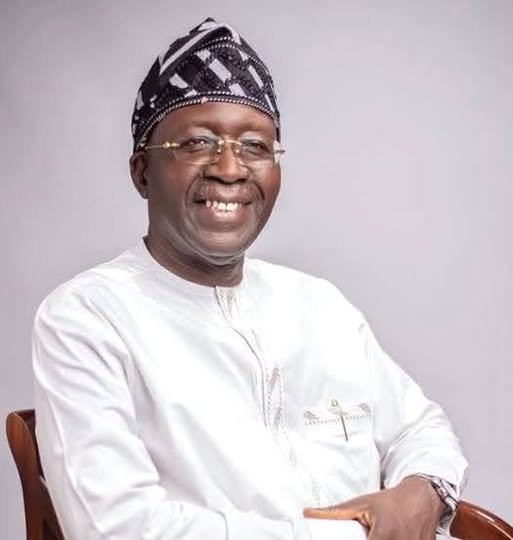
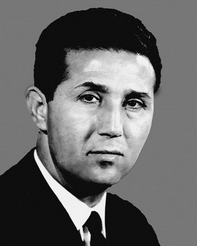
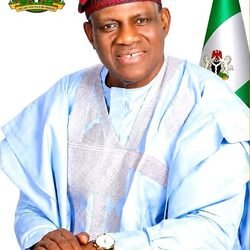
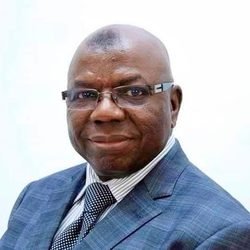
Dr Iyorchia Ayu: Scholar, Senate President and Party Leader
Senator Dr. Iyorchia Ayu was born on November 15, 1952, in Ipav, Gboko Local Government Area of Benue State. A sociologist turned statesman, he is a former Senate President, a former federal minister and a former National Chairman of the Peoples Democratic Party (PDP). He served as the 5th President of the Nigerian Senate during the Third Republic (1992-1993).
Academic Career
Ayu earned a degree in sociology from Ahmadu Bello University (ABU), Zaria, and later a doctorate from the University of Jos. He taught sociology at the University of Jos (Unijos), where his courses included the art and science of Marxism. He also served as chairman of the Unijos chapter of the Academic Staff Union of Universities (ASUU) and as a member of the Editorial Board of The Daily Times of Nigeria.
Entry into Politics
Ayu entered politics during the Third Republic. In 1992, he was elected Senator on the platform of the Social Democratic Party (SDP), and his leadership qualities soon earned him the position of President of the Senate.
He was known for his intellectual approach to lawmaking and his independence. He presided over the Senate at a turbulent time, when Nigeria was still under military rule led by General Ibrahim Babangida. His Senate often clashed with the executive over democratic reforms and transparency, and he held firmly to the principle of legislative independence.
In November 1993, the Senate impeached him. He had been a strong opponent of the Interim National Government, set up after the elected president, Moshood Kashimawo Olawale Abiola, was prevented from taking office.
He later served as Minister of Education in General Sani Abacha’s government. In March 1994, he chaired a workshop on technical education in Nigeria, which looked at lessons from Germany, the United States, Britain and Japan. He also facilitated the establishment of the Federal Government College, Vandeikya.
The Fourth Republic
With the return to civil rule in 1999, Ayu became a founding member of the PDP, which went on to dominate Nigerian politics. He helped in the 1998-1999 campaign to elect President Olusegun Obasanjo, who afterwards appointed him Minister of Industry (1999-2000). He was also widely regarded as the political godfather of Benue State Governor George Akume, who served from 1999 to 2007.
In a cabinet reshuffle in July 2003, he was reappointed as Minister of Internal Affairs. His tenure there included:
September 2003: announcing that Nigeria was negotiating security pacts with Niger and Chad to curb smuggling, human trafficking and cross-border banditry
June 2004: inaugurating the Prisons Monitoring Committee to safeguard prisoners’ right to acceptable conditions
August 2004: starting the distribution of national identity cards, meant to serve for identification, validate other documents such as passports and driving licences, help control migration, generate data for government planning and aid crime detection
In June 2005, another reshuffle moved him to the Ministry of Environment. He used the platform to press for stronger support for developing countries. At a meeting in Rotterdam in September 2005, he called for an effective, sufficient and predictable financial mechanism to give African countries the technical skills and infrastructure to handle chemicals safely. In October 2005, he called for fair access to UNDP/GEF funds and bigger allocations for developing countries. In December 2005, he praised the multi-sectoral approach of Integrated Coastal Area Management (ICAM) as a way to manage the regional ecosystem.
That same month, President Obasanjo removed him from the cabinet without giving reasons.
The Action Congress Years
After falling out with Obasanjo, Ayu left the PDP and joined the Action Congress (AC), where he headed the campaign to elect Vice President Atiku Abubakar as president in the April 2007 elections.
In March 2007, he spoke out against the Independent National Electoral Commission (INEC) for failing to include Atiku’s name on the list of candidates.
National Chairman of the PDP (2021-2023)
Ayu was elected National Chairman of the PDP in late 2021, following the resignation of Uche Secondus. His election was part of efforts to stabilize and reposition the party ahead of the 2023 general elections.
His tenure was marked by internal crisis, especially his conflict with the “G5 Governors,” led by then Rivers State Governor Nyesom Wike. The group demanded his resignation on the grounds of regional balance, since both the party’s presidential candidate, Atiku Abubakar, and Ayu were from the North. In March 2023, Ayu was suspended by his ward party council in Igyorov, Benue State, and he eventually stepped down as National Chairman.
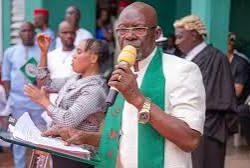
Senator Dr. Iyorchia Ayu
Personal Life and Legacy
Dr. Ayu is married with children. He is known for a calm, intellectual and strategic political style. Despite the controversies, he remains one of Nigeria’s most experienced political figures, having served as legislator, administrator and party leader.
His legacy rests on his contribution to Nigeria’s democratic evolution, his advocacy for strong institutions, and his lasting influence on the politics of Benue State and the nation.
Senate Passes State Police Bill. What’s Next Nigeria moved a significant step closer to restructuring its security architecture on Wednesday as the Senate passed the long-debated Constitution…