How to Increase Page RPM? – Smart, Proven Methods That Actually Work
How to Increase Page RPM? by improving ad viewability, using ad refresh, and leveraging header bidding to maximize revenue without hurting user experience.
How to Increase Page RPM?
The best way to increase page RPM is by serving more impressions per page view or by increasing the amount earned for each individual impression. While increasing website traffic is an obvious method, it is not the only or even the most effective approach. Publishers can significantly improve revenue by optimizing how ads are displayed, viewed, and monetized on existing traffic.
Page RPM (Revenue Per Mille) measures how much revenue a publisher earns per 1,000 page views. Even small improvements to ad performance, viewability, and competition can result in noticeable revenue growth over time. The key is increasing page RPM without damaging the user experience, which can otherwise lead to lower engagement and higher bounce rates.
Below are proven strategies that publishers can use to increase page RPM in a sustainable way.
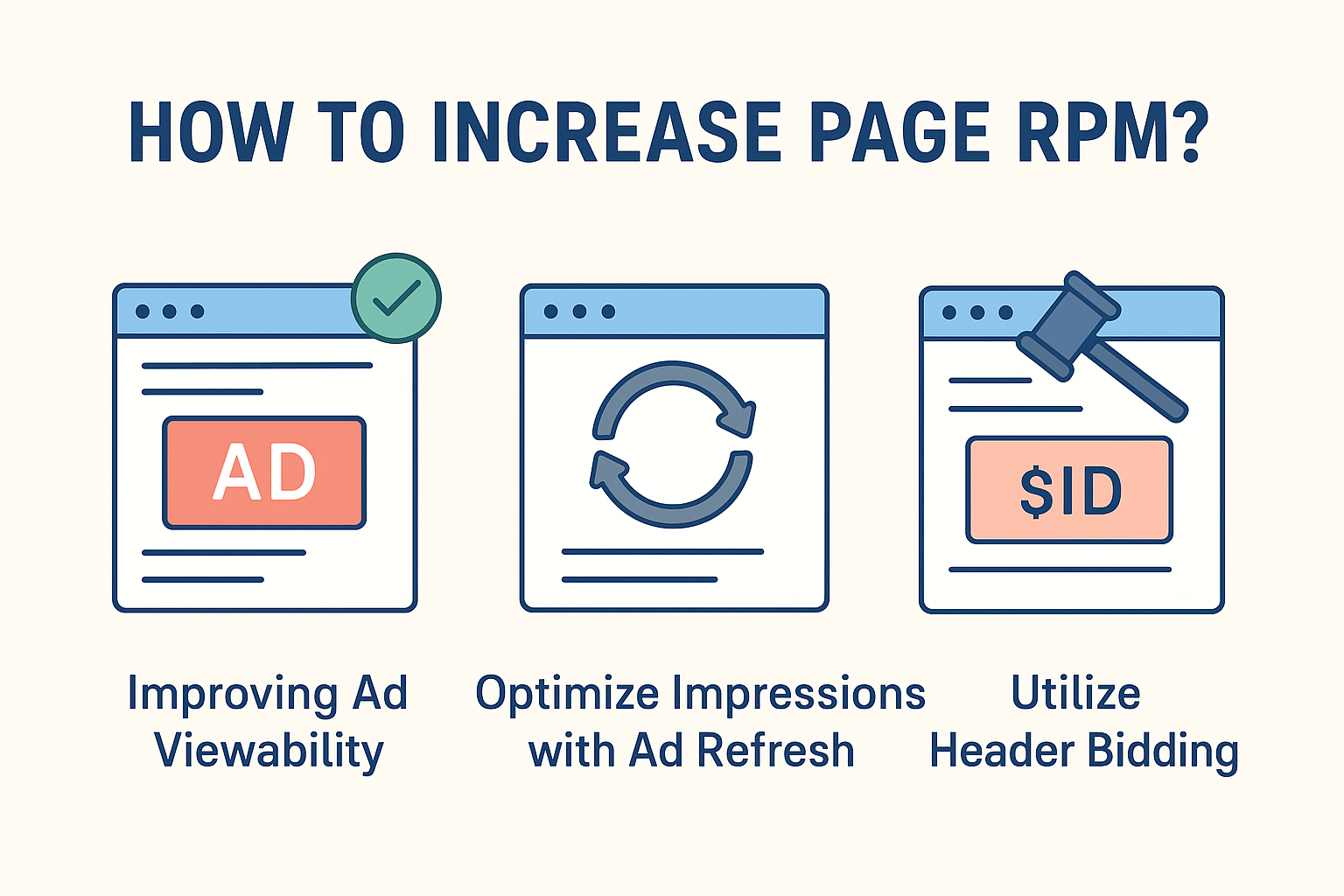
Improving Ad Viewability
Ads only generate revenue when users actually see them. That’s why ad viewability is one of the most important factors influencing page RPM. Higher viewability rates often lead to higher bids from advertisers, improved CPMs, and better overall monetization.
Several elements affect ad viewability. Page speed plays a major role. Faster-loading pages allow users to reach content quickly, increasing the chances that ads are rendered and viewed properly. Optimizing images, reducing unnecessary scripts, and improving server performance can all help reduce latency.
Ad placement and layout also matter. Ads placed above the fold or within natural content breaks tend to perform better than ads hidden at the bottom of the page. However, balance is essential. Poorly placed ads can feel intrusive and push users away, reducing long-term revenue. A thoughtful layout that integrates ads naturally into the content improves both viewability and user satisfaction.
Optimize Impressions with Ad Refresh
Another effective way to increase page RPM is by increasing the number of impressions per page view. This is commonly achieved through ad refresh.
Ad refresh works by reloading ads for users who remain active on a page for a certain amount of time. This approach is especially effective on content-heavy pages such as long articles, blogs, or news sites where users spend several minutes reading.
To avoid harming the user experience, ad refresh should only trigger when ads are viewable and when the user is active. Refreshing ads too frequently or without viewability checks can lead to policy violations and reduced advertiser trust. When implemented correctly, ad refresh can significantly increase impressions and boost page RPM without adding more ad units.
Utilize Header Bidding
Header bidding is one of the most powerful tools available to publishers looking to increase page RPM. It allows multiple ad exchanges and demand partners to bid on ad inventory at the same time, increasing competition and driving up CPMs.
Unlike traditional waterfall setups, header bidding ensures that every advertiser has an equal chance to bid, which often results in higher-paying ads being displayed. This method improves fill rates and maximizes the value of each impression without negatively affecting the user experience.
Header bidding works best for websites with consistent traffic and a healthy volume of impressions. When implemented correctly, it can dramatically improve revenue while maintaining fast load times and ad quality.
Improve Page RPM Through Better User Experience
User experience has a direct impact on page RPM. If visitors feel overwhelmed by ads, they are more likely to leave quickly, reducing impressions and revenue.
Mobile optimization is especially important, as most users now browse on smartphones. Ads should scale properly across devices and avoid covering content or interfering with navigation. Reducing ad clutter and prioritizing high-performing placements over excessive ad units leads to higher engagement and better RPM over time.
A positive user experience keeps visitors on your site longer, increasing both viewability and ad impressions naturally.
Use Smarter Ad Formats
Choosing the right ad formats can significantly improve page RPM. Sticky ads that remain visible as users scroll tend to have high viewability rates. Native ads, which blend seamlessly into the content, often generate strong engagement without disrupting the reading experience.
Testing different formats and placements allows publishers to find the best-performing combination for their audience while maintaining site quality.
Frequently Asked Questions (FAQs)
What is a good page RPM?
A good page RPM varies by niche, traffic source, and geography. However, increasing page RPM consistently over time is more important than comparing numbers across sites.
Does more traffic always increase page RPM?
No. Traffic increases total revenue, but page RPM depends on ad quality, viewability, and competition, not just visitor numbers.
Is ad refresh allowed by ad networks?
Yes, when implemented correctly with viewability and user-activity checks. Always follow ad network policies.
Can too many ads lower page RPM?
Yes. Excessive ads can reduce user engagement, leading to lower viewability and weaker performance.
Does page speed affect page RPM?
Absolutely. Faster pages improve user engagement and ad viewability, leading to higher RPM.
Is header bidding suitable for small websites?
Header bidding works best for sites with steady traffic, but smaller publishers can still benefit with the right setup.
Understanding How to Increase Page RPM? is about working smarter, not just harder. By improving ad viewability, using ad refresh responsibly, leveraging header bidding, and prioritizing user experience, publishers can unlock higher revenue from the same traffic. Sustainable growth comes from thoughtful optimization that benefits both users and advertisers.
Salary increase in Nigeria A Historical Perspective on Salary and Wage Reviews in Nigeria The history of Nigeria’s pay structure predates its political independence.…
NYSC ALLOWANCE INCREASE TO 77,000 The federal government has approved the increase of the nysc allowance,From 33,000 to 77,000 which payments are back dated to…