International Organizations Active in Bosnia and Herzegovina
Bosnia and Herzegovina hosts a significant presence of international and regional organizations that play essential roles in governance reform, peace implementation, human rights protection, economic development, security, and humanitarian assistance. This international engagement reflects the country’s post-conflict framework, its obligations under international law, and its strategic orientation toward European and global integration. The organizations listed below represent the most influential international actors operating in or engaging with Bosnia and Herzegovina.
Office of the High Representative for Bosnia and Herzegovina (OHR)
The Office of the High Representative is the primary civilian authority overseeing the implementation of the civilian aspects of the General Framework Agreement for Peace, commonly known as the Dayton Peace Agreement. The High Representative is mandated to monitor compliance with the agreement, coordinate international civilian activities, and facilitate institution-building. Under the so-called “Bonn Powers,” the High Representative may impose binding decisions and remove public officials who violate legal commitments or obstruct the peace process. OHR remains a central actor in safeguarding constitutional order and political stability.
European Union Delegation to Bosnia and Herzegovina and EU Special Representative
The European Union Delegation represents the EU’s political, economic, and strategic interests in Bosnia and Herzegovina. It also hosts the Office of the EU Special Representative, whose mandate focuses on supporting reforms related to EU accession, strengthening the rule of law, promoting democratic governance, and advancing reconciliation. The Delegation manages EU financial assistance instruments, including pre-accession funds, and serves as the principal interface between Bosnian institutions and EU bodies.
Regional Cooperation Council (RCC)
The Regional Cooperation Council promotes cooperation and European integration among South East European countries. Headquartered in Sarajevo, the RCC focuses on regional economic integration, infrastructure connectivity, digital transformation, security cooperation, and social development. It functions as a regionally owned framework that succeeded the Stability Pact for South Eastern Europe, emphasizing local ownership and shared responsibility for regional progress.
OSCE Mission to Bosnia and Herzegovina
The OSCE Mission to Bosnia and Herzegovina supports democratic governance, human rights protection, and security sector reform. Its work includes election monitoring, judicial reform assistance, education reform, arms control implementation, and the promotion of tolerance and non-discrimination. The Mission has been instrumental in post-war democratization and continues to address systemic governance and rule-of-law challenges.
United Nations High Commissioner for Refugees (UNHCR) in Bosnia and Herzegovina
UNHCR operates in Bosnia and Herzegovina to protect refugees, asylum seekers, internally displaced persons, and stateless individuals. Its activities include legal assistance, shelter support, advocacy for durable solutions, and coordination with national authorities on asylum and migration policies. UNHCR has played a long-standing role in post-war return processes and continues to respond to contemporary migration movements.
European Union
The European Union, as a supranational organization, is a central strategic partner of Bosnia and Herzegovina. The country is formally recognized as a potential EU member state and is engaged in the enlargement process. The EU provides political guidance, technical assistance, and financial support aimed at aligning Bosnia and Herzegovina with EU standards in governance, economy, justice, and fundamental rights.
European Union Force in Bosnia and Herzegovina (EUFOR Althea)
EUFOR Althea is the EU-led military operation responsible for maintaining a safe and secure environment in Bosnia and Herzegovina. Operating under a United Nations mandate, EUFOR supports local authorities in defense capacity-building and ensures compliance with the military aspects of the Dayton Peace Agreement. Its presence acts as a deterrent to instability and reinforces overall security.
Council of Europe
The Council of Europe promotes democracy, human rights, and the rule of law across the continent. Bosnia and Herzegovina is a member state and is bound by key conventions, including the European Convention on Human Rights. The organization provides legal expertise, monitors compliance through specialized bodies, and supports judicial and constitutional reforms, particularly in relation to human rights protection.
United Nations
The United Nations maintains a broad institutional presence and engagement in Bosnia and Herzegovina through its agencies, funds, and programs. UN involvement encompasses peacebuilding, development, human rights monitoring, humanitarian coordination, and support for sustainable development goals. The UN system works closely with national institutions and civil society to address structural and social challenges.
International Commission on Missing Persons (ICMP)
The International Commission on Missing Persons assists governments and institutions in locating and identifying persons missing as a result of conflict, human rights abuses, and disasters. In Bosnia and Herzegovina, ICMP has been pivotal in the identification of victims from the 1992–1995 conflict, supporting forensic investigations, family rights, and judicial processes related to war crimes.
United Nations Educational, Scientific and Cultural Organization (UNESCO)
UNESCO supports Bosnia and Herzegovina in education reform, cultural heritage protection, scientific cooperation, and media freedom. The organization is particularly active in safeguarding cultural heritage sites, promoting intercultural dialogue, and strengthening education systems in line with international standards.
International Criminal Police Organization (INTERPOL)
INTERPOL facilitates international police cooperation, enabling Bosnian law enforcement agencies to collaborate with counterparts worldwide. Its activities include combating transnational crime, terrorism, human trafficking, cybercrime, and organized crime. Membership in INTERPOL strengthens Bosnia and Herzegovina’s capacity to address cross-border security threats.
United Nations Office on Drugs and Crime (UNODC)
UNODC supports Bosnia and Herzegovina in addressing drug trafficking, organized crime, corruption, and terrorism. Through technical assistance and policy advice, UNODC contributes to strengthening criminal justice institutions, improving legislative frameworks, and enhancing international cooperation in law enforcement.
United Nations Development Programme (UNDP) in Bosnia and Herzegovina
UNDP focuses on sustainable development, democratic governance, social inclusion, environmental protection, and economic resilience. Its programs address unemployment, local governance, energy efficiency, disaster risk reduction, and institutional capacity-building. UNDP is a key partner in advancing long-term development objectives.
International Criminal Tribunal for the Former Yugoslavia (ICTY)
The ICTY was a United Nations judicial body established to prosecute serious violations of international humanitarian law committed during the conflicts in the former Yugoslavia. Although the Tribunal formally closed, its legacy remains highly significant in Bosnia and Herzegovina, particularly in establishing judicial accountability, developing international criminal law, and documenting wartime atrocities.
International Organization for Migration (IOM)
The International Organization for Migration works on migration management, humanitarian assistance, border governance, and counter-trafficking initiatives. In Bosnia and Herzegovina, IOM has been especially active in responding to mixed migration flows, supporting government institutions, and providing assistance to migrants and vulnerable populations.
Education in Bosnia and Herzegovina Education in Bosnia and Herzegovina has a rich and layered history shaped by religious traditions, imperial rule, socialism, and modern…
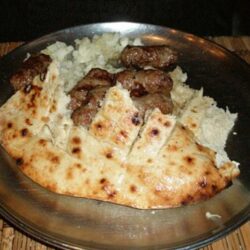
Cuisine of Bosnia and Herzegovina The cuisine of Bosnia and Herzegovina is a rich reflection of the country’s history, geography, and cultural diversity. Shaped by…
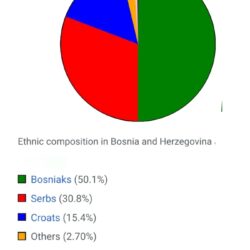
Bosnia and Herzegovina Ethnic Composition Bosnia and Herzegovina is one of the most ethnically diverse countries in Southeast Europe. Its social fabric has been shaped…
Languages of Bosnia and Herzegovina Language in Bosnia and Herzegovina is closely tied to history, identity, and politics. While the country is linguistically unified in…
Religion in Bosnia and Herzegovina Religion plays a central role in the history, identity, and social structure of Bosnia and Herzegovina. The country is widely…
International organizations Nigeria belongs to The international organizations that Nigeria belongs to are: United Nations Commonwealth of Nations (Secretariat) UK. Membership since: 1949 Commonwealth Secretariat…
Lagos International Airport The Lagos International Airport airport is Nigeria’s busiest airport followed by Nnamdi Azikiwe International Airport, Abuja. The Lagos International Airport…
List of International Airports In Nigeria Murtala Mohammed International Airport, Lagos Murtala Mohammed International Airport is an international airport which is located in the capital city…
Addis Ababa Bole International Airport Addis Ababa Bole International Airport is a primary gateway to Ethiopia and the African continent, connecting travelers worldwide to various…