Lagos State was created on May 27, 1967 by virtue of State (Creation and Transitional Provisions) Decree No. 14 of 1967, which restructured Nigeria’s Federation into 12 States.
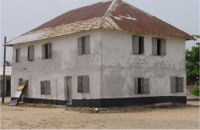
First storey building in Lagos and in Nigeria
Prior to this, Lagos Municipality had been administered by the Federal Government through the Federal Ministry of Lagos Affairs as the regional authority, while the Lagos City Council (LCC) governed the City of Lagos. Equally, the metropolitan areas (Colony Province) of Ikeja, Agege, Mushin, Ikorodu, Epe and Badagry were administered by the Western Region.
The State took off as an administrative entity on April 11, 1968 with Lagos Island serving the dual role of being the State and Federal Capital.
However, with the creation of the Federal Capital Territory of Abuja in 1976, Lagos ceased to be the capital of the State which was moved to Ikeja. Equally, with the formal relocation of the seat of the Federal Government to Abuja on 12th December, 1991, Lagos ceased to be Nigeria’s political capital. Nevertheless, Lagos remains the nation’s economic and commercial capital.
Lagos
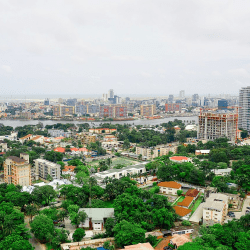
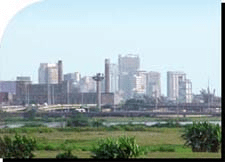
Lagos is the commercial capital of Nigeria and the most populated city in the country and Africa.
Ikoyi
It was the administrative capital of Nigeria until December 1991 following the government’s decision to move the capital to Abuja in the centre of the country.
Victoria Island
Lagos is a major African financial centre and is an economic hub.
The city has been described as the cultural, financial, and entertainment capital of Africa, and is a significant influence on commerce, entertainment, technology, education, politics, tourism, art, and fashion.
Lagos is also among the top ten of the world’s fastest-growing cities and urban areas.
The megacity has the fourth-highest GDP in Africa and houses one of the largest and busiest seaports on the continent.
The Lagos metropolitan area is a major educational and cultural centre in Sub Saharan Africa.
Cathedral Church of Christ Marina, Lagos is an Anglican cathedral on Lagos Island, Lagos, Nigeria.
Lagos emerged as a home to the Awori tribe of the Yoruba of West Africa islands, which are contained in the present day Local Government Areas (LGAs) of Lagos Island, Eti-Osa, Amuwo-Odofin and Apapa.
Due to rapid urbanisation, the city expanded to the west of the lagoon to include areas in the present day Lagos Mainland, Ajeromi-Ifelodun, and Surulere.
This led to the classification of Lagos into two main areas: the Island, which was the original city of Lagos, and the Mainland, which it has since expanded into.
This city area was governed directly by the Federal Government through the Lagos City Council, until the creation of Lagos State in 1967, which led to the splitting of Lagos city into the present-day seven Local Government Areas (LGAs), and an addition of other towns (which now make up 13 LGAs) from the then Western Region to form the state.
Third Mainland Bridge across the Lagos Lagoon
The islands are separated by creeks, fringing the southwest mouth of Lagos Lagoon, while being protected from the Atlantic Ocean by barrier islands and long sand spits such as Bar Beach, which stretch up to 100 km east and west.
However, the state capital was later moved to Ikeja in 1976, and the federal capital moved to Abuja in 1991.
Market
Even though Lagos is still widely referred to as a city, the present-day Lagos, also known as “Lagos Metropolitan Area” is an urban agglomeration or conurbation, consisting of 16 LGAs including Ikeja, the state capital of Lagos State.
Ferry terminal
This conurbation makes up 37% of Lagos State total land area, but houses about 85% of the state’s total population.
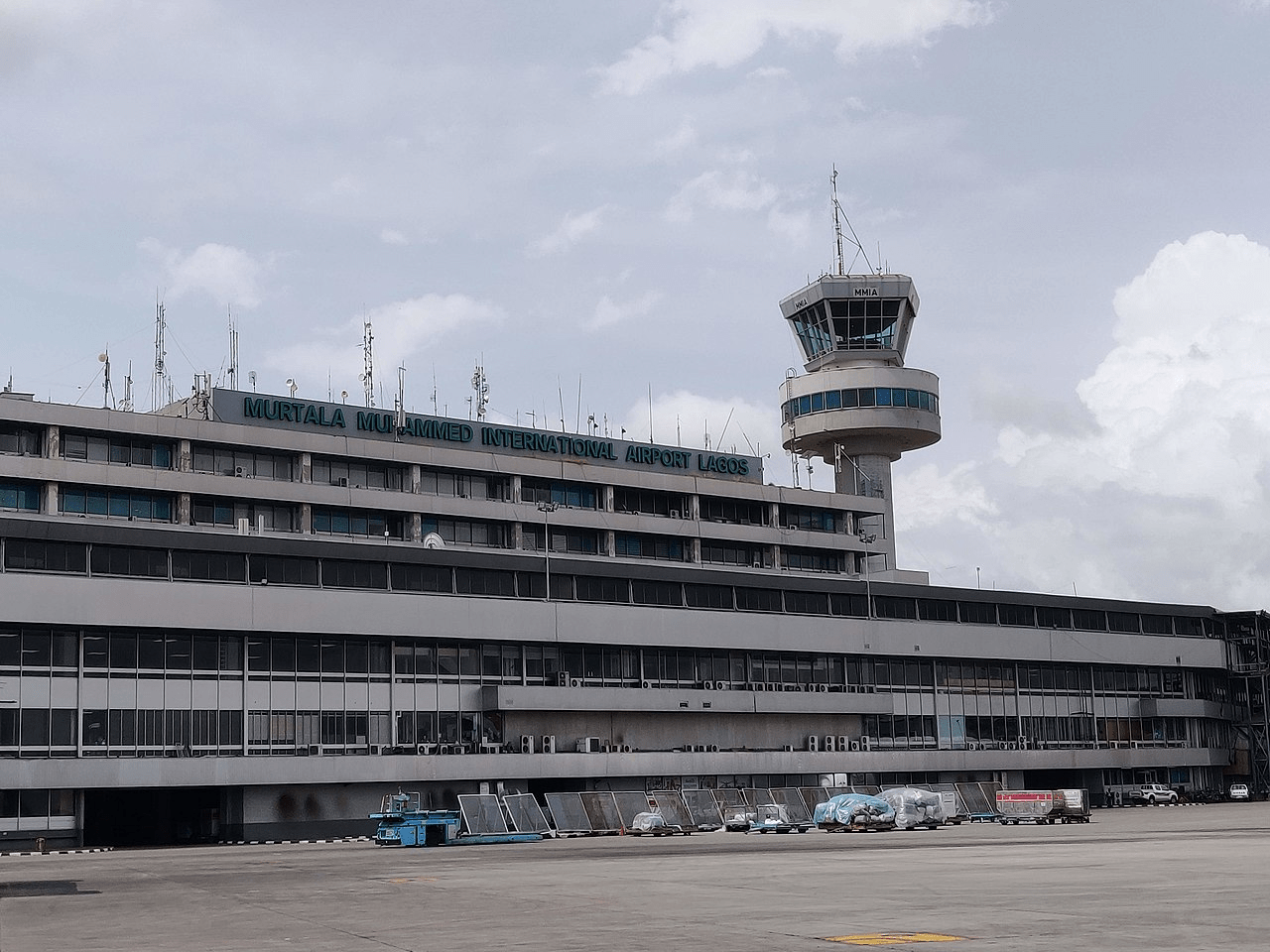
Airport
The business district of Lagos is home to Tinubu Square, named after the aristocratic slave trader Efunroye Tinubu. Lagos contains Murtala Muhammed International Airport, named after Nigerian president Murtala Muhammad, and is one of the busiest African airports. Lagos National Stadium has hosted various international sports events such as the 1980 African Cup of Nations.
More
A BRIEF HISTORY OF LAGOS STATE Lagos State, located in southwestern Nigeria, is the smallest by land area but one of the most significant states in…
Suez Canal History and Strategic Importance The Suez Canal stands today as one of the most crucial waterways in global maritime trade. Connecting the Mediterranean Sea to the Red…
Azerbaijani Language: History, Grammar, and Global Presence Azerbaijani language, its history, dialects, phonology, grammar, and global distribution. Learn key vocabulary, pronunciation rules, and linguistic features. Azerbaijani Azerbaijani,…
Etymology and History Behind the Name Bangladesh The fascinating etymology and deep-rooted history behind the name Bangladesh — uncovering its linguistic origins, cultural symbolism, and evolution from…