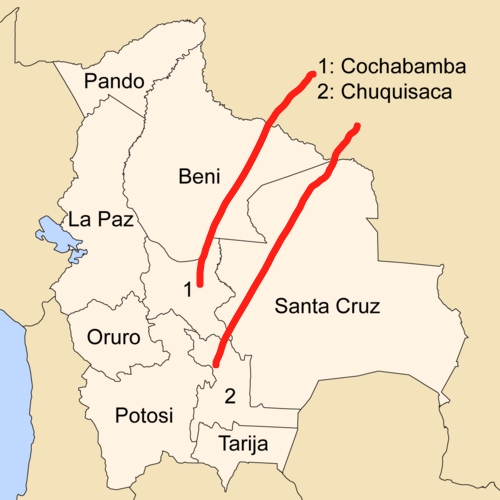
List of Bolivia Departments with their capitals, population, and size of land area
Bolivia has nine departments. They are:
Beni
Chuquisaca
Cochabamba
La Paz
Oruro
Pando
Potosí
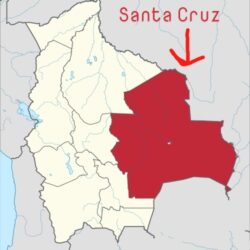
Santa Cruz
Tarija
Departments of Bolivia with their capitals, population, and size of land area
Department
Capital City
Population (approx.)
Area (km²)
Beni
Trinidad
~477,000
213,564
Chuquisaca
Sucre
~600,000
51,524
Cochabamba
Cochabamba
~2,005,000
55,631
La Paz
La Paz
~3,022,000
133,985
Oruro
Oruro
~570,000
53,588
Pando
Cobija
~131,000
63,827
Potosí
Potosí
~856,000
118,218
Santa Cruz
Santa Cruz de la Sierra
~3,115,000
370,621
Tarija
Tarija
~534,000
37,623
Quick facts
🏙️ Most populated: Santa Cruz
🌄 Largest by area: Santa Cruz
🌱 Least populated: Pando
📏 Smallest by area: Tarija
Bolivia is a diverse South American nation with rich geography, culture, and history. To manage this diversity effectively, the country is divided into Departments of Bolivia, which serve as its highest-level administrative units. These departments play a crucial role in governance, political representation, and regional development. Understanding how the departments function helps explain how Bolivia operates as a modern unitary state while still respecting regional identity.
Currently, Bolivia consists of nine departments, each with its own capital city, elected authorities, population size, and geographic features. Together, they form the backbone of the country’s political and administrative structure.
Departments of Bolivia
The Departments of Bolivia are the primary territorial divisions of the country. While Bolivia is officially a unitary state, the departments enjoy a level of administrative autonomy granted by the Constitution of Bolivia. Each department manages local affairs such as infrastructure, economic planning, education, and public services, while still operating under national laws.
Every department is represented in the Plurinational Legislative Assembly, ensuring that all regions have a voice in national decision-making. This system balances centralized authority with regional participation, helping maintain unity across Bolivia’s varied landscapes.
Administrative Structure and Constitutional Role
A department in Bolivia functions as an intermediate level between the national government and smaller subdivisions known as provinces and municipalities. Each department has a Departmental Government, led by a Governor elected by popular vote. These governments work alongside the national government to implement development plans and public policies.
Under the Bolivian Constitution, departments have rights related to budget management, regional planning, and natural resource coordination. However, they do not function as independent states. Instead, their authority exists within the framework of national unity and constitutional law.
Historical Development of Bolivia’s Departments
The departmental system in Bolivia has roots in the Spanish colonial era. During colonial rule, territories were organized for easier administration and tax collection. After Bolivia gained independence in 1825, these divisions were reorganized into departments to strengthen national governance.
Over time, boundaries shifted due to population changes, economic needs, and international conflicts. One notable example is the former Litoral Department, which was lost to Chile following the War of the Pacific in the late 19th century. Since then, Bolivia has maintained nine departments, which remain in place today.
The Nine Departments of Bolivia
Each of the nine departments contributes uniquely to the country:
La Paz is the most politically significant department and home to Bolivia’s seat of government. It is also one of the most populous regions.
Santa Cruz is the largest department by area and population, serving as Bolivia’s economic engine with strong agriculture and industry.
Cochabamba is known as the country’s agricultural heartland and enjoys a mild climate.
Chuquisaca, home to the constitutional capital Sucre, holds major historical importance.
Potosí is famous for its mining legacy, especially Cerro Rico, which played a global role in colonial silver production.
Oruro is known for mining and its UNESCO-recognized carnival.
Tarija is Bolivia’s smallest department by area but is rich in natural gas and wine production.
Beni features vast lowlands and river systems, supporting cattle ranching and biodiversity.
Pando, the least populated department, lies in the Amazon region and is covered largely by rainforest.
Together, these regions showcase Bolivia’s remarkable diversity in climate, economy, and culture.
Population Distribution and Demographics
Population across the Departments of Bolivia is uneven. Santa Cruz has become the most populous department due to rapid urban growth and economic opportunities. La Paz follows closely, while Pando remains sparsely populated due to its remote location and dense forests.
Urbanization plays a key role in population changes, with cities like Santa Cruz de la Sierra, El Alto, and Cochabamba attracting migrants from rural areas. These trends influence political representation, public spending, and regional planning.
Geographic Size and Natural Diversity
Bolivia’s departments vary greatly in size. Santa Cruz is the largest by area, covering vast plains, forests, and wetlands. In contrast, Tarija is the smallest but remains economically significant due to energy resources.
Geographically, the departments span the Andes Mountains, the Amazon Basin, fertile valleys, and arid highlands. This diversity affects climate, agriculture, transportation, and settlement patterns, making regional governance essential.
Political Representation and Governance
Each department elects four senators, regardless of population size, ensuring equal regional representation in the Senate. Seats in the Chamber of Deputies are distributed based on population, giving more populous departments greater influence.
Departmental governments coordinate closely with municipal and national authorities. While autonomy has expanded over the years, national unity remains a guiding principle in Bolivia’s political system.
Economic Importance of the Departments
The economy of Bolivia depends heavily on its departmental structure. Santa Cruz leads in agriculture and exports, Potosí and Oruro support mining, Tarija drives energy production, and La Paz functions as an administrative and commercial center.
This specialization allows departments to focus on their strengths while contributing to national development. Infrastructure projects and regional investment plans are often tailored to each department’s economic profile.
Cultural and Ethnic Diversity
Cultural identity varies widely across the Departments of Bolivia. Indigenous groups such as the Aymara, Quechua, Guaraní, and many Amazonian peoples are concentrated in different regions. Traditional languages, festivals, and customs remain strong at the departmental level.
This diversity is officially recognized by Bolivia’s plurinational identity, which values multiculturalism and indigenous rights.
Former Departments of Bolivia
Bolivia once included the Litoral Department, which provided access to the Pacific Ocean. After its incorporation into Chile, Bolivia became a landlocked country. This historical loss continues to influence national identity and foreign policy.
Frequently Asked Questions (FAQs) on Bolivia Departments
How many departments does Bolivia have?
Bolivia has nine departments, which are its main administrative divisions.
What is the largest department in Bolivia?
Santa Cruz is the largest department by both area and population.
Which department is the least populated?
Pando is the least populated department in Bolivia.
Do departments have political autonomy?
Yes, departments have limited autonomy under the Constitution but remain part of a unitary state.
What is the capital of Bolivia’s government?
The seat of government is in La Paz, while Sucre is the constitutional capital.
Are departments divided further?
Yes, departments are subdivided into provinces, which are further divided into municipalities.
More
Ghana districts. Population, size of land area and capitals of districts The districts of Ghana and their population, land area and capitals are as follows: DistrictPopulationArea (km.²)CapitalAbura-Asebu-Kwamankese90,093324Abura-DunkwaAccra1,659,136185AccraAdansi East129,3251,380New EdubiaseAdansi West235,680828ObuasiAfigya Sekyere117,653770AgonaAfram…
Tanzania districts: Population, land size and capitals Districts of Tanzania by population, land size and capital DistrictPopulationArea (Km²)CapitalArumeru514,6512,896AkheriArusha281,60883ArushaBabati302,2534,969BabatiBagamoyo228,9679,842ChalinzeBariadi603,6049,777BariadiBiharamulo409,3898,938Biharamulo MjiniBukoba Rural394,0206,993BukobaBukoba Urban80,86880BukobaBukombe395,29810,842UshiromboBunda258,9302,782BundaChake82,998332Chake ChakeChunya205,91527,065MakongorosiDodoma Rural438,86614,004DodomaDodoma Urban322,8112,576DodomaGeita709,0785,880KalangalalaHai258,9352,369Hai MjiniHanang204,6402,918GananaHandeni248,6336,112ChanikaIgunga324,0946,788IgungaIlala634,924210IlalaIleje109,8471,935ItumbaIlemela264,873895IlemelaIramba367,0367,900SheluiIringa Rural245,03319,898IringaIringa Urban106,371160IringaKahama594,8919,461Kahama…
Nigeria states and capitals, population, land area States of Nigeria; their capitals, population, land and area in Km² StateCapitalPopulationArea (Km²)AbiaUmuahia2,833,9994,857AdamawaYola3,168,10137,957Akwa IbomUyo3,920,2086,788AnambraAwka4,182,0324,761BauchiBauchi4,676,46548,197BayelsaYenagoa1,703,3589,363BenueMakurdi4,219,24430,755BornoMaiduguri4,151,19372,767Cross RiverCalabar2,888,96622,112DeltaAsaba4,098,39117,095EbonyiAbakaliki2,173,5016,342EdoBenin City3,218,33219,584EkitiAdo-Ekiti2,384,2125,797EnuguEnugu3,257,2987,560Federal Capital TerritoryAbuja1,405,2017,569GombeGombe2,353,87917,428ImoOwerri3,934,8995,135JigawaDutse4,348,64923,415KadunaKaduna6,066,56244,217KanoKano9,383,68220,389KatsinaKatsina5,792,57823,822KebbiBirnin Kebbi3,238,62836,320KogiLokoja3,278,48729,063KwaraIlorin2,371,08933,792LagosIkeja9,013,5343,475NasarawaLafia1,863,27526,633NigerMinna3,950,24972,065OgunAbeokuta3,728,09816,850OndoAkure3,441,02415,019OsunOshogbo3,423,5358,585OyoIbadan5,591,58927,036PlateauJos3,178,71226,539RiversPort Harcourt5,185,40010,361SokotoSokoto3,696,99932,146TarabaJalingo2,300,73659,180YobeDamaturu2,321,59144,880ZamfaraGusau3,259,84633,667Total140,003,542911,519…
Tanzania regions: Population, land area and capitals Regions of Tanzania by population, land area and capitals RegionPopulationArea (Km²)CapitalArusha1,694,31033,809ArushaDar es Salaam4,364,5411,393Dar es SalaamDodoma2,083,58841,311DodomaGeita1,739,530 GeitaIringa941,23856,864IringaKagera2,458,02328,388BukobaKatavi564,604 MpandaKigoma2,127,93037,037KigomaKilimanjaro1,640,08713,309MoshiLindi864,65267,000LindiManyara1,425,13146,359BabatiMara1,743,83019,566MusomaMbeya2,707,41060,350MbeyaMorogoro2,218,49270,799MorogoroMtwara1,270,85416,707MtwaraMwanza2,772,50919,592MwanzaNjombe702,097 NjombePemba North211,732574WetePemba South195,116332Chake ChakePwani1,098,66832,407Dar es SalaamRukwa1,004,53968,635SumbawangaRuvuma1,376,89163,498SongeaShinyanga1,534,80850,781ShinyangaSimiyu1,584,157 BariadiSingida1,370,63749,341SingidaTabora2,291,62376,151TaboraTanga2,045,20526,808TangaZanzibar…
List of Cameroon regions by size of land Largest List of Cameroon regions by land area. From largest to smallest RegionArea (Km2)East109,002Centre68,953North66,090Adamawa63,701South47,191Far North34,263Southwest25,410Littoral20,248Northwest17,300West13,892 Smallest List of Cameroon regions…
Most Populated Departments of Bolivia The most populated departments of Bolivia, ranked from highest to lowest population Most Populated Departments of Bolivia are Santa Cruz…
Land Size of Local Government Areas in Nigeria Local Government AreaArea (km²)Abadam3,973Abaji992Abak190Abakaliki584Aba North23Aba South49Abeokuta North808Abeokuta South71Abi282Aboh-Mbaise184Abua/Odual704Abuja Municipal Area Council (AMAC)1,769Adavi718Ado1,220Ado Ekiti293Ado-Odo/Ota878Afijio722Afikpo North240Afikpo South378Agaie1,903Agatu1,015Agege11Aguata195Agwara1,538Ahiazu-Mbaise114Ahoada East341Ahoada West403Aiyedade1,113Aiyedire262Aiyekire391Ajaokuta1,362Ajeromi-Ifelodun12Ajingi714Akamkpa5,003Akinyele518Akko2,627Akoko-Edo1,371Akoko North East372Akoko North…
Total land size of Algeria The total land area of Algeria is 2,381,741 km2 (kilometers square). Algeria provinces by land area (largest to smallest) ProvinceLand…