Why Is Bolivia Named Bolivia? A Look at Its Origins
Bolivia’s name carries deep historical meaning rooted in the struggle for independence in South America. It honors one of the most influential revolutionary leaders of the 19th century—Simón Bolívar, the Venezuelan general who played a key role in freeing much of the continent from Spanish colonial rule.
Simón Bolívar and the Fight for Independence
Simón Bolívar was a central figure in the Spanish American wars of independence, leading campaigns that helped liberate present-day Venezuela, Colombia, Ecuador, Peru, and Bolivia. His vision extended beyond military victory; Bolívar dreamed of a united and self-governing South America.
As Spanish control weakened in the region known as Charcas (modern-day Bolivia), Bolívar entrusted an important decision to his close ally and fellow revolutionary, Antonio José de Sucre.
A Crucial Choice for a New Nation
After independence from Spain seemed inevitable, Sucre faced three possible paths for Charcas:
Unite with the newly formed Republic of Peru
Join the United Provinces of the Río de la Plata (present-day Argentina)
Become a fully independent nation
With strong local support, Sucre chose the third option. On August 6, 1825, the territory formally declared independence and decided to create a brand-new state rather than merge with its neighbors.
From Bolívar to Bolivia
Initially, the new country was named the Republic of Bolívar in honor of Simón Bolívar himself. Shortly afterward, a congressman named Manuel Martín Cruz proposed a memorable and poetic argument:
“If from Romulus came Rome, then from Bolívar comes Bolivia.”
The idea resonated. On October 3, 1825, the name Bolivia was officially adopted, cementing Bolívar’s legacy in the nation’s identity.
A Modern Name for a Diverse Nation
Bolivia’s name evolved again nearly two centuries later. In 2009, a new constitution renamed the country the Plurinational State of Bolivia. This change was meant to recognize the country’s rich ethnic diversity and to strengthen the rights and representation of its Indigenous peoples.
Today, the name reflects both Bolivia’s revolutionary past and its commitment to inclusivity and cultural recognition.
Bolivia flag
Bolivia’s name is more than a tribute—it’s a symbol of independence, unity, and identity. From honoring Simón Bolívar’s leadership to embracing its multi-ethnic present, the country’s name tells the story of a nation shaped by history, ideals, and the people who fought to define its future.
What are subsidies and why they matter There is no universally accepted definition of a subsidy. Organizations such as the Organisation for Economic Co-operation and Development (OECD)…
Why Study Zulu There are many reasons for studying Zulu, including personal interest in southern African cultures, research interests and fulfillment of foreign…
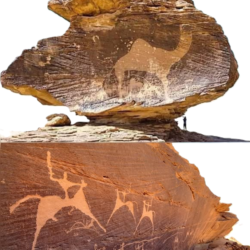
Why Bi’r Hima in Saudi Arabia matters Bi’r Hima, located in southwestern Saudi Arabia, is indeed one of the most significant archaeological sites in the world, offering…