Barbados is widely recognised for its rich cultural tapestry, shaped by centuries of migration, colonial influence, and global exchange. While the island’s identity is strongly rooted in its Afro-Caribbean majority, Barbados hosts a range of minority communities whose histories, traditions, and economic contributions have played an important role in shaping modern Bajan society.
Below is an extensive, structured exploration of these communities, their origins, and their cultural impact on the island.
(Relevant images may be represented through descriptive placeholders.)
The Afro-Bajan Majority
Afro-Barbadians, often called Afro-Bajans, make up close to 90% of the population. Their ancestry is largely West African, tied to the transatlantic slave trade during the British colonial period. Over time, Afro-Bajans developed a distinct cultural identity reflected in:
Language: Bajan Creole
Music: Calypso, spouge, tuk
Cuisine: Cou-cou, flying fish, pudding and souse
Community traditions: Crop Over, landship performances
Afro-Bajans continue to be the cultural backbone of the nation, influencing public life, government, and Barbados’s global identity.
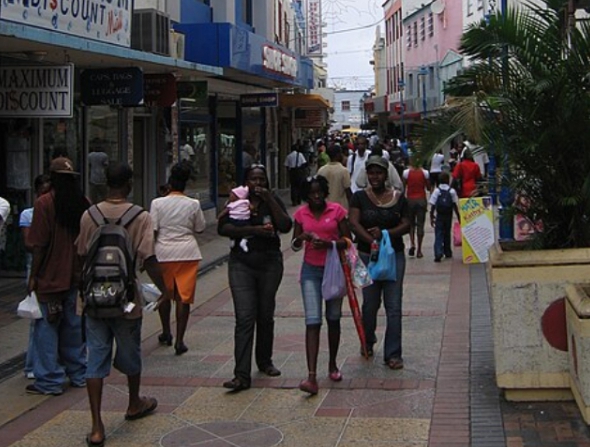
Photo Placeholder:A vibrant Barbadian Crop Over procession in Bridgetown.
Indo-Bajans and Indo-Guyanese
Origins and Growth
Indians began arriving in small numbers through the 19th and 20th centuries, but a meaningful demographic shift occurred after the 1990s, particularly with migration from Guyana. These populations include both Indo-Guyanese and Indian migrants from South India and Gujarat.
Cultural Presence
Many Indo-Bajans operate small and medium-sized businesses.
The Muslim Indian community has an especially strong presence in retail and commerce.
Hindu and Muslim observances, while smaller than in Trinidad or Guyana, contribute to the island’s multicultural rhythm.
Photo Placeholder:A small family-owned Indian grocery in Bridgetown.
Euro-Bajans (White Barbadians)
Historical Background
Euro-Bajans, approximately 5% of the population today, descend primarily from early settlers from:
England
Ireland
Scotland
Portugal
In the 17th century, whites famously comprised the majority population, a result of plantation settlement patterns before the African enslaved population expanded.
Cultural Influence
European settlers introduced architectural styles, agricultural practices, and music traditions such as Irish and Highland tunes.
A notable cultural imprint includes place names such as the Scotland District, inspired by the rugged hills of Scotland.
The Redlegs
A unique Euro-Bajan subgroup is the Redlegs, descendants of Irish indentured labourers, prisoners of war, and supporters of the Duke of Monmouth exiled after the Battle of Sedgemoor. Today their population is extremely small—around 400 individuals—but their historical significance is deeply woven into Barbados’s settlement narrative.
Photo Placeholder:The scenic Scotland District in St. Andrew parish.
Chinese-Barbadians
Chinese migrants arrived in several small waves beginning in the early to mid-20th century. While numerically small, Chinese-Barbadians have established themselves prominently in commerce, particularly through:
Supermarkets
Restaurants
Import businesses
Chinese cuisine and cultural expressions have gradually entered mainstream Bajan life, reflecting the island’s openness to global influences.
Photo Placeholder:A Chinese-Barbadian restaurant in central Bridgetown.
Arab Barbadians (Syrian and Lebanese)
Families of Syrian and Lebanese descent make up the island’s Arab community. Many arrived in the 20th century seeking trade opportunities, and today they are especially active in:
Retail
Wholesale distribution
Family-owned enterprises
Their long-standing commercial presence has contributed to the stability and diversity of Bridgetown’s business sector.
Photo Placeholder:Historic storefronts in Bridgetown’s commercial district.
Jewish Community of Barbados
Early Arrival
Jewish settlers arrived shortly after Barbados’s founding in 1627, becoming one of the earliest Jewish communities in the Americas. They played a central role in the sugar industry and international trade networks.
Heritage Sites
The most important heritage landmark is the Nidhe Israel Synagogue in Bridgetown:
Originally built in 1654
Current structure dates to 1833
Adjacent cemetery contains tombstones from the 1630s
Restored by the Jewish community and the Barbados National Trust beginning in 1986
Today, the site functions as a museum, celebrating centuries of Jewish-Bajan history.
People of Barbados
Romani Presence
In the 17th century, small numbers of Romani people were forcibly transported from Britain to Barbados as enslaved laborers or indentured servants. Although their descendants eventually assimilated, this history reflects the diversity—and complexity—of Barbados’s early colonial population structure.
North American Returnees (“Bajan Yankees”)
Barbadians who spend significant time in the U.S. (or whose children are born there) are sometimes referred to as “Bajan Yankees”, a term considered derogatory by some. Regardless of terminology, returning Barbadians contribute to:
Economic investment
Cultural exchange
Strengthening family networks across borders
Islanders generally view all people with Barbadian roots as part of the national family.
Barbados, though small in size, has a profoundly diverse heritage shaped by centuries of global movement. While Afro-Bajans form the core of the national identity, the island’s rich cultural fabric is also defined by Indian, European, Chinese, Arab, Jewish, and Romani influences. Together, these communities have shaped a society renowned for stability, cultural richness, and a deep sense of national belonging.
List of Barbados Government Ministries Barbados Government Ministries form the central framework of public administration across the island. These ministries ensure that national policies are…
List of Barbados Government Departments Barbados Government Departments are the backbone of the island’s public service system. They support citizens, protect national resources, manage critical…
Barbados Ministries and their Ministers A full list of ministries in Barbados along with the current minister (or responsible office-holder) for each. Ministries and their…
World Heritage Site in Barbados UNESCO World Heritage Site in Barbados is: Historic Bridgetown and its Garrison > View other UNESCO World Heritage Sites More…
Belgium Communities, Regions, and Language Areas Belgium’s institutional structure is one of the most sophisticated in Europe. Shaped by linguistic diversity, historical compromise, and successive waves…
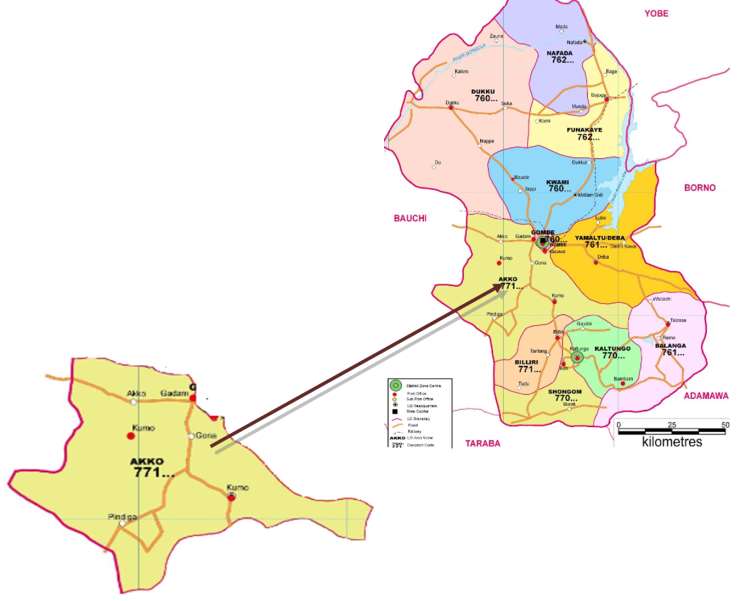
Distance of Funakaye communities, LGA headquarters and Gombe town, the state capital Approximate distance of Funakaye communities, LGA headquarters and state capital CommunityDistance from LGA HeadquartersDistance from State HeadquartersASHAKA GARI9.45KM78.01KMBAGE12.34KM78.93KMBAJOGA0 KM71.12KMRIBADU32.4KM45.44KMWAWA34.28KM57.54KMWUROBAPPARU14.58KM76.37KM Funakaye is…
List of communities in Gombe LGA, Gombe State Major communities in Gombe Local Government Area of Gombe State, Nigeria are: Bajoga Shamaki Dawaki Bolari Fantami Jekadafari London Maidoruwa…
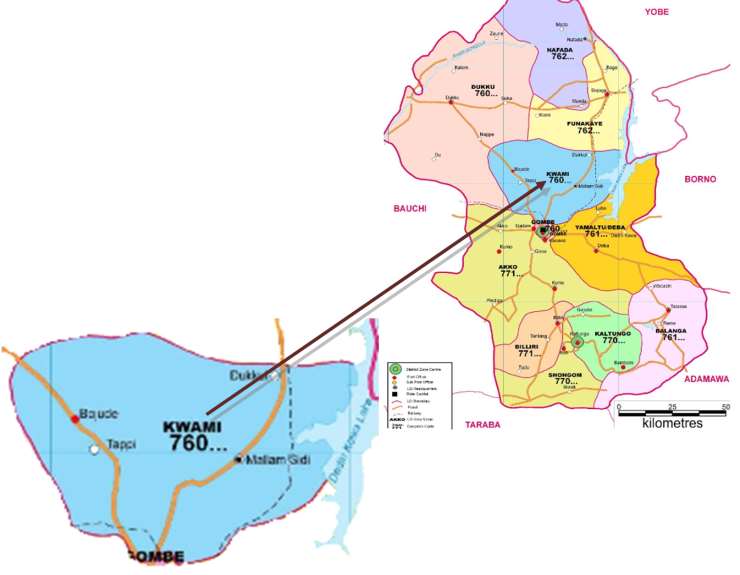
Distance of Kwami communities, LGA headquarters and Gombe State capital Approximate distance between communities to the Local and State headquarters CommunityDistance from LGA HeadquartersDistance from State HeadquartersKwami49.5KM13.53KMMalam Sidi0.KM25.92KMBojude58.7KM32.65KMTappi53KM26.68KMDoho7.9KM19.14KMDukul22KM43.84KM Kwami Local…
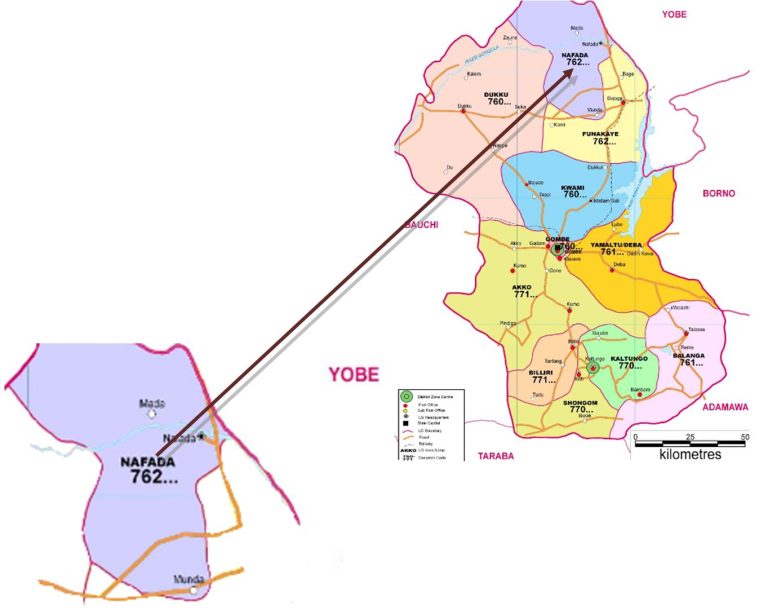
Distance of communities, Nafada LGA and Gombe State capital Approximate distance between the communities to the LGA and State capital CommunityDistance from LGA HeadquarterDistance from State HeadquartersBarwo Wunde8.14KM91.65KMNafada0. KM97.88KMJigawa33.56KM126.36KMBarwo…