Additional Indigenous Languages Proposed for Official Status
Joaquiniano
Kumsa (Kunza)
Paunaka
Sign Language
Bolivian Sign Language
Languages Without Official Status (Minority & Foreign)
Plautdietsch (Low German)
Standard German
Portuguese
English
Vernacular & Mixed Languages
Bolivian Spanish
Portuñol (Spanish–Portuguese mix)
The Languages of Bolivia: A Living Tapestry of Cultures and Voices
Bolivia is one of the most linguistically diverse countries in the world. Nestled in the heart of South America, it is home not only to Spanish—the dominant language of daily life and government—but also to a remarkable array of indigenous and minority languages that reflect centuries of history, migration, and cultural resilience. Today, Bolivia officially recognizes 37 languages, making it a truly multilingual nation.
A Multilingual Nation by Law
Bolivia’s linguistic diversity is not just cultural—it is constitutional. The 2009 Constitution of Bolivia declares Spanish and all indigenous languages of the country as official languages of the state. This groundbreaking decision positioned Bolivia as a plurinational state, recognizing the equal dignity of its many Indigenous peoples and their languages.
The constitution explicitly lists 36 indigenous languages, alongside Spanish, although some of these languages are now extinct or spoken by very small communities.
Spanish: The Dominant Lingua Franca
Spanish (Castilian) is the most widely spoken language in Bolivia and serves as the primary language of government, media, and education.
Native Spanish speakers: ~44.9% of the population
Total Spanish speakers (including bilinguals): ~75%
Bolivian Spanish has its own regional characteristics, shaped by Indigenous languages and local history. In urban areas especially, Spanish dominates daily communication, often at the expense of Indigenous languages.
Major Indigenous Languages of Bolivia
While dozens of Indigenous languages are officially recognized, a small number are spoken by the majority of Indigenous language speakers.
Quechua
Speakers: ~2.28 million (25.08%)
Region: Primarily the Andean highlands
Notes: Quechua is part of a broader language family spoken across several South American countries.
Aymara
Speakers: ~1.53 million (16.77%)
Region: The Altiplano, especially around Lake Titicaca
Notes: Aymara has a strong cultural presence and remains widely used in rural and community life.
Guaraní
Speakers: ~62,500 (0.69%)
Region: Southeastern Bolivia, near Paraguay and Argentina
Notes: Closely related to Paraguayan Guaraní, though less widespread in Bolivia.
Chiquitano (Bésiro)
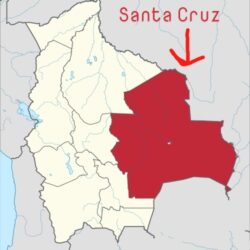
Region: Central Santa Cruz Department
Notes: A key language in Bolivia’s eastern lowlands, with growing revitalization efforts.
The Full List of Official Languages
Bolivia’s constitution recognizes a wide range of languages, including:
Amazonian languages (such as Tacana, Movima, and Ese Ejja)
Lowland languages (like Baure, Mojeño-Trinitario, and Guarayu)
Highland languages (including Quechua and Aymara)
Some officially recognized languages, such as Puquina and Machajuyai-Kallawaya, are now considered extinct, while others are spoken by fewer than 1,000 people.
In 2019, the Bolivian government announced plans to extend recognition to three additional Indigenous languages:
Joaquiniano
Kumsa (Kunza)
Paunaka
Bolivian Sign Language
Bolivian Sign Language (LSB) is also recognized and is closely related to American Sign Language (ASL). It plays a vital role in accessibility and inclusion for Bolivia’s Deaf community, though resources and institutional support remain limited.
Minority and Foreign Languages
Bolivia is also home to several non-Indigenous minority languages:
German and Plautdietsch
Spoken by Mennonite communities, especially in Santa Cruz Department
Plautdietsch (Low German) is used in daily life, while Standard German is used in writing, education, and religious settings
Portuguese
Spoken near the Brazilian border
About 0.2% of Bolivians speak Portuguese as their mother tongue
English
Taught as a foreign language and used in tourism and international business, though not widely spoken fluently
Language Use in Government and Education
Bolivian law requires that:
Government institutions use at least two languages: Spanish and one relevant Indigenous language
Departmental and municipal governments use the languages spoken in their territory, always including Spanish
Following the 1994 National Education Reform, Indigenous languages were introduced into schools alongside Spanish. However, implementation has been uneven, especially in urban areas.
Bolivia’s national anthem has also been translated into six Indigenous languages, symbolizing national recognition of linguistic diversity.
Demographic Snapshot
All Indigenous language speakers: ~43% of the population
Only Indigenous language speakers: ~10.5%
Spanish monolingual speakers: ~44.9%
Despite constitutional recognition, many Indigenous languages remain endangered due to urbanization, migration, and limited intergenerational transmission.
Preserving Bolivia’s Linguistic Heritage
Bolivia’s language policy is among the most ambitious in the world. Yet, legal recognition alone is not enough. Many officially recognized languages are spoken by only a few hundred people, and some are on the brink of extinction.
Efforts by institutions such as the Plurinational Institute for the Study of Languages and Cultures (IPELC) aim to document, revitalize, and promote Indigenous languages through education, media, and community programs.
The languages of Bolivia tell a powerful story—one of resilience, diversity, and cultural pride. From the bustling streets of La Paz to the forests of the Amazon and the plains of the Chaco, language remains a living expression of identity.
As Bolivia continues to balance modernization with cultural preservation, its multilingual framework stands as a global example of how nations can honor Indigenous heritage while embracing inclusivity in the modern world.
Bolivia Population by Department Bolivia has a total population of 11,365,333 people, with a nearly equal gender distribution: 5,682,498 men and 5,682,835 women. This…
List of ethnic groups in Bolivia Major Ethnic Groups in Bolivia are Mestizo (mixed Indigenous and European ancestry) Indigenous peoples White / European-descended Bolivians Afro-Bolivians Major…
Most Populated Departments of Bolivia The most populated departments of Bolivia, ranked from highest to lowest population Most Populated Departments of Bolivia are Santa Cruz…