Brazil is one of the most ethnically diverse countries in the world. This diversity did not happen by chance—it is the result of centuries of migration, colonization, forced labor, and cultural blending. Each region of Brazil developed its own ethnic profile, shaped by geography, economic needs, and historical events. Understanding these regional differences helps explain Brazil’s rich cultural identity.
Population by Ethnicity/Race in Brazil
Brazil (Total Population)
White: 47.5%
Black: 7.5%
Multiracial (Pardo): 43.4%
Asian (Yellow): 1.1%
Indigenous: 0.4%
South Region
White: 78.3%
Black: 4.0%
Multiracial (Pardo): 16.7%
Asian: 0.7%
Indigenous: 0.3%
Southeast Region
White: 54.9%
Black: 7.8%
Multiracial (Pardo): 36.0%
Asian: 1.1%
Indigenous: 0.1%
Northeast Region
White: 29.2%
Black: 9.4%
Multiracial (Pardo): 59.8%
Asian: 1.2%
Indigenous: 0.4%
North Region
White: 23.2%
Black: 6.5%
Multiracial (Pardo): 67.2%
Asian: 1.1%
Indigenous: 1.9%
Central-West Region
White: 41.5%
Black: 6.6%
Multiracial (Pardo): 49.4%
Asian: 1.5%
Indigenous: 0.9%
Ethnicities by Region in Brazil
Brazil – Overall
European ancestry: Largest share nationwide
Mixed-race (Pardo): Second-largest group
African ancestry: Significant, varies by region
Indigenous ancestry: Strongest in the North
Asian ancestry: Small but notable, mainly in the Southeast
Southern Brazil
Majority population of European descent
Main ancestries:
Portuguese (Azorean)
German
Italian
Polish
Indigenous groups:
Guarani
Kaingang
African ancestry:
Historically significant due to slavery
Much smaller percentage today
Cultural traits:
Strong European traditions
Wine production, agriculture, and small farming communities
Southeastern Brazil
Most ethnically diverse region
Major groups:
Europeans (Portuguese, Italian, others)
Mixed-race population
African descendants
Largest Asian Brazilian population in the country
Indigenous population:
Small but historically important
Key influences:
Early Portuguese colonization
African slavery
Coffee plantation immigration
Major cities:
São Paulo
Rio de Janeiro
Northeastern Brazil
Majority mixed-race (Pardo) population
Strong African influence, especially along the coast
European influence:
Mostly Portuguese
Limited later European immigration
Indigenous-European mixing common in interior regions
Cultural highlights:
Afro-Brazilian religion, music, and cuisine
Notable city:
Salvador (Bahia), strong African heritage
Northern Brazil
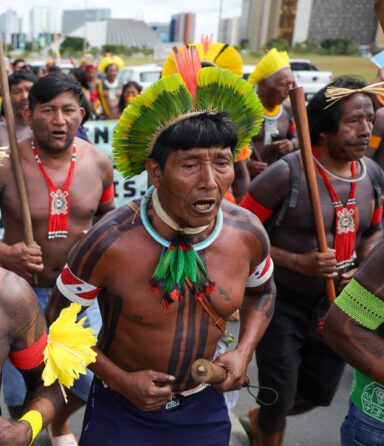
Strongest Indigenous influence in Brazil
Majority mixed-race population
Key factors:
Indigenous tribes of the Amazon
Migration from Northeast Brazil during the rubber boom
African ancestry:
Smaller than in other regions
Cultural identity:
Deep Indigenous traditions in daily life
Central-West Brazil
Originally Indigenous territory
Mixed-race population formed through early contact
Population growth driven by:
Discovery of precious stones
Construction of Brasília (1960)
Later migration:
European-descended farmers from Southern Brazil
Current profile:
Mixed ethnic composition with regional variation
Across Brazil as a whole, people of European ancestry form the largest share of the population, followed by those of mixed racial backgrounds (known as Pardo), people of African descent, Indigenous peoples, and smaller Asian communities. While European ancestry predominates nationwide, the balance between European, African, and Indigenous roots varies significantly by region.
In general:
Northern Brazil shows a stronger Indigenous influence.
Northeastern, Central-Western, and Southeastern Brazil have a greater African presence.
Southern Brazil stands out for its strong European majority.
These differences reflect the unique settlement patterns and economic histories of each region.
Southern Brazil: Strong European Roots
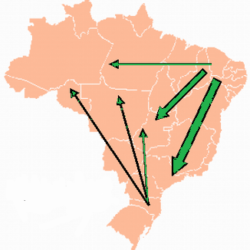
Southern Brazil has the highest proportion of people of European descent in the country. This region includes the states of Paraná, Santa Catarina, and Rio Grande do Sul and was originally inhabited by Indigenous groups such as the Guarani and Kaingang.
Early Settlement and Portuguese Influence
During colonial times, the South had a small population and was strategically vulnerable. To secure the region, Portugal encouraged settlement, particularly by families from the Azores islands. These settlers formed the foundation of coastal communities and contributed heavily to fishing and agriculture.
African Presence and Decline
African slaves were later brought to work in cattle farming, especially in Rio Grande do Sul. At one point, Africans made up nearly half of the population there. Over time, however, their proportion declined significantly due to changes in labor systems and immigration policies.
European Immigration Waves
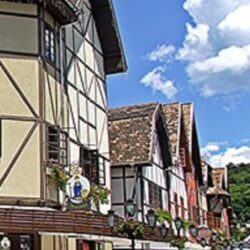
After Brazil gained independence, the government actively promoted European immigration. Germans arrived first, establishing farming colonies and towns such as São Leopoldo and Novo Hamburgo. Italians followed in large numbers, settling mainly in highland areas and creating strong wine-producing regions. Polish immigrants also arrived, particularly in Paraná, forming close-knit agricultural communities.
Today, Southern Brazil remains strongly influenced by German, Italian, and other European traditions.
Southeastern Brazil: The Great Melting Pot
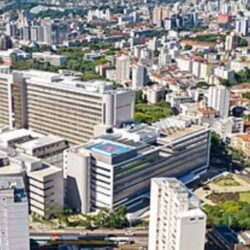
The Southeast is Brazil’s most ethnically diverse region and includes São Paulo, Rio de Janeiro, Minas Gerais, and Espírito Santo. It combines European, African, Indigenous, and Asian influences.
Colonial Foundations
This region was home to Brazil’s earliest Portuguese settlements. Early colonization involved extensive interaction—and exploitation—of Indigenous populations. Over time, racial mixing gave rise to unique cultural groups such as the Bandeirantes, who played a major role in expanding Portuguese territory.
Gold, Slavery, and Urban Growth
The discovery of gold in Minas Gerais triggered a massive influx of Portuguese settlers and African slaves. Rio de Janeiro became one of the most heavily African cities in the world during the 18th century. Later, the arrival of the Portuguese royal family further strengthened European influence.
Mass Immigration
From the late 19th century onward, millions of European immigrants—especially Italians—arrived to work on coffee plantations. Their descendants remain highly visible today, particularly in São Paulo.
Northeastern Brazil: Deep African and Mixed Heritage
The Northeast has one of the strongest African cultural influences in Brazil and a majority mixed-race population.
Roots of Diversity
Portuguese settlers often arrived without women, leading to relationships with Indigenous and African women. Over centuries, this resulted in extensive racial mixing.
Slavery and Sugar Economy
The region was a major center of sugar production and received millions of enslaved Africans, particularly along the coast. Cities like Salvador in Bahia are renowned for their African heritage, reflected in music, religion, and cuisine.
Limited European Immigration
Unlike the South and Southeast, the Northeast did not experience large waves of European immigration due to economic decline after the sugar industry weakened.
Northern Brazil: Indigenous Influence at the Core
Northern Brazil, dominated by the Amazon rainforest, has the strongest Indigenous presence in the country.
Late Non-Indigenous Settlement
Although Europeans arrived in the 17th century, large-scale settlement did not occur until the rubber boom of the late 19th and early 20th centuries.
Migration and Mixing
Workers from the Northeast migrated to the Amazon to extract rubber. Interaction between Indigenous peoples and these migrants shaped the region’s predominantly mixed-race population.
Indigenous culture remains deeply embedded in Northern Brazil’s traditions, food, and daily life.
Central-West Brazil: A Region Transformed
Originally inhabited by Indigenous groups, the Central-West saw limited population growth until the 20th century.
Early Exploration
Portuguese explorers arrived searching for precious stones, leading to early racial mixing.
Modern Migration
The construction of Brasília in 1960 transformed the region, attracting workers from across Brazil. Later, agricultural expansion brought migrants of European descent from the South, reshaping the demographic balance in some areas.
More
Religion in Brazil by Region Religion in Brazil is a defining element of the country’s cultural identity and social structure. As the largest nation in…
List of Brazil’s most popular names Most popular names in Brazil, including meanings, cultural influence, and why these names have stood the test of time. Brazil…
List of Brazil’s Racial Groups A look at racial groups in Brazil based on the 2022 Census (IBGE), with percentages and population numbers Total population…
List of Brazil Languages List of the languages spoken in Brazil, grouped by status and usage Official / National Language Portuguese (Brazilian Portuguese) —…
List of ethnic and racial groups in Brazil 1. Official Racial Groups in Brazil Brazil officially recognizes five self-identified racial categories: Pardo (Mixed-race) – 45.3% People of mixed…
World Heritage Sites in Brazil UNESCO World Heritage Sites in Brazil are: Historic Town of Ouro Preto Historic Centre of the Town of Olinda Jesuit…
Philippine Provinces per Region Provinces of Philippine grouped per region. Cordillera Administrative Region (CAR) Abra Benguet Ifugao Kalinga Mountain Province Apayao Region I –…
Uganda’s Districts by Region, Population Uganda Districts by Region with Populations (2014 Census & 2023 Estimates) Central Region (Including Kampala) DistrictPopulation (2014)Population (2023 est.)Buikwe422,771499,800Bukomansimbi151,413158,400Butambala100,840110,900Buvuma89,890154,200Gomba159,922180,300Kalangala54,29374,500Kalungu183,232189,200Kampala1,507,0801,766,500Kasanda271,544334,100Kayunga368,062427,100Kiboga148,218183,300Kyankwanzi214,693323,900Kyotera224,878271,100Luweero456,958558,100Lwengo274,953297,200Lyantonde93,753119,600Masaka297,004364,800Mityana328,964378,800Mpigi250,548305,300Mubende412,804641,800Mukono596,804757,500Nakaseke197,373254,900Nakasongola181,795233,400Rakai291,431338,900Sembabule252,597319,300Wakiso1,997,4183,519,300TOTAL9,529,23812,762,200 Eastern…
List of Uganda Districts by Region Uganda has 135 districts plus Kampala, grouped into four major regions. Central Region (Including Kampala) Buikwe Bukomansimbi Butambala Buvuma Gomba…
Egypt Climate by Month and Region Egypt, a land of ancient wonders and sun-soaked landscapes, is characterized by a predominantly arid desert climate. Its weather patterns…
Oromia Region 1. Oromia Oromia (Oromo: Oromiyaa, Amharic: ኦሮሚያ) is the largest and most populous regional state in Ethiopia. It is the…