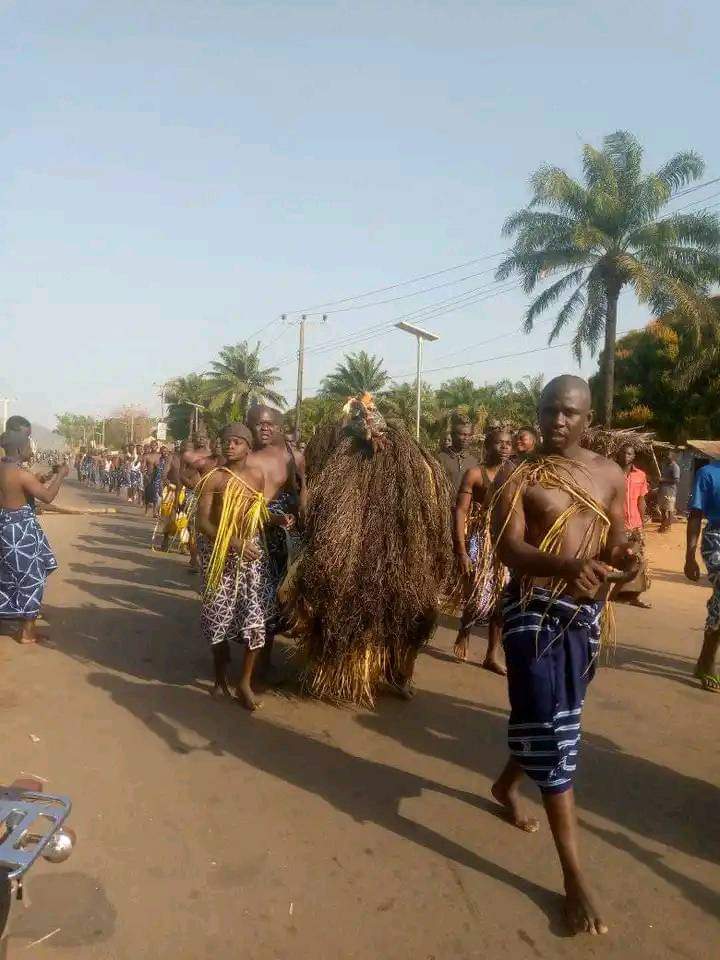
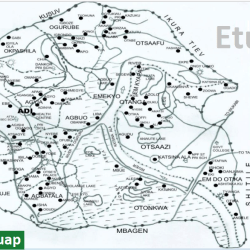
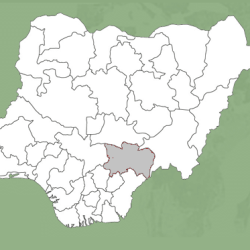
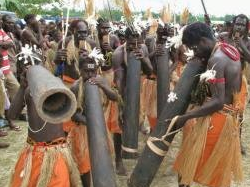
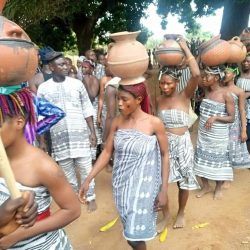
Etulo people have ancestral roots across both Katsina-Ala and Buruku Local Government Areas. They occupied these lands for generations, building thriving communities, preserving unique traditions, and maintaining a profound spiritual relationship with nature—especially water.
Among the many remarkable features of Etulo heritage is their extraordinary abundance of natural water resources. The Etulo landscape is richly blessed with majestic lakes, flowing rivers, sparkling streams, and life-sustaining ponds that have shaped the people’s culture, economy, spirituality, and identity for centuries.
The Vast Waterways of the Etulo People
Stretching from Ashitanaku to Igi ‘di-shewe, the expansive Etulo rivers and lakes form an important geographical and cultural network within the Etulo homeland. These water bodies have served not only as sources of livelihood through fishing and farming, but also as sacred spaces deeply woven into traditional beliefs and communal life.
The lakes of the Etulo people include:
Akata
Atiise
Angwute
Atoba
Okinkili Ese
Uto-ese
Utukwilibo (Itokulibo)
Adi
In addition to these lakes, numerous streams flow through Etulo territory, sustaining communities and enriching the natural environment. These streams include:
Ogatulu
Ogbani (Mkwatsa-Mkwaniba)
Ogbaun
Atsozi
Ufe-Akwu
Odobwi
Owamuan
Ogbe otu (Ogbudu)
Ogbe-Isa (Gbisa)
Owanakwu
Agya Ekima
The Etulo homeland is also home to several important ponds, including:
Ese-£kyo
Esekwo
Ibu Onogwuda
Ibude – Atsagye Compound
These bodies of water collectively represent more than natural resources. They are symbols of continuity, ancestral memory, spirituality, and survival.
The Sacred Origin of Akata
Among all the lakes within the Etulo territory, Akata occupies a uniquely revered place in the history and spirituality of the people.
The name “Akata” originates from the Etulo expression Nghakatakata (Ngh-katakata), a phrase used to describe an immense, boundless, and seemingly endless journey. The expression captured the awe experienced by ancient Etulo fishermen and hunters who encountered the vast waters during expeditions led by Emunkpe in ancient times.
Over time, the poetic expression evolved into the name “Akata,” preserving the memory of that remarkable discovery and the deep wonder it inspired.
Akata as a Sacred Spiritual Site
For the Etulo people, Akata is far more than an ordinary lake. It is regarded as sacred ground—a spiritually hallowed place central to traditional worship, ritual cleansing, ancestral appeasement, and sacrificial ceremonies.
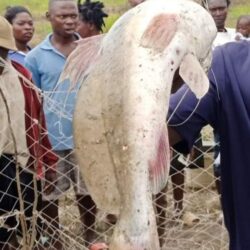
Before every fishing festival, sacred rites were traditionally performed to honor ancestral spirits and seek divine favor. According to Etulo belief, failure to carry out these sacrifices would result in an unsuccessful fishing season, with fish refusing to appear in the waters.
One of the most respected custodians of these sacred traditions was the late Pa Adumu, who faithfully performed the ceremonial rites before festivals. His role reflected the enduring importance of traditional spirituality within Etulo society and the community’s deep reverence for Akata.
Akata as a Growing Community Center
Beyond its spiritual significance, Akata has also evolved into an important educational and religious center within the Otanga Etulo-speaking community.
Several notable institutions are located within Akata in Katsina-Ala, including:
LGA Primary School, Akata
Stella Maris Catholic Church, Akata
Shalom Christian Center, Akata
These institutions serve the people of Otanga and surrounding Etulo-speaking communities, contributing to education, faith, and social development while preserving the cultural identity of the Etulo nation.
Preserving the Etulo Legacy
The story of Akata and the Etulo waterways is ultimately a story of heritage, spirituality, resilience, and identity. Across generations, the Etulo people have maintained a sacred connection to the land and waters inherited from their ancestors.
Etulo people
Their lakes, streams, and ponds are not merely geographical features; they are living monuments of history and culture. Through places like Akata, the memory of the Etulo people continues to endure—rooted in ancestral traditions, sustained by sacred waters, and carried forward by the communities that still call Otanga home.
Aldar Headquarters Building, Dubai The Aldar Headquarters Building, located in Abu Dhabi, UAE, is a distinctive and innovative architectural structure known for its unique…
Sibut Administrative Building, CAR The Sibut Administrative Building, Bangui, CAR (Central African Republic), commissioned in December 2018, houses four ministries, namely: the Ministry of…
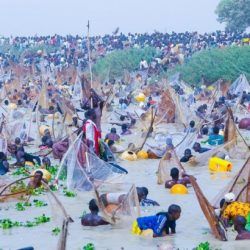
Argungu Fishing Festival Argungu Fishing Festival is an international attraction in and outside Nigeria. Argungu fishing festival in Kebbi State Every year, people…
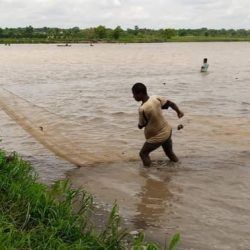
Fish Catch at Argungu Fishing Festival Argungu Fishing Festival is an international attraction in and outside Nigeria. Argungu fishing festival in Kebbi State Every year, people…
Oko-Amakom, Oko-Anala Fishing Festival The Oko-Amakom, Oko-Anala Fishing Festival is celebrated to revive their indigenous occupation (fishing) and protect their cultural heritage. The highlight…
Njuwa fishing festival Njuwa is an annual fishing festival performed by the Buatiye (Bata) people of Rugange, Njoboliyo, Dasin, Dulo, Bagale, Dagri, and…
NJUWA FISHING FESTIVAL Njuwa is an annual fishing festival by the Buatiye (Bata) people Of Adamawa State, Nigeria. Though there is no fixed…
Akata fishing festival Akata fishing festival is an annual fishing event at Akata Lake near Katsina-Ala town. Fishermen at Akata Lake Akata Lake…