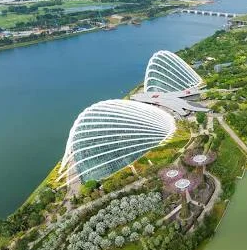
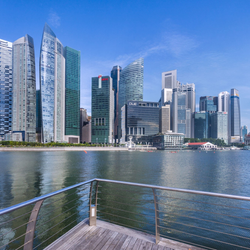
Singapore is widely known as a city-state, but it is also an archipelago made up of numerous offshore islands surrounding its main island, Pulau Ujong (Singapore Island). While many people think of Singapore as a single island, the country consists of approximately 64 islands and islets, although the exact number varies depending on how reclaimed land and merged islands are counted.
Over the decades, extensive land reclamation projects have dramatically reshaped Singapore’s coastline. Several smaller islands have been joined together to create larger land masses such as Jurong Island and Pulau Semakau, while others have been absorbed into the mainland. As a result, historical records sometimes report more than 70 islands, whereas modern studies often cite between 44 and 64.
About Singapore’s Islands
Singapore’s islands serve a variety of purposes, including:
Tourism and recreation
Nature conservation
Industrial and petrochemical activities
Military training
Waste management and environmental projects
Maritime navigation and port operations
Some islands, such as Sentosa and Pulau Ubin, are open to the public and attract visitors, while others remain restricted due to military or industrial use.
Major Civilian Islands
Singapore Island (Pulau Ujong)
The largest and most populous island in the republic, Pulau Ujong forms the mainland of Singapore and is home to nearly all of the country’s residents and major infrastructure.
Area: Approximately 710 km²
Status: Main island
Function: Residential, commercial, governmental, and industrial centre
Sentosa
Formerly known as Pulau Blakang Mati, Sentosa is Singapore’s premier island resort destination.
Highlights
Universal Studios Singapore
S.E.A. Aquarium
Adventure Cove Waterpark
Beaches and luxury resorts
Fort Siloso
Area: 4.71 km²
Pulau Ubin
Pulau Ubin preserves much of Singapore’s rural heritage and natural landscape.
Highlights
Chek Jawa Wetlands
Traditional kampong atmosphere
Cycling and hiking trails
Rich wildlife habitats
Area: 10.19 km²
St John’s Island
Located south of mainland Singapore, St John’s Island was once used as a quarantine station but is now popular for recreation and marine research.
Highlights
Beaches
Marine laboratories
Camping facilities
Day-trip excursions
Area: 0.405 km²
Lazarus Island
Connected to St John’s Island by a causeway, Lazarus Island is known for its secluded beaches and tranquil environment.
Area: 0.47 km²
Kusu Island
Meaning “Tortoise Island” in Chinese, Kusu Island is famous for its temple and annual pilgrimage season.
Highlights
Da Bo Gong Temple
Malay Keramat shrines
Coastal lagoons
Religious pilgrimage site
Area: 0.085 km²
Sisters’ Islands
Comprising Big Sister’s Island and Little Sister’s Island, these islands form Singapore’s first Marine Park.
Highlights
Coral reefs
Marine biodiversity
Guided nature programmes
Conservation projects
Combined Area: 0.056 km²
Coney Island (Pulau Serangoon)
An ecologically sensitive park located off Punggol.
Highlights
Nature trails
Coastal habitats
Birdwatching
Sustainable landscape design
Area: 1.33 km²
Industrial Islands
Jurong Island
Jurong Island is Singapore’s largest man-made offshore petrochemical hub.
Created by joining several smaller islands, including:
Pulau Ayer Chawan
Pulau Merlimau
Pulau Sakra
Pulau Seraya
Pulau Pesek
Pulau Pesek Kechil
Importance
Global petrochemical centre
Refining and chemical production
Strategic energy infrastructure
Area: 32 km²
Pulau Bukom
A major energy and refining centre operated by Shell.
Importance
Oil refining
Petrochemical production
Marine energy logistics
Area: 1.45 km²
Pulau Sebarok
An energy storage and petroleum distribution island located southwest of mainland Singapore.
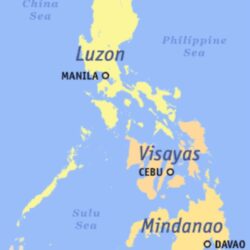
Philippine Islands The major islands of Philippine are Luzon, Mindoro, Panay, Negros, Cebu, Samar, Leyte, Bohol, and Paragua (now Palawan). They appear…
World Heritage Site in Solomon Islands UNESCO World Heritage Site in Solomon Islands is: East Rennell > View other UNESCO World Heritage Sites More on World…
World Heritage Site in Marshall Islands UNESCO World Heritage Site in Marshall Islands is: Bikini Atoll Nuclear Test Site > View other UNESCO World Heritage Sites…
The 10 islands of Cape Verde Cape Verde is made up of 10 islands and eight islets, located some 450 km west of Senegal, approximately 2890…
Cape Verde islands Cape Verde is a West African country located in the central Atlantic Ocean, consisting of 10 volcanic islands with a…
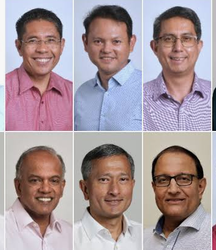
Singapore ministers and ministries list Singapore’s Cabinet ministers and their portfolios Lawrence Wong: Prime Minister and Minister for Finance Lee Hsien Loong: Senior Minister Gan…
Singapore Land Reclamation Land reclamation in Singapore has been a cornerstone of the city-state’s spatial, economic, and infrastructural strategy since the early nineteenth…