The origins, roles, and historical importance of THE ERA OF BRITISH CHIEFS in Tivland, focusing on the early district heads (tar tiv) and their significance in British colonial administration.
Understanding THE ERA OF BRITISH CHIEFS
THE ERA OF BRITISH CHIEFS marked a turning point in Tiv history, reshaping governance, leadership, and political authority under colonial rule. When the British extended their control into Tivland in the early 20th century, they introduced a system of indirect rule that relied heavily on district heads (tar tiv).
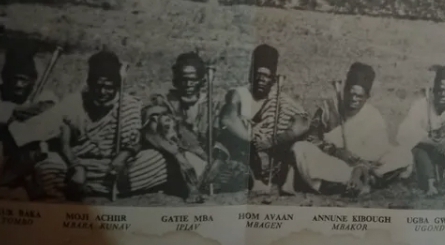
These leaders were not always traditional rulers. In many cases, British officials selected individuals they trusted or considered cooperative, often sidelining influential indigenous leaders such as tor agbande (drum chiefs). This blog article explores who these early district heads were, how they emerged, and why they mattered in the British administration of Tivland.
The Genesis of British Rule in Tivland
British administration in Tivland began from the eastern districts, where colonial officials experimented with governance structures that aligned with their indirect rule policy.
The British classified recognised leaders as fifth-class chiefs and symbolized their authority by issuing them staffs of office. However, recognition was selective and political. Many powerful traditional figures were considered “suspect” due to their influence and independence.
Ukum District: The First Experiment
Ukum holds a special place in THE ERA OF BRITISH CHIEFS as the first district under British control.
Biam Ala of Ingenev
Biam Ala, an influential tor agbande, served as headman from 1907 to 1913. Despite his authority and influence, he was never formally recognised as a district head. The British viewed his popularity with suspicion. He eventually died as a mere tax-collecting agent, a stark reminder of how colonial power redefined leadership.
Afegha: The First Recognised District Head
In 1913, Afegha became the first officially recognised District Head of Ukum. Unlike traditional rulers, he lacked indigenous authority but governed firmly through British backing until his deposition in 1920 (Auchinleck, 1913).
Tongov District: Marginalising Traditional Power
The story in Tongov mirrored Ukum’s experience.
Anyam and Naka
Anyam, a celebrated tor agbande, unintentionally aided British occupation but was never recognised. Instead, Naka—ambitious and favoured by the British—became the first recognised District Head. His loyalty ensured his long stay in power, while other traditional leaders remained unnoticed.
Ugondo District: Leadership by British Preference
In Ugondo, the British initially appointed Mindi, an elderly man familiar to them. His lack of enthusiasm led to his resignation.
Despite the presence of notable leaders, including drum chiefs, the British selected Ugba, a middle-aged and cooperative figure. Ugba’s rule ended abruptly in 1925, showing how unstable colonial appointments could be.
Shitire-Tiev: Authority Without Tradition
Ayiramo, another middle-aged man with no known drum chieftaincy, was appointed headman in Shitire-Tiev. Later recognised as District Head, he ruled until his deposition in 1920. Once again, British authority outweighed traditional legitimacy.
Saghev (Nongov East): Dual Leadership to Central Authority
Initially, two headmen—Gumela (tor agbande) and Tsegem—were appointed. Following Gumela’s death, Tsegem became the first recognised District Head in 1918. His tenure ended with his death in 1923 (Rowe, 1913).
Mbalagh District: From Resistance to Administration
Ashinya, famous for killing Griffiths in 1895, was reluctantly appointed headman by the British. Due to his past resistance, he was never elevated to District Head status. After his death in 1919, Dekke succeeded him and was formally recognised until his death in 1924.
Ikurav-Tiev: Choosing the ‘Whiteman’s Ally’
Monkwav (Tor Takum) and Yaha initially served as headmen but were bypassed for Agahiande, a man admired for his understanding of British ways. Agahiande became the first recognised District Head and ruled until 1936, one of the longest tenures in THE ERA OF BRITISH CHIEFS.
Shitire South: Continuity of Traditional Leadership
Shitire South (Gambe-Ya and Kpav) stood out.
Aba Kume
A respected tor agbande, Aba Kume enjoyed British confidence. Recognised informally in 1909 and officially in 1912, he became the first District Head of Shitire South and served until his death in 1922. His case shows rare continuity between traditional authority and colonial governance.
Ndzorov and Nongov West: Shared Beginnings
In 1910, Ityuruv and Ikua were appointed headmen. Ityuruv’s loyalty and administrative usefulness earned him elevation to District Head in 1913.
The Significance of District Heads in British Administration
The district heads were central to British control. Their responsibilities included:
Tax collection
Enforcement of colonial laws
Mobilising labour
Acting as intermediaries between the British and Tiv communities
Although they held administrative power, many lacked traditional legitimacy, creating long-term tensions in Tiv political culture.
FAQs About THE ERA OF BRITISH CHIEFS
1. What does tar tiv mean?
Tar tiv refers to district heads appointed during colonial rule in Tivland.
2. Why did the British ignore many traditional leaders?
The British preferred leaders who were cooperative and easy to control, often viewing powerful traditional rulers as threats.
3. Were all district heads traditional chiefs?
No. Many lacked traditional authority and ruled solely through British support.
4. What was a fifth-class chief?
It was a colonial classification for lower-ranking chiefs recognised by the British and given staffs of office.
5. Did district heads benefit Tiv society?
While they introduced formal administration, they also disrupted indigenous governance systems.
6. Why is THE ERA OF BRITISH CHIEFS historically important?
It explains the roots of modern political authority and leadership conflicts in Tivland
.
Legacy of THE ERA OF BRITISH CHIEFS
THE ERA OF BRITISH CHIEFS reshaped Tiv leadership forever. By elevating selected individuals as district heads, the British redefined authority, often sidelining legitimate traditional rulers. The effects of these decisions still echo in Tiv political and social structures today.
For deeper historical context on indirect rule in Nigeria, see related studies available through reputable academic archives such as JSTOR.
More
DISTRICT HEADS IN BAKURA EMIRATE The Districts heads in Bakura are: ALH. BELLO A. YUSUFU II ALH. ISAH ABDULLAHISenior District Head District Head of Birnin…
DISTRICT HEADS IN BUNGUDU EMIRATE The DISTRICT HEADS IN BUNGUDU EMIRATE are: ALH. BELLO SALIHU MNI ALH MANI AHUCHEDistrict Head of Kwaikwai Keku Nahuche ALH.…
Gombe Emirates, Chiefdoms & District Heads Gombe State in northeastern Nigeria has vibrant traditional leadership, which includes Emirates, Chiefdoms, and Senior District Heads. These traditional institutions…
NKST (Nongo u Kristu u i Ser u sha Tar) NKST (Nongo u Kristu u i Ser u sha Tar) or Universal Reformed Christian Church (URCC) is a reformation, presbyterian,…
Taraba Heads of Service The past Heads of Service of the Taraba State are: NAMEDURATIONMr. Simon Istifanus Angyu21st March. 2016 – 2019Bldr. Augustine Bazing…
HOW TINUBU APPOINTS HEADS OF AGENCIES BY RELIGION President Tinubu’s approach to appointing heads of agencies in Nigeria has sparked conversations around religious and ethnic diversity. Tinubu has…