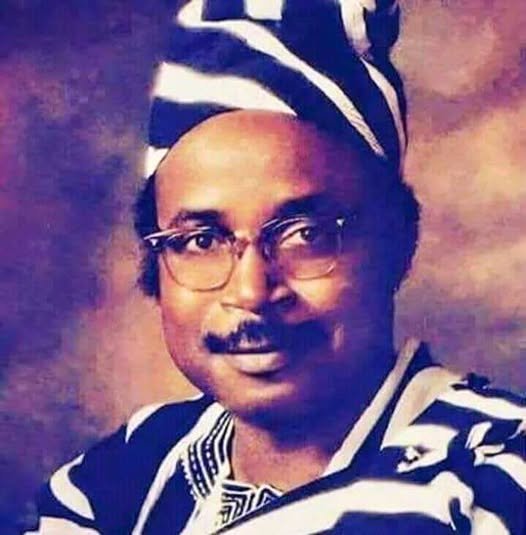
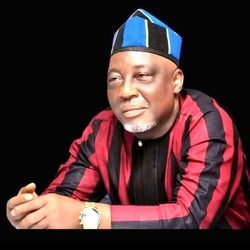
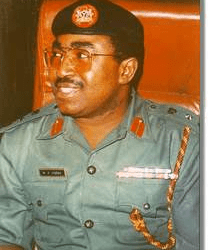
Chief Apollos Aper Aku was an educator, civil servant and statesman who served as the first civilian Governor of Benue State in the Second Republic. Many Benue people still regard him as the state’s best governor, and Professor David Iornem once described him as a visionary leader ahead of his time.
Early Life and Education
Aper Aku was born in 1938 in Ikyobo, Ushongo Local Government Area of Benue State. He was of Tiv origin.
His education took him across Nigeria and beyond:
Aku Primary School (1943-1947)
Senior Primary School, Mkar (1948-1951)
Government College, Keffi (1952-1957)
Nigerian College of Arts and Science, later Ahmadu Bello University (1958-1961)
Fourah Bay College, University of Sierra Leone (1961-1964)
Ahmadu Bello University, Zaria, postgraduate course in Education (1965-1966)
Teaching and Public Service
Aku began his teaching career in 1964 at William Bristow Secondary School, Gboko. He later taught at Bauchi Provincial Secondary School and Government Secondary School, Gombe. In 1968, he joined the Federal Government, working with External Aid for Education and the Federal Ministry of Establishment. He then served as Principal of the Federal Training Centre, Kaduna (1970-1972), and as a member of the Governing Council of the University of Ibadan (1972-1976).
Standing Up to Power
In May and again in August 1974, Aku wrote to Joseph Dechi Gomwalk, Governor of Benue-Plateau State, accusing him of nepotism and financial wrongdoing, and he filed affidavits to support his claims. General Yakubu Gowon dismissed the allegations and ordered Aku’s detention. After Gowon’s overthrow, however, a probe set up by his successor, Murtala Mohammed, vindicated Aku and found the allegations to be true.
Political Career
In 1977, Governor Abdullahi Shelleng appointed Aku Chairman of Kwande Local Government Council. He presided over a divided council, with some councillors loyal to his mentor, Joseph Tarka, and others to Paul Unongo, leader of a rival political camp. Even so, his administration was seen as honest and effective.
He resigned in 1978 and entered the governorship primary of the National Party of Nigeria (NPN), which he won against challengers including Isaac Shaahu and George Atedze. In 1979, he was elected Governor of Benue State, and he was re-elected in 1983.
Governor of Benue State
Aku inherited a state with a long history of neglect, especially in the southern area, home to minority groups. Benue also had fertile land and abundant rainfall, and he set out to use them.
Agriculture. He encouraged mass agricultural production, and the state recorded bumper harvests of yams, cassava, soya beans, cowpea, maize, guinea corn, millet, groundnut, banana, mangoes and oranges. His government set up industries for fertilizer production and the processing of farm produce, sited close to the farming areas.
Commerce and industry. He launched enterprises including:
Benue Brewery
Benro Packaging
Benue Bottling Company
Lobi Bank
Ber-Agbum Fish Farm
Ikogen Cattle Ranch
Taraku Vegetable Processing Industry
Benue International Hotel, Makurdi
He also initiated the Makurdi International Market, planned a flour mill in Makurdi, and built a state-of-the-art State Secretariat.
Health, education and infrastructure. He cancelled work on a large medical centre at Apir and began building seven cottage hospitals in different locations instead. He established two teachers’ colleges, at Oju and Makurdi, and the University of Technology, Makurdi. He expanded the number of secondary schools, built roads and installed street lights in Makurdi township, awarded the contract for the Arts Council Complex and started work on the Makurdi stadium.
Removal, Imprisonment and Death
On December 31, 1983, General Muhammadu Buhari took power in a coup and replaced the civilian governors with military officers. When Aku left office, the state’s finances were heavily overdrawn. Many of his projects were later abandoned by successive military governors, including the water supply schemes he had started, and agricultural output fell sharply as the infrastructure went unmaintained.
Buhari’s government jailed Aku and most of the other governors and set up military tribunals to investigate their conduct in office. The harsh conditions broke his health, and he died shortly after his release. Chief Apollos Aper Aku died on November 14, 1988, and was buried in his hometown of Ikyobo, Ukan, Ushongo Local Government Area. He left two wives and four children.
Aper Aku
Legacy
Decades on, Aku’s name is still spoken with respect. At a 2008 press conference marking the anniversary of his death, the leader of the Peoples Democratic Party (PDP) in the state noted that 70% of the important projects in Benue State had been started or completed during his four years in office.
More
Aper Aku Stadium, Makurdi The Aper Aku Stadium, situated in Makurdi, Benue State, Nigeria, is a prominent multi-use stadium with historical and cultural significance.…
Aper Aku Aper Aku was born in 1938 in Ikyobo, Ushongo Local Governement Area. After his early education, he attended Government College,…