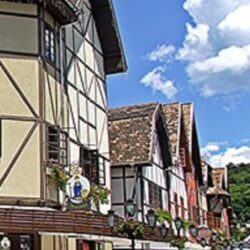
Talian (Venetian-based Italian dialect) (recognized as cultural heritage in Rio Grande do Sul)
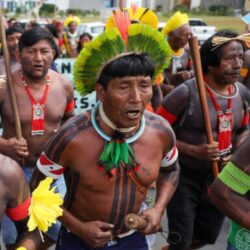
Indigenous Languages (Living / Spoken Communities)
Brazil has 180+ Indigenous languages, including:
Tupi-Guarani family (Guarani, Nheengatu, Kaiowá, etc.)
Macro-Jê family (Xavante, Kaingang, Timbira, etc.)
Arawak family (Baniwa, Terena, Paresi…)
Tucanoan family (Tucano, Desano…)
Panoan family (Yawanawá, Shipibo…)
Cariban family (Macuxi, Ye’kuana…)
Many are endangered, spoken mainly in the Amazon and interior regions.
Immigrant / Heritage Community Languages
Still used by communities, especially in the South & Southeast:
German-origin varieties
Riograndenser Hunsrückisch
East Pomeranian (Pomerano)
Standard German (smaller share)
Italian-origin varieties
Talian (Venetian-based)
Regional Italian dialects
Other immigrant languages (smaller communities)
Japanese
Polish
Ukrainian
Arabic
Spanish
Yiddish
Dutch
Lithuanian
Use varies by generation and region.
Urban / Contact / Historical Languages
Nheengatu (Lingua Geral Amazônica) — formerly a major lingua franca; still spoken in the Amazon
Portuguese-influenced creoles and mixed varieties (regional / historical contexts)
Brazil is officially monolingual in Portuguese, but socially multilingual, with:
a nationwide sign language (LIBRAS),
dozens of municipal co-official languages,
180+ Indigenous languages, and
significant heritage immigrant languages that remain culturally active.
Languages in Brazil
Brazil is officially a Portuguese-speaking country, and nearly the entire population speaks Brazilian Portuguese, which is the language used in government, education, media, and public life. Portuguese in Brazil has its own pronunciation, vocabulary, and usage patterns, making it distinct from European Portuguese, much like the differences between American and British English.
Although Brazil is legally monolingual at the national level, it is socially multilingual. The country recognizes Brazilian Sign Language (LIBRAS) for public services and education, and dozens of municipalities grant co-official status to local languages — especially in Indigenous and immigrant-heritage communities.
Brazil is home to over 180 Indigenous languages, spoken mainly in the Amazon and interior regions, belonging to families such as Tupi-Guarani, Macro-Jê, Arawak, Panoan, Cariban, and Tucanoan. Many of these languages are endangered but remain culturally central to their communities.
In the South and Southeast, immigrant-descendant groups continue to speak heritage languages brought by European settlers, including German dialects (such as Riograndenser Hunsrückisch and Pomeranian) and Italian-derived Talian, some of which are locally protected or co-official.
Overall, while Portuguese unifies Brazil nationally, the country’s linguistic landscape is diverse and historically layered, reflecting Indigenous roots, colonial history, migration, and modern cultural identity.
More
List of ethnic and racial groups in Brazil 1. Official Racial Groups in Brazil Brazil officially recognizes five self-identified racial categories: Pardo (Mixed-race) – 45.3% People of mixed…
List of Brazil’s most popular names Most popular names in Brazil, including meanings, cultural influence, and why these names have stood the test of time. Brazil…
List of Brazil’s Racial Groups A look at racial groups in Brazil based on the 2022 Census (IBGE), with percentages and population numbers Total population…
World Heritage Sites in Brazil UNESCO World Heritage Sites in Brazil are: Historic Town of Ouro Preto Historic Centre of the Town of Olinda Jesuit…
Religion in Brazil by Region Religion in Brazil is a defining element of the country’s cultural identity and social structure. As the largest nation in…
List of languages in Kaduna Kaduna comprises numerous ethnic groups and the groups have their own languages Most of the languages are spoken in Southern Kaduna.…
List of Bhutan Languages Bhutan is a small yet remarkably diverse Himalayan kingdom nestled between China and India. Despite its modest population and land…