A look at racial groups in Brazil based on the 2022 Census (IBGE), with percentages and population numbers
Total population (2022): 203,080,756
Pardos (Mixed-race)
45.34%
92,083,286 people
Whites (Brancos)
43.46%
88,252,121 people
Blacks (Pretos / Afro-Brazilians)
10.17%
20,656,458 people
Indigenous (Indígenas)
0.60%
1,227,642 people
East Asians (Amarelos / Asian Brazilians)
0.42%
850,130 people
IBGE Racial Classification Categories
The Brazilian Institute of Geography and Statistics (IBGE) uses self-identification and classifies race/color into five categories:
Branco (White)
Pardo (Mixed-race)
Preto (Black)
Amarelo (East Asian)
Indígena (Indigenous)
Mixed-race Brazilians (Pardos) are now the largest racial group.
White Brazilians remain a large plurality but are no longer the majority.
Black Brazilians increased significantly compared to earlier censuses.
Indigenous population reached its highest recorded share in Brazilian history.
Asian Brazilians remain a small but stable minority.
Racial Groups in Brazil (2022 Census)
Brazil’s population is one of the most racially and ethnically diverse in the world, shaped by Indigenous origins, European colonization, African slavery, and later immigration from multiple regions. According to the 2022 Brazilian Census (IBGE), racial identity is based on self-identification and classified into five official categories.
As of 2022, Brazil had a population of 203.1 million people. The largest racial group is Pardos (mixed-race), followed closely by Whites, with Blacks forming a significant minority. Indigenous and East Asian populations remain comparatively small but culturally important.
Key Patterns
Mixed-race Brazilians (Pardos) now represent the largest share of the population, reflecting centuries of racial mixing.
White Brazilians are no longer an absolute majority, continuing a long-term demographic shift.
Black Brazilians have increased notably in proportion since 2010, partly due to changing self-identification.
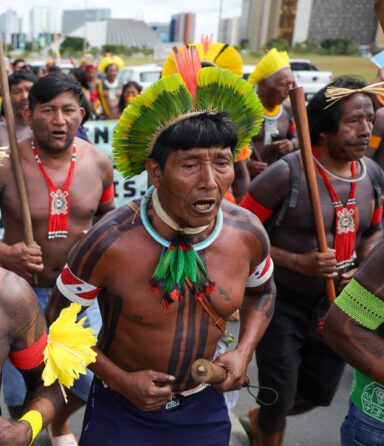
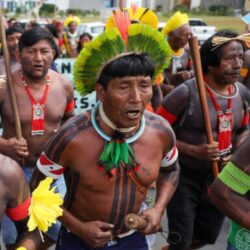
Indigenous peoples reached their highest recorded population share, reflecting improved census inclusion and ethnic recognition.
Asian Brazilians, while a small percentage, are historically significant, especially in urban centers.
Racial Composition (2022)
Pardos (Mixed-race): 45.3%
Whites: 43.5%
Blacks: 10.2%
Indigenous: 0.6%
East Asians: 0.4%
Long-Term Trend
Historically, Brazil shifted from a White-majority population in the mid-20th century to a plurality mixed-race population today. This change reflects social dynamics, migration patterns, and evolving perceptions of racial identity rather than sudden demographic movement.
More
List of ethnic and racial groups in Brazil 1. Official Racial Groups in Brazil Brazil officially recognizes five self-identified racial categories: Pardo (Mixed-race) – 45.3% People of mixed…
List of Brazil Languages List of the languages spoken in Brazil, grouped by status and usage Official / National Language Portuguese (Brazilian Portuguese) —…
List of Brazil’s most popular names Most popular names in Brazil, including meanings, cultural influence, and why these names have stood the test of time. Brazil…
World Heritage Sites in Brazil UNESCO World Heritage Sites in Brazil are: Historic Town of Ouro Preto Historic Centre of the Town of Olinda Jesuit…
Religion in Brazil by Region Religion in Brazil is a defining element of the country’s cultural identity and social structure. As the largest nation in…
List of ethnic groups in Kaduna Kaduna State comprises over 63 ethnic groups namely: Abinu (also known as Binawa) Ada (also known as Kuturmi) Adara (also known…
List of ethnic groups in Equatorial Guinea The ethnic groups in Equatorial Guinea are: 85.7% Fang6.5% Bubi3.6% Ndowe1.6% Annobon1.1% Bujeba1.1% other Languages in Equatorial Guinea Spanish and…
List of ethnic groups in ADDIS ABABA, Ethiopia The ethnic groups in ADDIS ABABA, Ethiopia are: SurmaSheTigrieTimebaroTsemayUpoWelaitaWerjiYemZeyeseZelmam Ethiopia ethnicity Ethiopia is a multi-ethnic country with over 80 different…
List of ethnic groups in GULELE, Ethiopia The ethnic groups in GULELE, Ethiopia are: Affar Agew—Awi Agew Hamyra Alaba Amhara Anyiwak Argoba Ari Arborie Bacha Basketo Bench…
List of ethnic groups in LIDETA, Ethiopia The ethnic groups in LIDETA, Ethiopia are: Affar Agew—Awi Agew Hamyra Alaba Amhara Anyiwak Argoba Ari Arborie Bacha Basketo Bench…