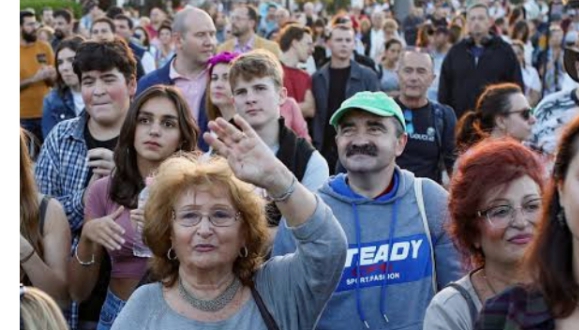
Bulgaria’s ethnic composition across its 28 provinces and Sofia City. While ethnic Bulgarians remain the overwhelming majority nationwide, the regional distribution of Turkish, Romani, and other ethnic groups reveals strong geographic patterns shaped by history, migration, and socio-economic factors.
Nationally
At the national level, Bulgaria’s population of 6,519,789 people in 2021 was composed of:
Ethnic Bulgarians: 5,118,494 (78.5%)
Ethnic Turks: 508,378 (7.8%)
Romani: 266,720 (4.1%)
Other ethnic groups: 79,006 (1.2%)
Undeclared ethnicity: 79,513 (1.2%)
Unknown / not stated: 467,678 (7.2%)
While these figures suggest relative homogeneity at the national level, provincial data tells a far more complex story.
Provinces with a Strong Bulgarian Majority
Several provinces show an exceptionally high share of ethnic Bulgarians, often exceeding 90% of the declared population:
Pernik Province: 94.1%
Kyustendil Province: 91.0%
Vidin Province: 90.4%
Vratsa Province: 90.0%
Smolyan Province: 90.2%
Gabrovo Province: 90.9%
These regions are largely located in western and central Bulgaria and tend to have smaller minority populations, particularly low Turkish representation.
Turkish-Majority and Turkish-Plurality Regions
The ethnic Turkish population is highly concentrated in northeastern and southern Bulgaria.
Turkish-majority provinces:
Kardzhali Province: 59.0% Turkish
Razgrad Province: 47.8% Turkish (plurality, close to majority)
Provinces with significant Turkish minorities:
Shumen Province: 29.2%
Silistra Province: 35.7%
Targovishte Province: 34.9%
Burgas Province: 12.4%
Haskovo Province: 12.1%
Ruse Province: 12.4%
These concentrations reflect the historical settlement patterns of ethnic Turks dating back to the Ottoman period.
Romani Population Distribution
The Romani population is present across all provinces but is most visible in several regions:
Sliven Province: 13.9%
Montana Province: 10.9%
Kyustendil Province: 5.9%
Stara Zagora Province: 6.1%
Yambol Province: 6.5%
Vidin Province: 6.7%
Sliven stands out nationally as the province with the highest proportion of Romani residents.
Sofia City: A Unique Case
Sofia City, Bulgaria’s capital and largest urban center, presents a distinctive demographic profile:
Ethnic Bulgarians: 83.1%
Turks: 0.5%
Romani: 1.1%
Other ethnic groups: 1.1%
Undeclared: 1.2%
Unknown: 13.0%
The exceptionally high share of “unknown” ethnicity likely reflects urban anonymity, migration, and a higher tendency to avoid ethnic self-identification.
Undeclared and Unknown Ethnicity
Across Bulgaria, 7.2% of the population did not declare ethnicity or was classified as unknown. This phenomenon is particularly pronounced in:
Sofia City: 13.0%
Sliven Province: 9.5%
Yambol Province: 8.5%
Kardzhali Province: 8.6%
This trend may indicate growing civic identity over ethnic identity, privacy concerns, or census-related challenges.
Regional Patterns at a Glance
Western and central Bulgaria: Predominantly ethnic Bulgarian
Northeastern Bulgaria: Strong Turkish presence
Southern Rhodope region: Turkish-majority areas
Urban centers: More diverse and more likely to have undeclared ethnicity
Northwestern Bulgaria: Higher Romani proportions
The 2021 census confirms that Bulgaria remains ethnically diverse at the regional level, even as ethnic Bulgarians form a clear national majority. Turkish and Romani communities play a crucial role in shaping the demographic character of many provinces, while rising rates of undeclared ethnicity—especially in cities—point to evolving attitudes toward ethnic identity.
Understanding these patterns is essential for effective regional policy, social inclusion strategies, and informed public debate about Bulgaria’s demographic future.
Bulgaria’s 2021 census highlights a country that is nationally cohesive but regionally diverse in ethnic composition. Ethnic Bulgarians form a clear majority nationwide, accounting for nearly four-fifths of the population, yet this dominance varies significantly from one province to another. Western and central provinces tend to be overwhelmingly Bulgarian, while parts of northeastern and southern Bulgaria show strong concentrations of ethnic Turks and, in some areas, sizeable Romani communities.
The ethnic Turkish population is most prominent in provinces such as Kardzhali, Razgrad, Shumen, Silistra, and Targovishte, reflecting long-standing historical settlement patterns. The Romani population, although smaller nationally, is more evenly spread and reaches its highest proportions in provinces like Sliven, Montana, and Yambol. Urban centers—especially Sofia City—stand out for their greater diversity and a notably high share of residents who chose not to declare an ethnic affiliation.
Overall, the provincial data reveals that ethnicity in Bulgaria is closely tied to geography, history, and urbanization. These patterns continue to shape regional identities and remain an important consideration for social policy, regional development, and demographic planning.
More
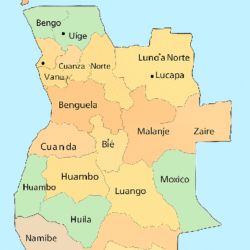
List of ethnic groups in Angola by province The ethnic groups in Angola according to province are: ProvinceEthnicityBengoAmbundu, BakongoBenguelaOvimbundu, OhvanyanekaEndOvimbundo, TucokweCabindaBakongoCuando CubangoOvanganguelaCuanza NorteAmbunduKwanza SulAmbundu, OvimbunduCuneneOvambuHuamboOvimbunduHuilaOvambuLuandaAmbunduLunda NorteCokweLunda SouthCokweMalanjeAmbunduMoxicoOvangaNamibeOluyaneka MinorityUígeBakongo,…
List of languages in Angola by province The languages in Angola according to province are: ProvinceLanguageBengoKimbundu, KikongoBenguelaUmbundu, OhvanyanekaEndUmbundu, CokweCabindaFiote, KikongoCuando CubangoNganguelaCuanza NorteKimbunduKwanza SulKimbundu, UbunduCuneneOshiwamboHuamboUmbunduHuilaOlunhaneka, UmbunduLuandaKimbunduLunda NorteCokweLunda SouthCokweMalanjeKimbunduMoxicoCokwe,…
List of ethnic groups in Kaduna Kaduna State comprises over 63 ethnic groups namely: Abinu (also known as Binawa) Ada (also known as Kuturmi) Adara (also known…
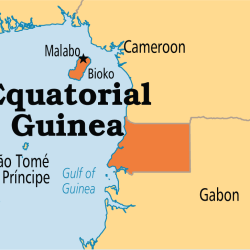
List of ethnic groups in Equatorial Guinea The ethnic groups in Equatorial Guinea are: 85.7% Fang6.5% Bubi3.6% Ndowe1.6% Annobon1.1% Bujeba1.1% other Languages in Equatorial Guinea Spanish and…
List of ethnic groups in ADDIS ABABA, Ethiopia The ethnic groups in ADDIS ABABA, Ethiopia are: SurmaSheTigrieTimebaroTsemayUpoWelaitaWerjiYemZeyeseZelmam Ethiopia ethnicity Ethiopia is a multi-ethnic country with over 80 different…
List of ethnic groups in GULELE, Ethiopia The ethnic groups in GULELE, Ethiopia are: Affar Agew—Awi Agew Hamyra Alaba Amhara Anyiwak Argoba Ari Arborie Bacha Basketo Bench…
List of ethnic groups in LIDETA, Ethiopia The ethnic groups in LIDETA, Ethiopia are: Affar Agew—Awi Agew Hamyra Alaba Amhara Anyiwak Argoba Ari Arborie Bacha Basketo Bench…
List of ethnic groups in KIRKOS, Ethiopia The ethnic groups in KIRKOS, Ethiopia are: Affar Agew—Awi Agew Hamyra Amhara Anyiwak Argoba Ari Arborie Bacha Basketo Bench Berta…
List of ethnic groups in ARADA, Ethiopia The ethnic groups in ARADA, Ethiopia are: Affar Agew—Awi Agew Hamyra Alaba Amhara Anyiwak Argoba Ari Arborie Bacha Basketo Bench…
List of ethnic groups in YEKA, Ethiopia The ethnic groups in YEKA, Ethiopia are: Affar Agew—Awi Agew Hamyra Alaba Amhara Anyiwak Argoba Ari Arborie Bacha Basketo Bench…
List of ethnic groups in BOLE, Ethiopia The ethnic groups in BOLE, Ethiopia are: Affar Agew—Awi Agew Hamyra Alaba Amhara Anyiwak Argoba Ari Arborie Bacha Basketo Bench…