Capital Hill, Lilongwe — His Excellency Professor Arthur Peter Mutharika, President of the Republic of Malawi, in exercise of the powers conferred upon him under Section 94(1) of the Constitution of the Republic of Malawi, has constituted the Cabinet as follows:
President and Commander-in-Chief of the Malawi Armed Forces His Excellency Professor Arthur Peter Mutharika
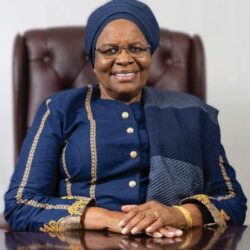
First Vice President Right Honourable Dr. Jane Ansah, SC, JA Rtd.
Second Vice President Right Honourable Enoch Kamzingeni Chihana
Minister of State Honourable Alfred Ruwan Gangata
Minister of Finance, Economic Planning and Decentralisation Honourable Joseph Mwanamvekha, MP
Minister of Agriculture, Irrigation and Water Development Honourable Roza Mbilizi Fachi, MP
Minister of Education, Science and Technology Honourable Bright Msaka, SC
Minister of Justice and Constitutional Affairs Honourable Charles Mhango
Minister of Foreign Affairs and International Cooperation Honourable George T. Chaponda, MP
Minister of Health and Sanitation Honourable Madalitso Baloyi, MP
Minister of Local Government and Rural Development Honourable Ben Malunga Phiri, MP
Minister of Industrialisation, Business, Trade and Tourism Honourable George Patridge
Minister of Transport and Public Works Honourable Feston Kaupa, MP
Minister of Homeland Security Honourable Peter Mukhito
Minister of Gender, Children, Disability and Social Welfare Honourable Mary Navicha, MP
Minister of Natural Resources, Energy and Mining Honourable Jean Mathanga, MP
Minister of Lands, Housing and Urban Development Honourable Jappie Mhango, MP
Minister of Labour, Skills and Innovation Honourable Joel Chigona, MP
Minister of Youth, Sports and Culture Honourable Patricia Wiskies, MP
Minister of Information and Communications Technology Honourable Shadrick Namalomba, MP
Deputy Minister of Health and Sanitation Honourable Chimwemwe Chipungu, MP
Deputy Minister of Homeland Security (Operations) Honourable Norman Chisale, MP
Deputy Minister of Gender, Children, Disability and Social Welfare Honourable Martha Ngwira, MP
The new Malawi ministers have officially been announced, ushering in a refreshed leadership team expected to guide the nation into a more stable and development-focused future. This cabinet appointment, made by President Professor Arthur Peter Mutharika, arrives at a critical moment when Malawi’s social, economic, and governance sectors require strong policy direction. The announcement has sparked renewed public interest, optimism, and debate across various communities.
In this article, we take a deep dive into the new Malawi ministers, their responsibilities, their potential impact, and how their leadership may shape the nation’s long-term progress. This guide covers everything you need to know—comprehensive insights, expert analysis, and clear explanations for a Grade 7 reading level.
Understanding the New Malawi Ministers Announcement
The announcement of the new Malawi ministers marks a significant step in strengthening government efficiency. Cabinet changes like these are not uncommon, but they always draw attention because ministers play a critical role in implementing national policies and driving developmental agendas.
Why Cabinet Appointments Matter
Ministers influence major sectors such as education, health, finance, and agriculture. Their decisions shape national progress, determine budget priorities, and affect how resources are allocated. With the new Malawi ministers sworn into office, citizens are eager to see how this leadership shift will address long-standing challenges like unemployment, food insecurity, and public service reforms.
Malawi’s Government Structure
To understand the importance of the new Malawi ministers, it’s helpful to know how Malawi’s executive branch works. The President appoints ministers to lead different ministries, ensuring each sector of government receives proper oversight and direction. These ministers become part of the Cabinet, the highest decision-making body after the presidency.
Ministers work with principal secretaries, directors, and local government officers. Together, they plan, implement, and oversee national policies.
Key Ministries and Their National Impact
Ministry of Finance
This ministry is responsible for national budgeting, taxation, economic growth strategies, and financial reforms. The new Malawi ministers in this sector will have to stabilize public debt and strengthen revenue collection.
Ministry of Health
Healthcare remains one of Malawi’s top concerns. The new minister must address medicine shortages, upgrade hospitals, and enhance service delivery.
Ministry of Education
From improving school infrastructure to addressing teacher shortages, the education minister has a major role in shaping the nation’s future workforce.
Ministry of Agriculture
Agriculture employs a large percentage of Malawians. The new cabinet must tackle low crop yields, unpredictable weather patterns, and market challenges.
Ministry of Homeland Security
This ministry manages immigration, policing, and national safety. Its leadership is crucial in combating crime and improving border control.
How Ministers Are Appointed in Malawi
The Malawi Constitution gives the President powers to appoint ministers at his discretion, allowing him to form a team he believes can deliver his vision. Once appointed, ministers take an oath of office and begin executing their roles.
Impact of The New Malawi Ministers on National Development
The appointment of new leaders typically brings hope and renewed direction. The new Malawi ministers are expected to:
Improve public service delivery
Strengthen economic stability
Modernize critical sectors
Drive national development strategies
Promote accountability and transparency
If well-coordinated, these ministers could help Malawi achieve stronger economic growth and improved living conditions.
1. Who appointed the new Malawi ministers?
President Professor Arthur Peter Mutharika appointed the new Malawi ministers.
2. Why were new ministers appointed?
To improve efficiency, strengthen governance, and align leadership with national priorities.
3. When was the new cabinet announced?
The new cabinet was released on 30 October 2025.
4. How many ministers are in the new cabinet?
The cabinet consists of multiple ministries, including finance, health, education, agriculture, and more.
5. What are the roles of Malawi ministers?
They oversee national sectors, develop policies, and ensure effective public service delivery.
The new Malawi ministers symbolize a renewed direction for national governance. Their leadership will shape major reforms across key sectors like education, finance, health, and agriculture. As citizens watch these appointments closely, there is hope that this cabinet will champion progress, stability, and sustainable development. With fresh leadership in place, Malawi stands at a promising point for growth and transformation.
World Heritage Sites in Malawi UNESCO World Heritage Sites in Malawi are: Lake Malawi National Park Chongoni Rock-Art Area > View other UNESCO World Heritage…
Barbados Ministries and their Ministers A full list of ministries in Barbados along with the current minister (or responsible office-holder) for each. Ministries and their…
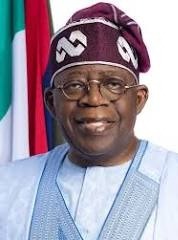
LIST OF ALL MINISTERS AND POTFOLIOUS Here’s the list of Nigeria’s ministers appointed by President Bola Tinubu in 2024, along with their portfolios: Bosun Tijani -…
List of Ministers in Trinidad and Tobago A look at the Government of Trinidad and Tobago under Prime Minister Kamla Persad-Bissessar, as sworn in following the 2025…
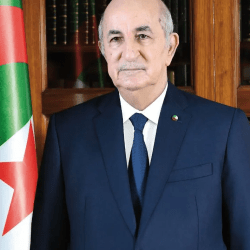
List of ministers in Algeria The ministers in Algeria, under President Abdelmadjid Tebboune, as of December 2023, are: Ahmed AttafMinister of Foreign Affairs and the…
List of Burkina Faso ministers List of Burkina Faso government ministers, 2024 His Excellency Sir Appolinaire Joachimson KYELEM of TambélaThe Prime Minister Colonel Major Kassoum…
List of Ministers of Education in Nigeria, from 1958 Nigeria’s Ministers of Education since 1958 when the Federal Ministry of Education was created are: NameDurationPartyAja Nwachukwu1958 – 1965NCNCRichard Akinjide1965…
List of Ministers in Ethiopia The President of Ethiopia is Taye Atske Selassie while the Prime Minister: Dr. Abiy Ahmed. Tagese Chafo is Speaker of…
Burkina Faso ministers, 2024 List of government ministers in Burkina Faso as of 2024 His Excellency Sir Appolinaire Joachimson KYELEM of TambélaThe Prime Minister…